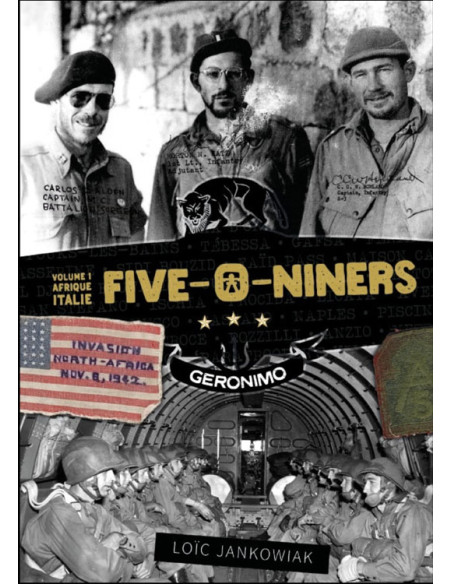
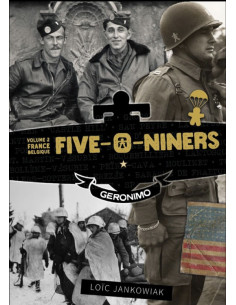
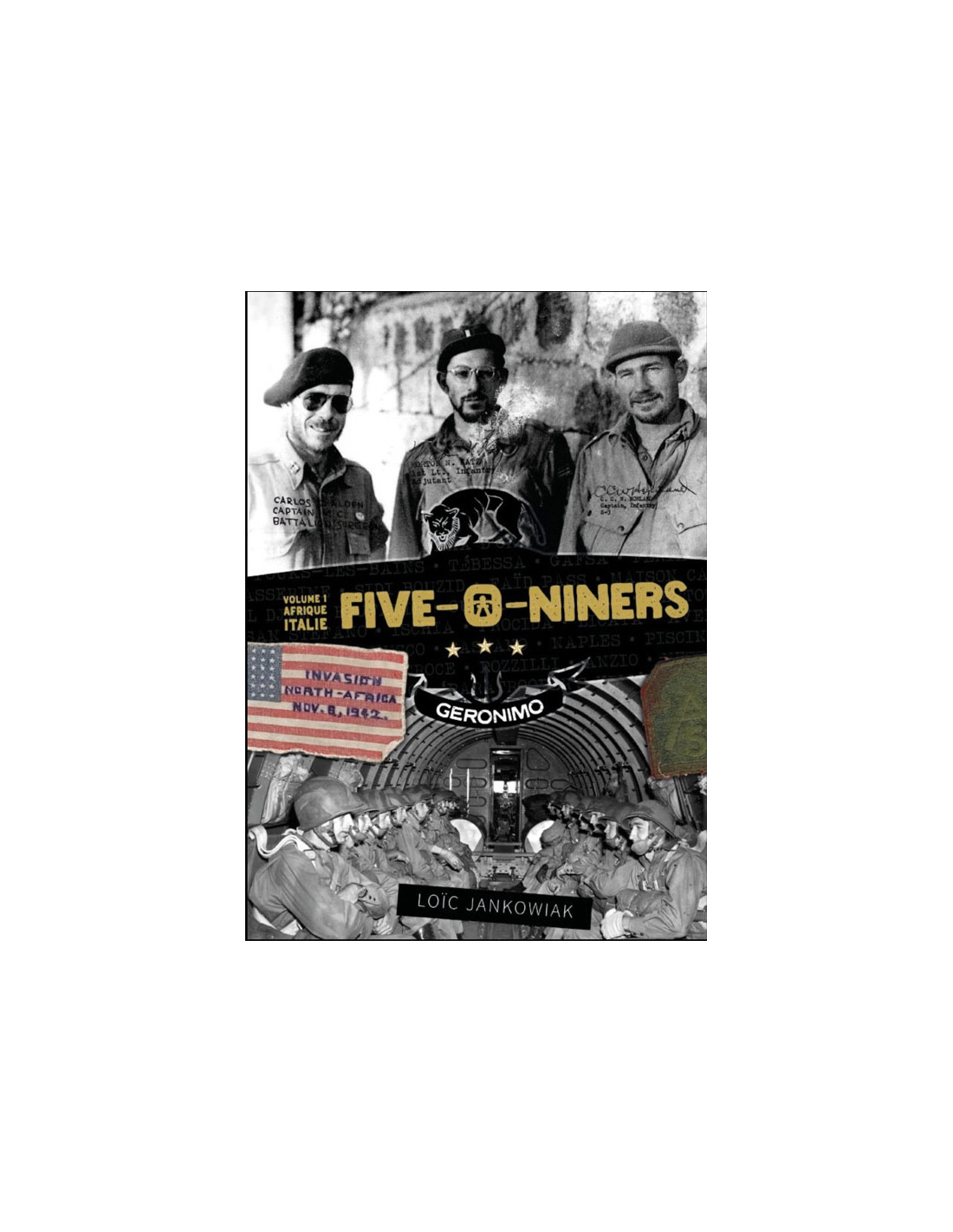
Five-O-Niners - 509 Parachute Infantry Battalion Vol 1 - Africa Italy
This first volume traces the history of the battalion during a period when it still bore the identity forged by its founding generation, drawn from the earliest American parachute formations. As the first Army paratroopers to enter combat during Operation Torch, they were the pathfinders, the first in the nation to test this unconventional mode of warfare — the first to pay its price. Even as newcomers joined the unit through March 1944, it remained dominated by the influence of its veterans, who ensured its continuity and spirit.
Following their outstanding performance in North Africa, Lt. Gen. Mark W. Clark developed a particular affection for the 509 and entrusted them with several of the most demanding missions of the 5th Army: relieving the Salerno bridgehead, seizing the strategic mountain position of Venafro, and conducting the amphibious landing at Anzio.
It took courage to accomplish these missions against the finest units the German army could field during those early years. But the 509 prevailed. Facing every temperature the desert could offer, the unforgiving mountains of the Apennines, the sodden plains and relentless rains of the Pontine Marshes: in the air, on land, and at sea.
Secure Payment
Delivery
(+33) 01.79.75.05.50
Over the years, considerable confusion has surrounded what the 509th was and how that strange number suddenly appeared in North Africa. Its initial identity upon activation was the 504th Parachute Battalion — unrelated to the 504th PIR.
Between October 1940, the date of activation of the 501st Parachute Battalion, and the attack on Pearl Harbor, the War Department believed that a small number of independent battalions would suffice. After all, there were not enough transport aircraft to carry them. As such, it was the fourth and last of the independent, non-regimental parachute battalions. But December 7, 1941 and the impact of the German paratroopers' conquest of Crete rendered that concept obsolete.
Washington planners then decided to expand airborne forces considerably. By 1942, the four battalions had been reorganized into three parachute infantry regiments. The 504th became the 2nd Battalion, 503rd Parachute Infantry Regiment, which arrived in England in May 1942. As we shall see, this battalion would change its designation overseas and operate in North Africa as the 2nd Battalion, 509th Parachute Infantry Regiment. The battalion would never attain the title or status of a full regiment. The hope of achieving that goal would nonetheless persist until December 1943. It would simply be redesignated the 509th Parachute Infantry Battalion.
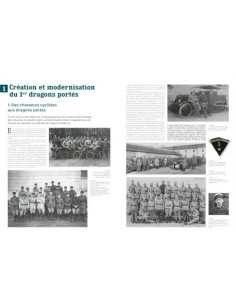
The Five-O-Niners would then know themselves condemned to remain an orphan battalion. To set themselves apart, a distinctive insignia was created: the 'Little Man at the Door', depicting the silhouette of a paratrooper holding his reserve chute, in the exit position, hands outside the aircraft. It would quickly be dubbed the Gingerbread Man owing to its resemblance to the ginger biscuit.
- Author 1
- Loic Jankowiak
- Publication date
- November 2025
- Pages
- 456
- Illustrations
- 1,000+ photos per volume
- Cover
- Hardcover
- Language
- French
- Publisher
- self-published
You might also like