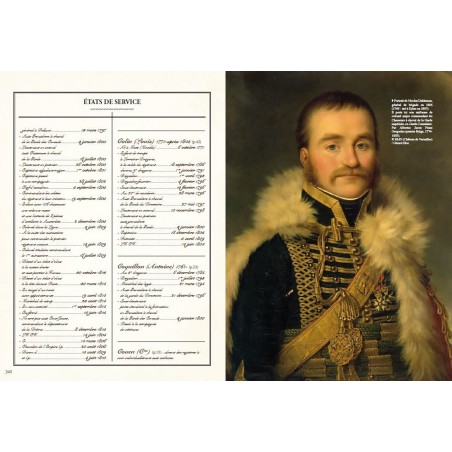
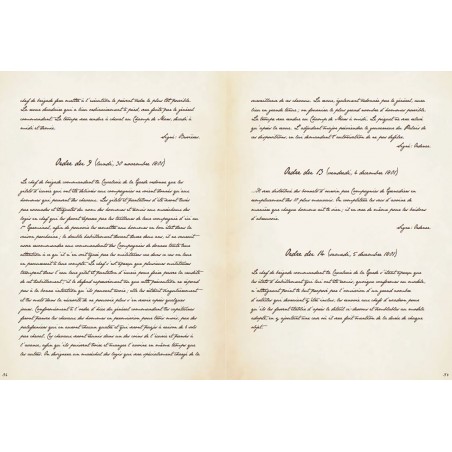
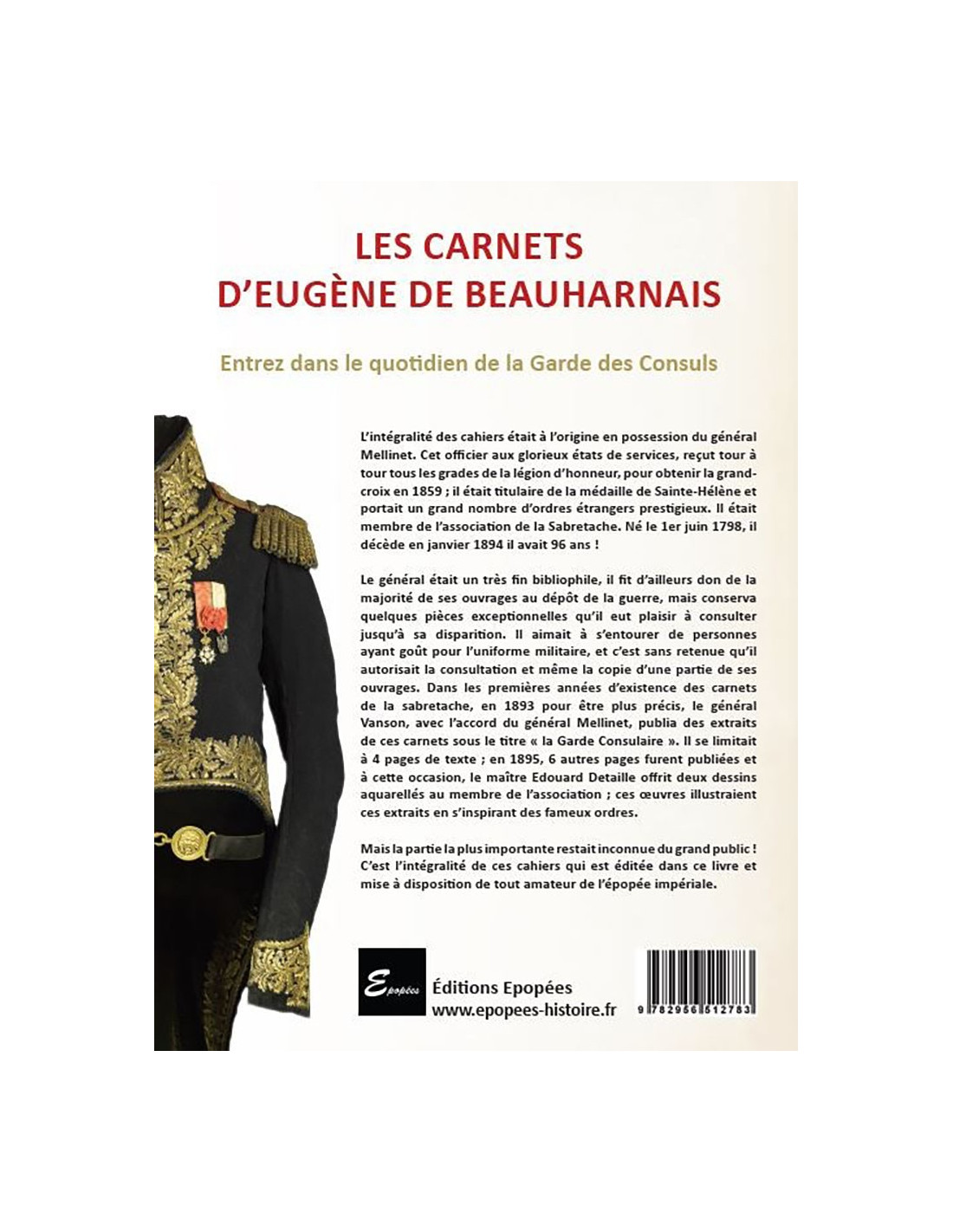
The entirety of the notebooks was originally in the possession of General Mellinet: this officer, described at the time by General Vanson as a «glorious scarred veteran», commanded the Grenadiers of the Imperial Guard at Magenta. This soldier, a lieutenant in the national guards in 1813, was rapidly incorporated into the 88th line infantry regiment in 1814, then joined the 96th line at the end of that same year. Discharged in 1815, he rejoined the army in March 1816 within the departmental legions. Initially posted to the 5th Light in 1823, he entered in 1828 the 5th infantry regiment of the Royal Guard. Captain in the 14th line in 1830, he became battalion commander in the 35th line in 1839, then commanded the 5th battalion of chasseurs à pied in 1840. His rise continued in 1842, the year in which he became lieutenant colonel of the 41st line. Two years later, he transferred to the 32nd and finally became colonel of the 1st Foreign Legion regiment in 1846. Commanding the Sidi-bel-Abbès subdivision in 1848, he was made brigadier general in 1850.
He took command of the 1st infantry brigade of the Imperial Guard in the Army of the East in 1855. As a major general, he retained command of the guard infantry in 1855 during its restructuring upon return from Crimea.
In August 1870, he commanded the depots of the Imperial Guard in Paris and found himself held in reserve in 1871. It was not until 1878 that he finally received his pension. Wounded at the Battle of Paris in 1814, he received a lance thrust to the thigh at the siege of Metz in 1815, then a gunshot wound at the siege of San Sebastián in 1823. A shell fragment seriously marked his cheek during the assault on Sevastopol in 1855. He received all the grades of the Légion d'honneur in succession, attaining the grand cross in 1859; he held the Médaille de Sainte-Hélène and wore a great number of prestigious foreign orders. He was a member of the Sabretache association. Born on 1 June 1798, he died in January 1894 at the age of 96.
The general was a very keen bibliophile; he donated the majority of his works to the war depot, but kept a few exceptional pieces that he took pleasure in consulting until his death. He liked to surround himself with people who had a taste for military uniform, and he freely allowed the consultation and even the copying of a portion of his works.
In the early years of the carnets de la sabretache, in 1893 to be more precise, General Vanson, with the agreement of General Mellinet, published extracts from these notebooks under the title «la Garde Consulaire». He limited himself to 4 pages of text; in 1895, 6 further pages were published and on that occasion, master Edouard Detaille offered two watercolour drawings to the association's members; these works illustrated the extract, drawing inspiration from the famous orders.
But the most important part remained unknown to the general public!
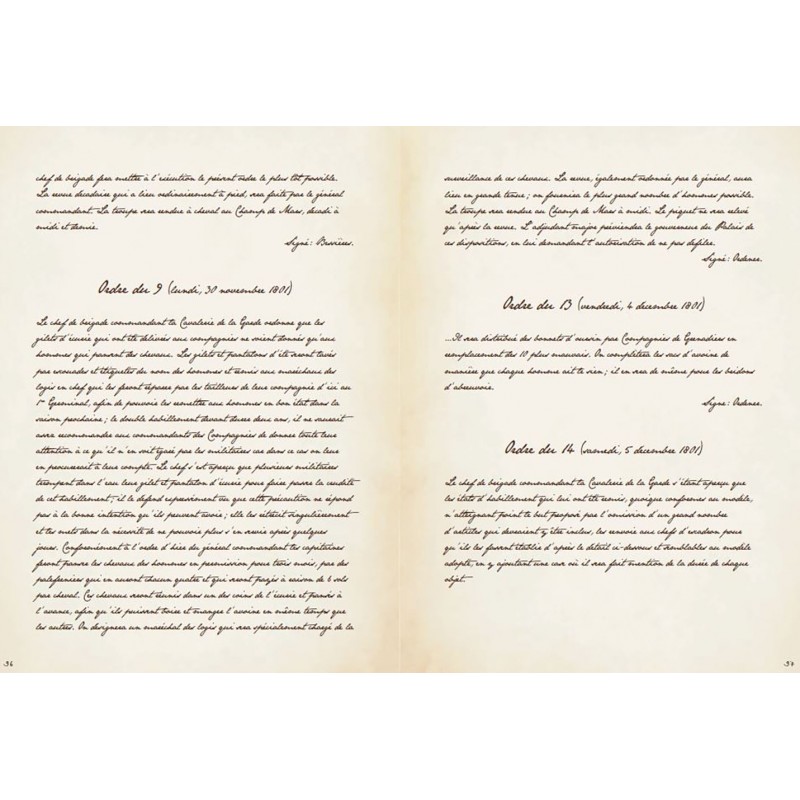
Upon the death of General Mellinet, the registers were acquired by another private collector. The latter, a friend of Lieutenant-Colonel Titeux, authorised him to copy all the extracts he deemed worthy of interest. And it was during the month of January 1899 that Titeux transcribed, in his own words: «the entirety of the orders pertaining to the organisation and uniforms of the cavalry of the Consular Guard». He notes that he did not include the Consuls' decree of 21 Fructidor Year VIII nor that of 9 Vendémiaire Year XI, present at the beginning of the 1st notebook and at the end of the 7th. We may therefore reasonably conclude that this copy was very thorough.
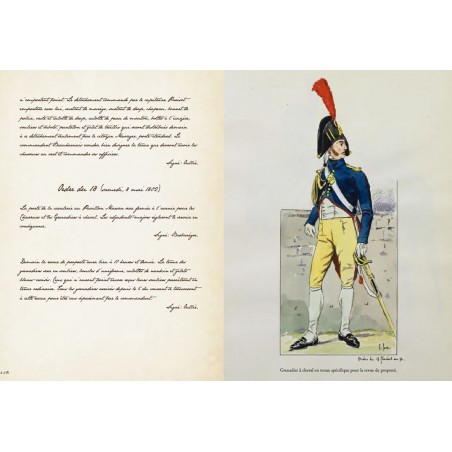
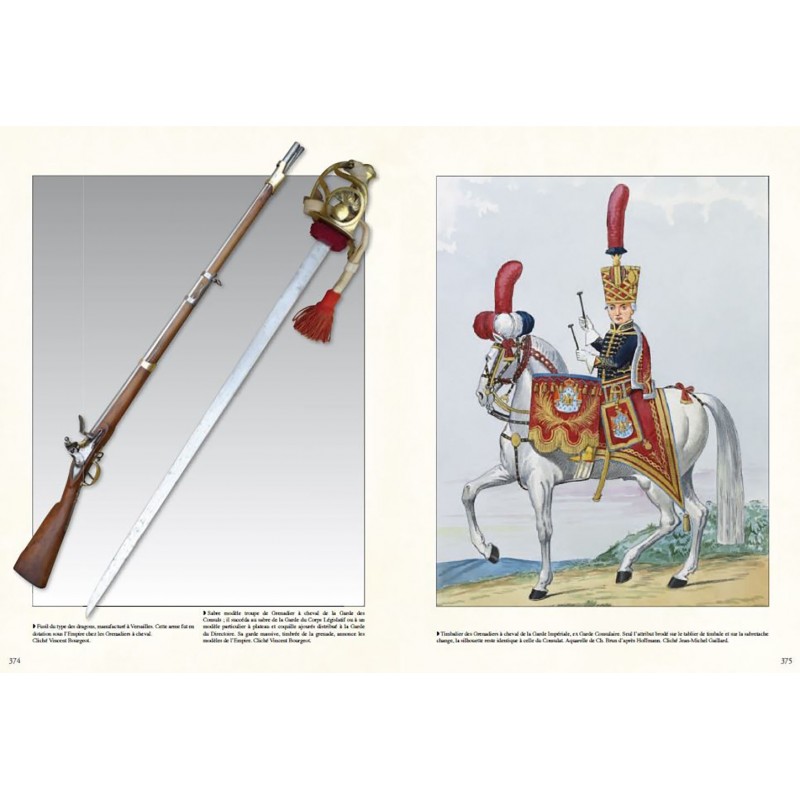
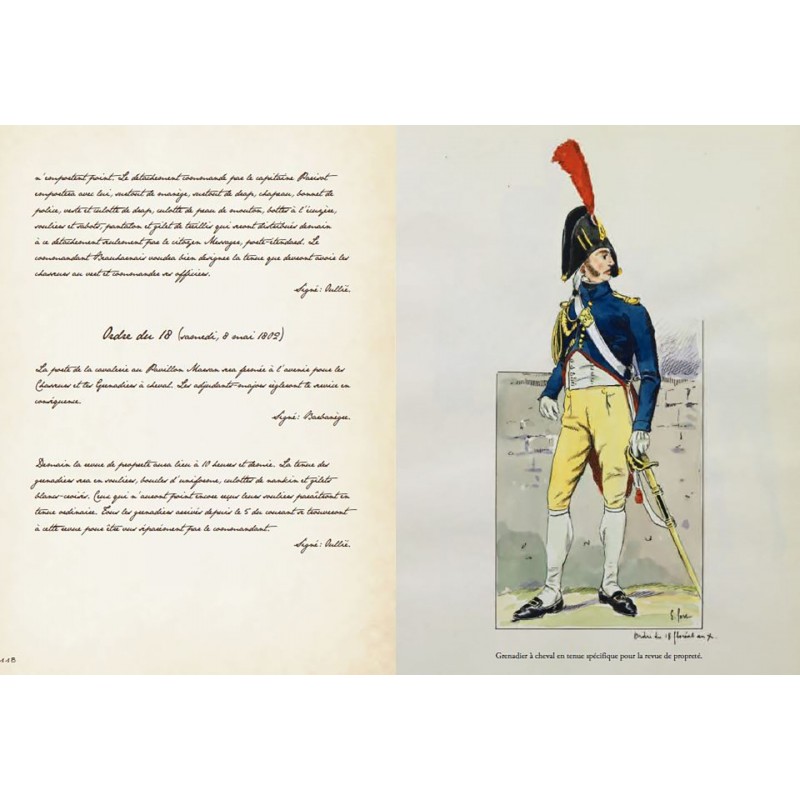
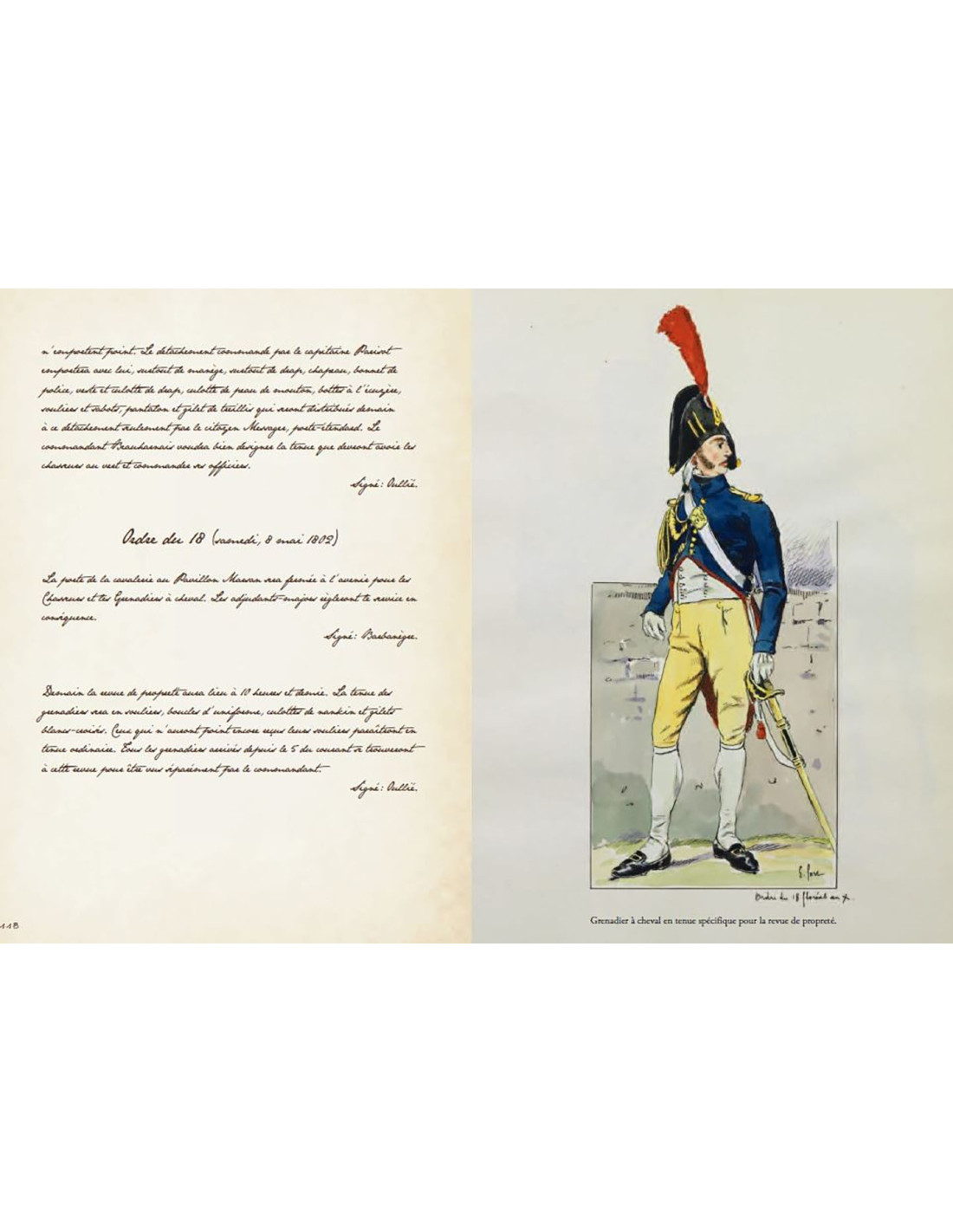
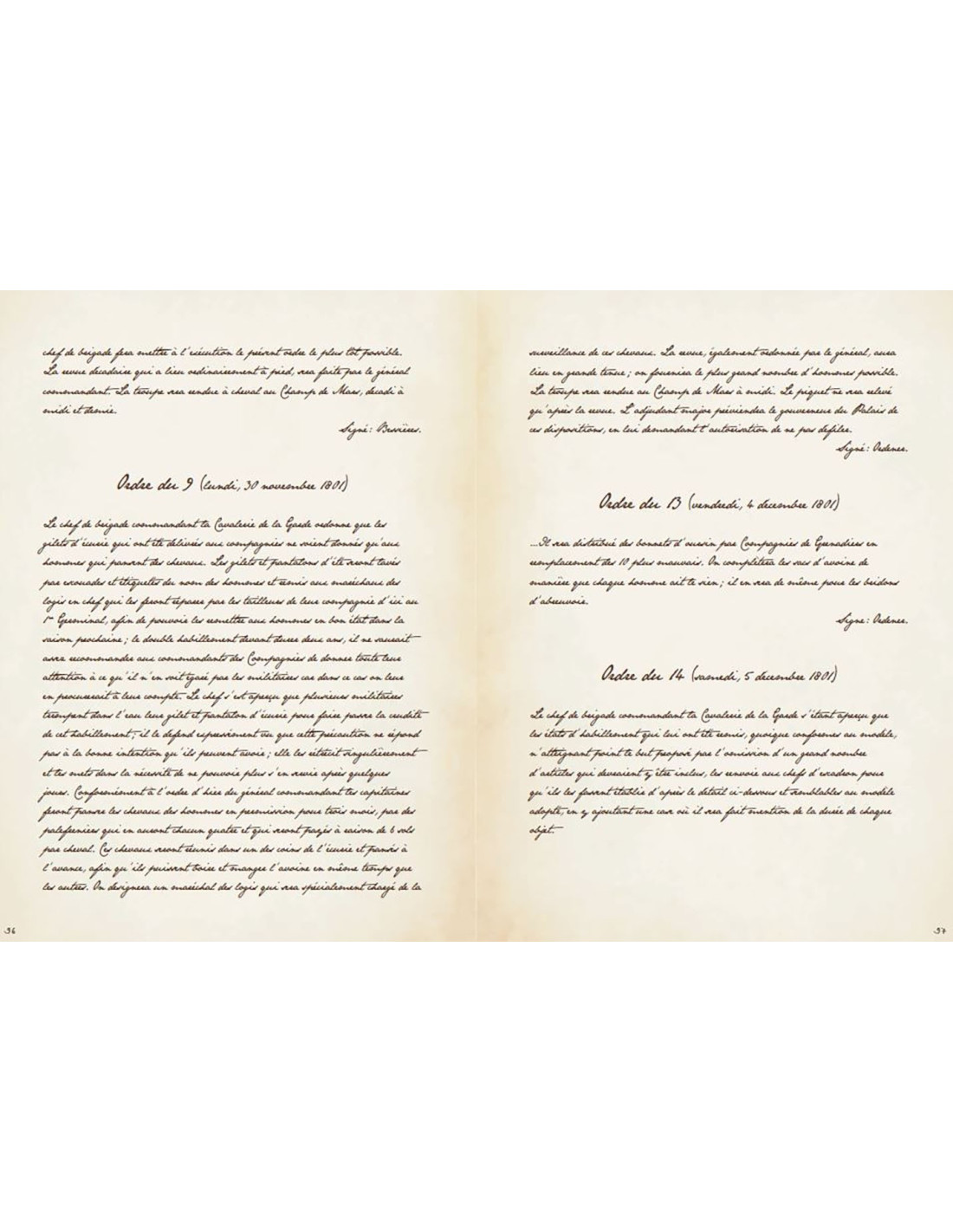
In 1910, the painter Ernest Fort took up and illustrated this text with 26 watercolours presenting and illustrating the various dress orders indicated in the notebooks, enabling a rapid visualisation of the practical application of the orders. In publishing these notebooks, we have respected the occasionally approximate turns of phrase used in the original text, as well as certain words no longer in use today; we have simply allowed ourselves a few spelling corrections and verified the correct chronology of the texts. What follows begins with a historical chronology, covering Bonaparte's situation and certain events set against the dates cited in the notebooks. This work will allow the reader to closely follow the unit's schedule in relation to the political life of the country.
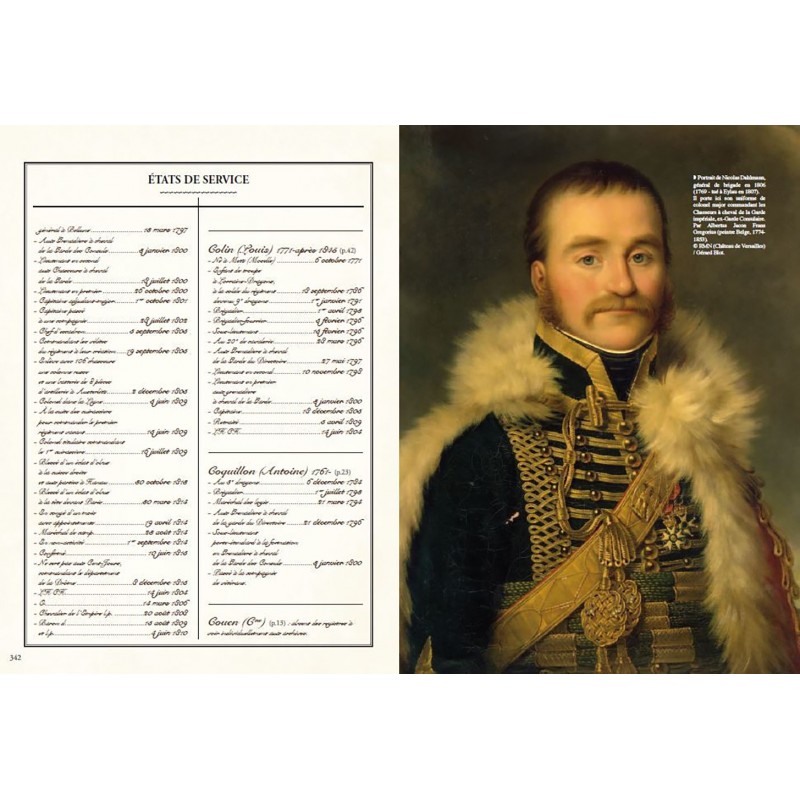
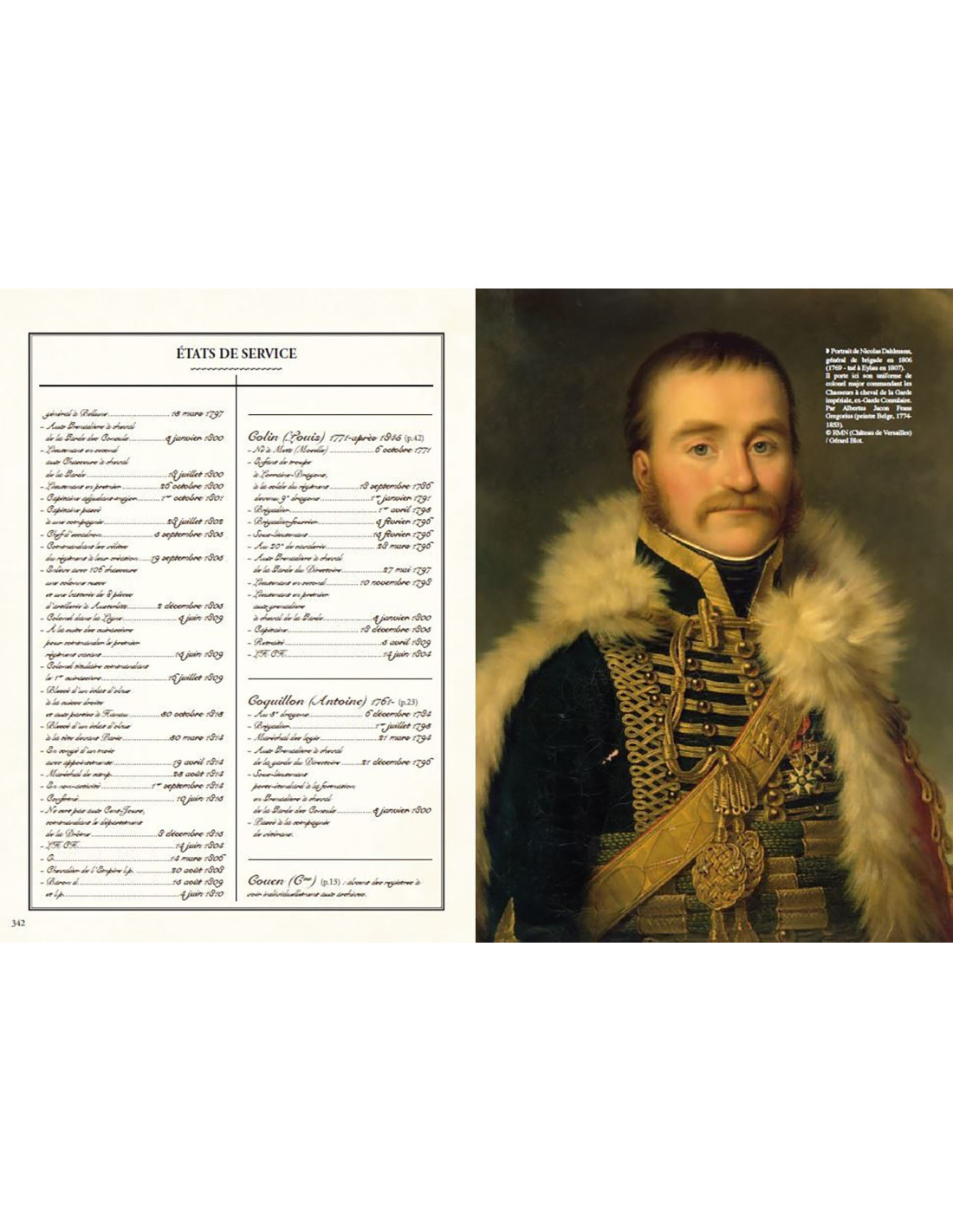
We will then present a retrospective of the various decrees and orders concerning the cavalry of the Garde des Consuls, these texts supplementing the contents of the notebooks with official information. We will continue this publication by providing the service records of the officers mentioned in the notebooks: it should be noted that there are some gaps, as the war archives do not hold (or no longer hold) the files of certain military personnel.
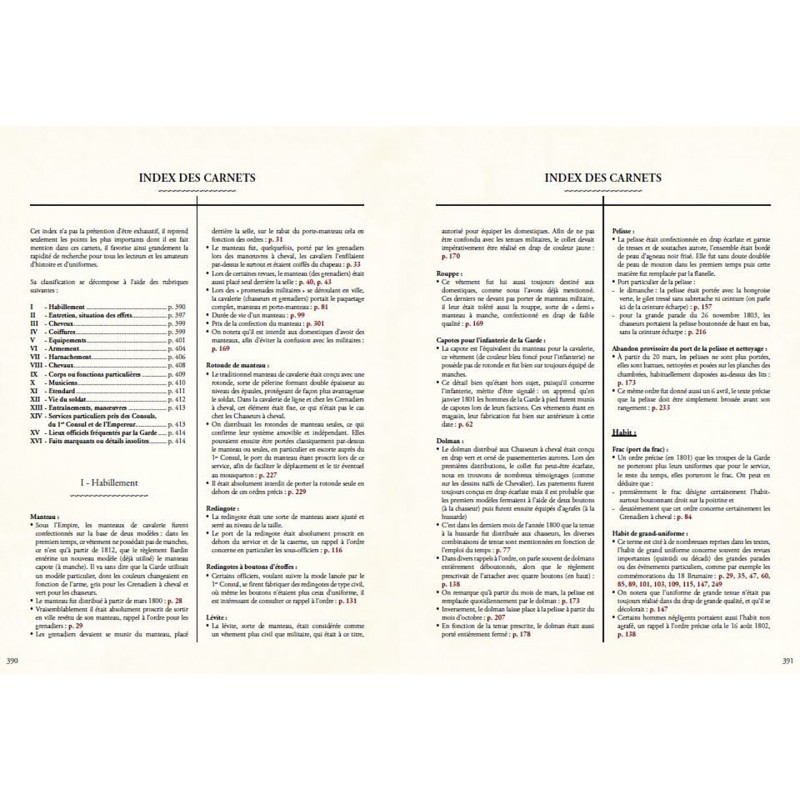
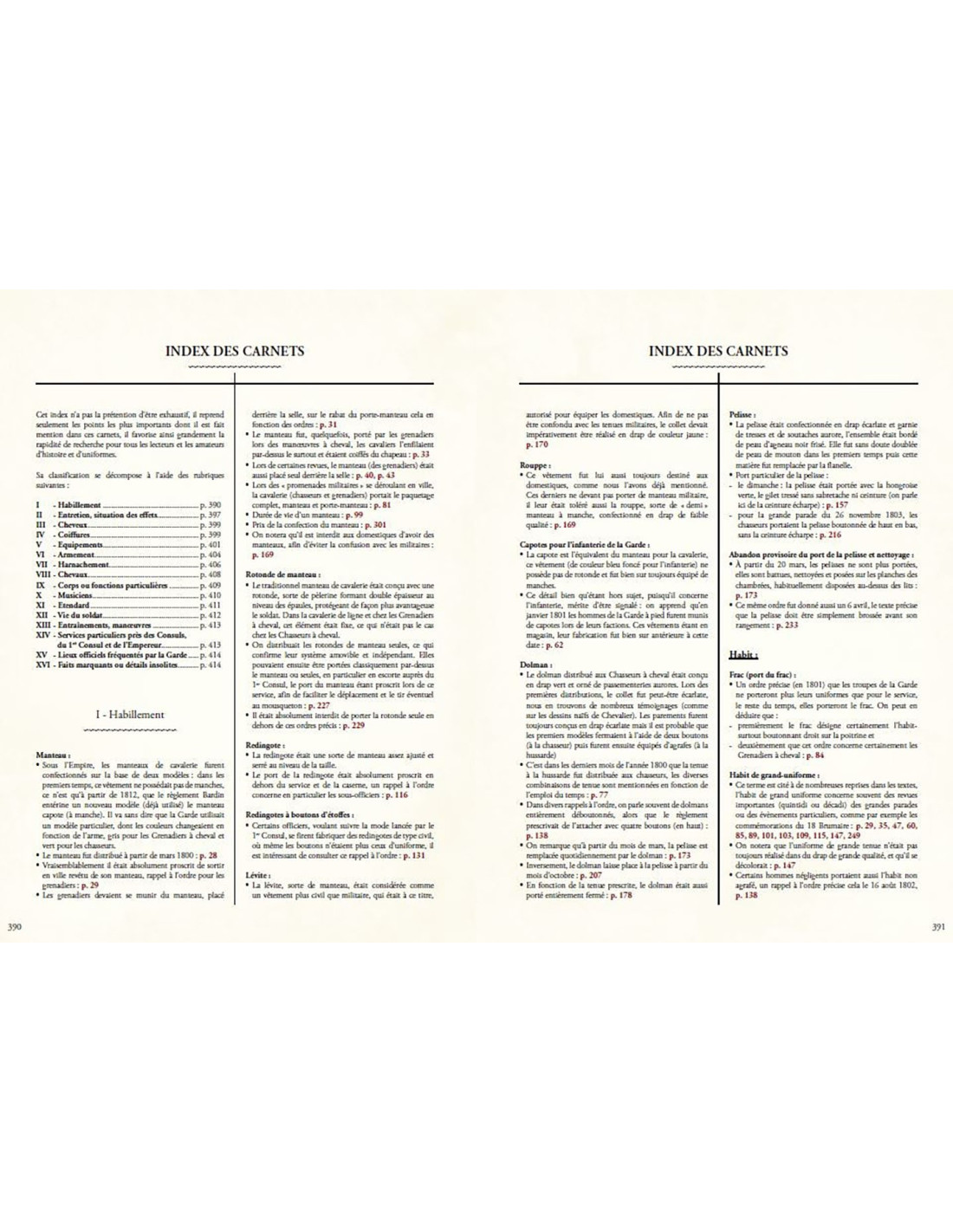
Preface by Michel Kerautret, over 400 pages of previously unpublished documentation, original illustrations, service records and index.
Limited edition of 250 copies