- SUMMER SALE 2026 Massive clearance
-
Bookshop
Publisher
- FORGOTTEN BATTLES HISTORICONE
- CARAKTERE
- EPOPÉES - SABRETACHE
- ETAI
- HEIMDAL
- LAVAUZELLE
- LES BELLES LETTRES
- HISTOIRE & COLLECTIONS
- LELA PRESSE
- L'ESCADRON EDITIONS
- NIMROD
- MARANES EDITIONS
- NUTS & BOLTS
- OREP
- OVERLORD PRESS
- PAQUET
- PIERRE DE TAILLAC
- PERRIN
- PEROTTI - PP CONCEPT
- REGI-ARM MEMORABILIA
- SERVICE HISTORIQUE DE LA DEFENSE (SHD)
- YSEC
Theme- 2ND ARMORED DIVISION
- ARMS & ARTILLERY
- AUTOMOBILIA
- AVIATION
- BATTLES
- BIOGRAPHIES
- DOCTRINES - GEOPOLITICS
- FORTIFICATIONS
- HISTORY
- SCALE MODELS
- NAVY
- MILITARIA
- FASHION, STYLE & CLOTHING
- RECIPES & COOKING
- REGIMENTAL
- RESISTANCE
- SECRET SERVICES & SPECIAL FORCES
- SURVIVAL - SELF DEFENSE - PREPAREDNESS
- UNIFORMS & EQUIPMENT
- CIVILIAN VEHICLES
- MILITARY VEHICLES
- CIVILIAN LIFE
-
Vintage Fashion
Other Brands
-
Second Hand
-
- Plein Air -
BAREBONES - Surplus
-
Gift
Cards - Blog
- Our Website
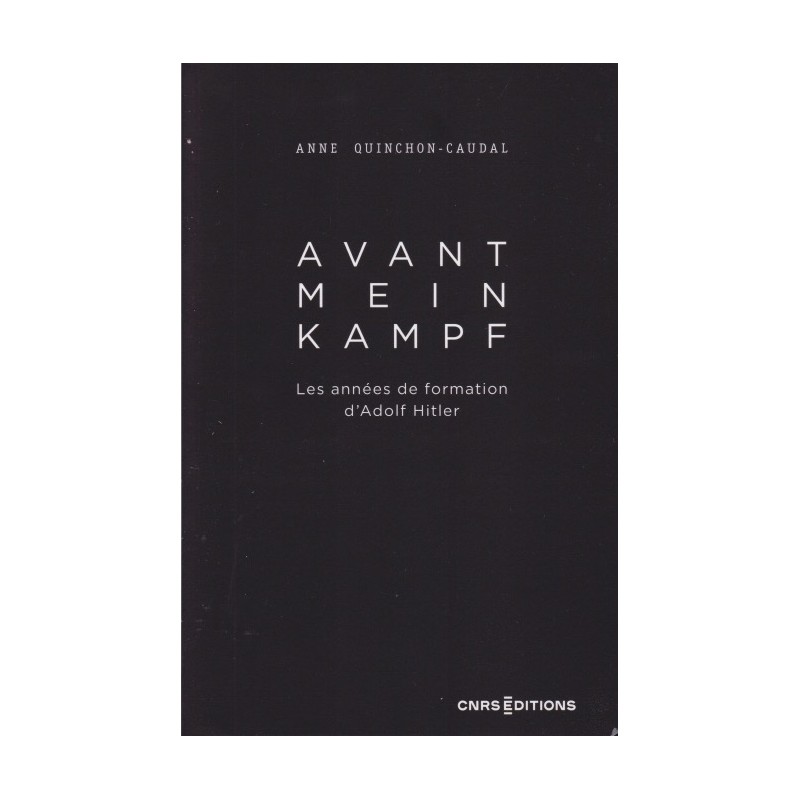
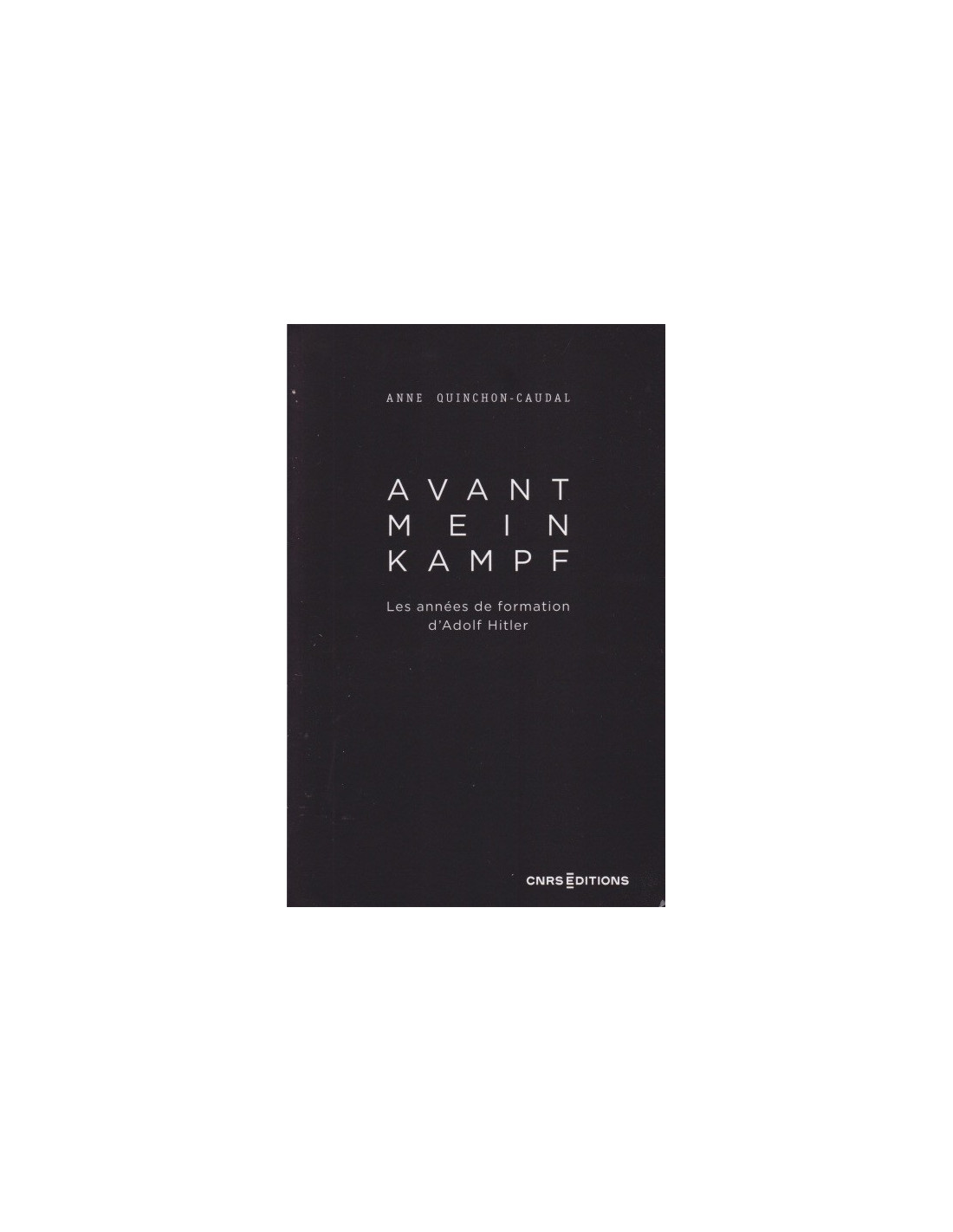
BEFORE MEIN KAMPF - The Formative Years of Adolf Hitler
In Mein Kampf, the autobiography he wrote in 1924–1925, Hitler presents himself as a perfect self-taught man with a fully formed worldview. Yet the man in his thirties who entered politics at the end of the First World War had no fixed opinions, nor even strong antisemitic convictions.
Drawing on Hitler's earliest texts — some translated here for the first time — Anne Quinchon-Caudal traces the formative years of this soldier who, from 1919 onwards, found a second family within the German Workers' Party. This party maintained more or less close ties with a nebula of nationalist and racist ideologues who sought to defend the interests of the "authentic" German people against a multitude of enemies supposedly bent on destroying Germanness.
It was this milieu that provided Hitler with the language of his propaganda — words that resonated with the situation of a broad section of the population: a population impoverished by war and outraged by its consequences, which the politician harangued with ever-increasing radicalism at National Socialist Party rallies. But it was above all in this milieu that Hitler encountered the man who would become his intellectual mentor: the antisemitic writer Dietrich Eckart.
In this book, Anne Quinchon-Caudal offers a history of Hitlerian ideas and their evolution, from the end of the Great War to the failure of the Beer Hall Putsch in 1923.
"This work shows Hitler as a son, not an accident, of our modernity." Nicolas Patin, author of the preface
Secure Payment
Delivery
(+33) 01.79.75.05.50
You might also like