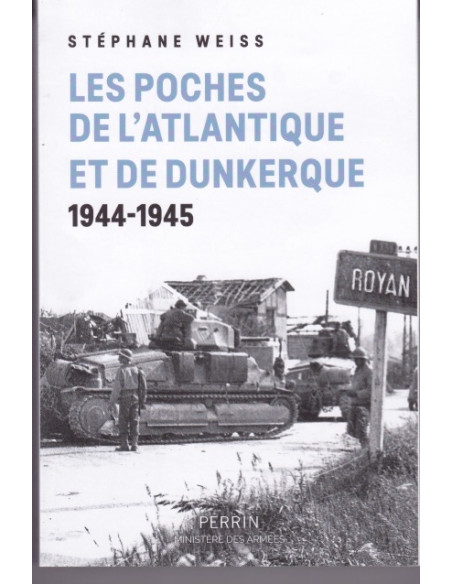
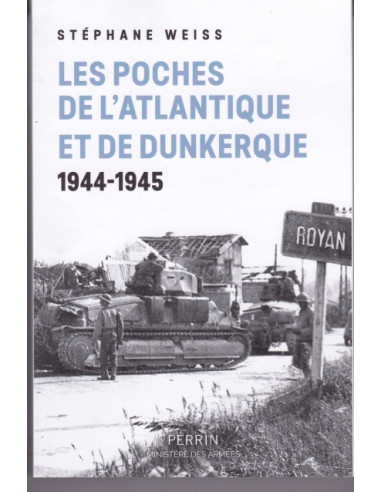
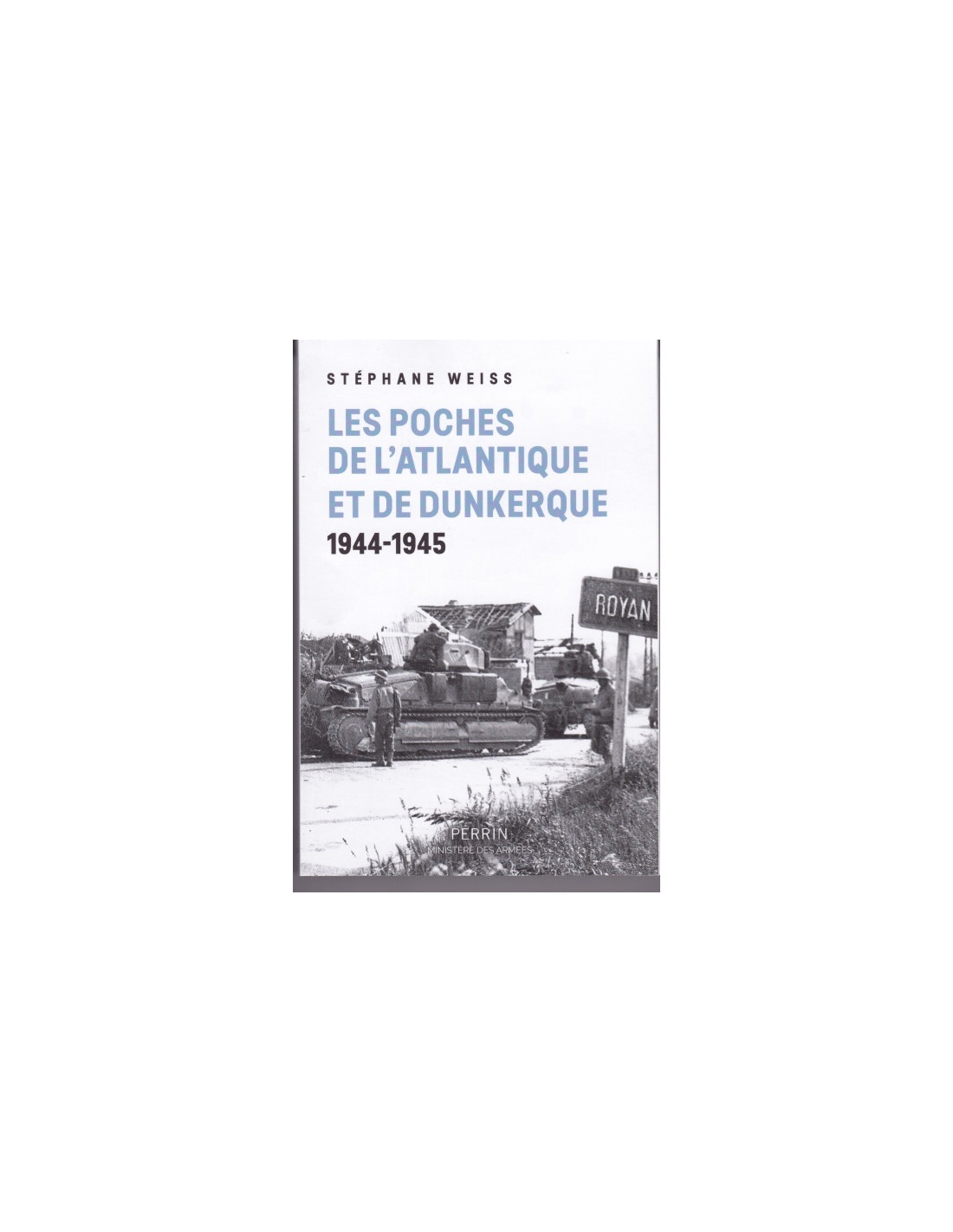
The Atlantic Pockets and Dunkirk. 1944–1945

The Atlantic Pockets and Dunkirk. 1944–1945

L20250107
In stock
€22.75
Publication

Forgotten battles and forgotten acts of heroism. The liberation of France cannot be reduced to the Normandy landings and the liberation of Paris. Far from the main front, the war continued until May 1945 around German redoubts strung along the French Atlantic coastline, from the Gironde estuary to Dunkirk. These redoubts, described as … Forgotten battles and forgotten acts of heroism. The liberation of France cannot be reduced to the Normandy landings and the liberation of Paris. Far from the main front, the war continued until May 1945 around German redoubts strung along the French Atlantic coastline, from the Gironde estuary to Dunkirk.

These redoubts, described by the Allies as pockets and by the Germans as fortresses, or Festungen, did not come about by chance. They stemmed from a strategy of blocking the deep-water ports along the French, Belgian and Dutch coasts, formulated by the enemy in January 1944 in order to deny the Allies a logistical foothold in the event of a landing on the continent. Thus, when the German high command ordered the retreat to the borders of the Reich on 17 August, garrisons entrenched themselves within thirteen Festungen, from Toulon to Dunkirk. However, this strategy quickly ran out of steam at the end of summer 1944, when the Allies seized the port facilities of Antwerp and Marseille. Some Festungen were stormed during the summer of 1944: while Toulon and Marseille held out for only a few days, Cherbourg, Saint-Malo, Brest, Le Havre, Boulogne and Calais were reduced to rubble of little use. As for the remaining pockets (Royan and the Médoc, La Rochelle, Saint-Nazaire, Lorient, Dunkirk and the Channel Islands), they posed no major threat to Allied supply lines.

From that point on, the "liberators" relegated them to the very bottom of their priorities, opting for a simple holding operation. Conversely, General de Gaulle incorporated these pockets into his agenda, envisaging large-scale operations there, which only materialised in April 1945 (Royan and the Médoc). In this context, the siege of the pockets, largely entrusted to French troops drawn from the Forces françaises de l'Intérieur, became a long wait, punctuated by sporadic local flare-ups. Far from the main front, these pockets were characterised as "forgotten fronts" from autumn 1944 onwards, a designation that has endured to this day, not without paradox: their memory rests on this very sense of oblivion. An exemplary historical investigation into the last fires of the war in the West.


Secure Payment


Delivery

  Call Us

(+33) 01.79.75.05.50

 
Author 1
Stéphane Weiss
Publication date
07/05/2025
Pages
432
Cover
Paperback
Format
14.3 cm × 21.2 cm
Language
French
Publisher
Perrin
EAN
9782262105129

You might also like

Customers who bought this product also bought: