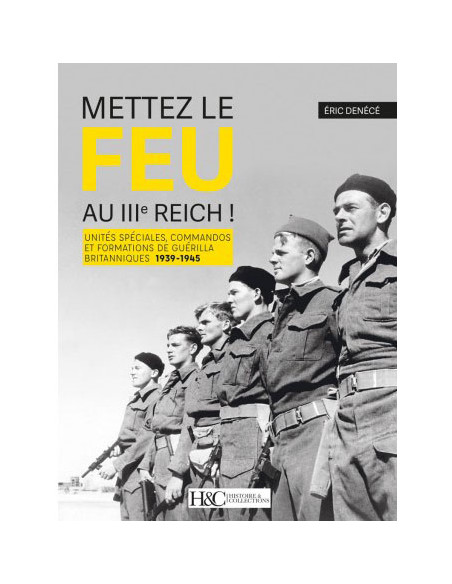
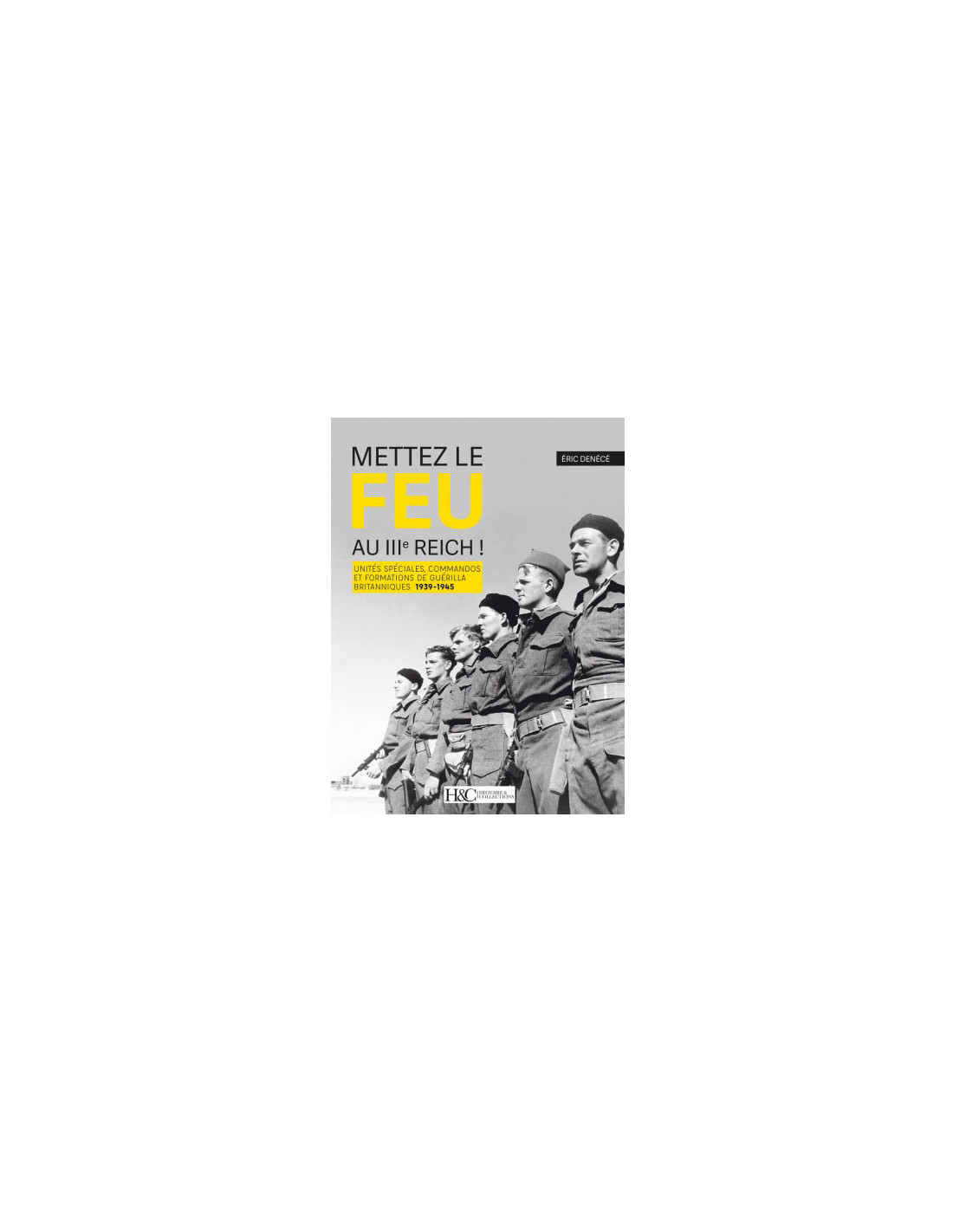
Set Europe Ablaze! - British Special Units and Commandos
Available June 16, 2025
The Second World War was the true laboratory for what we today call "special forces". While all the belligerents raised commando, sabotage or guerrilla units, it was the British who created the greatest number and often the most original. Indeed, His Majesty's Army has always displayed an innate talent for bringing together unorthodox soldiers within unconventional formations in time of war.
This is what it did from the summer of 1940, against Germany in Europe and North Africa, and against Japan in South-East Asia, by creating more than thirty "special" units — answering to the special services, the general staff or theatre commanders — tasked with supporting resistance movements, carrying out strategic demolition raids, or conducting difficult reconnaissance and assault missions in support of conventional military operations. Their strength varied considerably: some units numbered fewer than twenty men, others exceeded a thousand. Their modes of action were equally varied: on foot, airborne, nautical, motorised, etc.
Yet all shared a common purpose: to wage unconventional warfare against the Axis forces in which no holds were barred.
The author: former intelligence analyst and director of the Centre Français de Recherche sur le Renseignement (CF2R). Éric Denécé operated in Cambodia alongside the anti-communist resistance, and in Burma, protecting the interests of a French company against local guerrilla forces. He has also served as a consultant to the Ministry of Defence on the future of special forces.
He is the author of more than thirty works on intelligence, terrorism and special operations, including: La Nouvelle guerre secrète : unités militaires clandestines et opérations spéciales, co-authored with Alain-Pierre Laclotte, Mareuil éditions, Paris, 2021; Commandos et forces spéciales, Ouest France éditions, Rennes, 2011; Histoire secrète des forces spéciales (de 1939 à nos jours), Nouveau monde, Paris, 2007 (translated into Portuguese and Polish); Forces spéciales, l'avenir de la guerre, collection "L'art de la guerre", éditions du Rocher, Paris, 2002 (translated into Italian). His work earned him the 1996 Prize of the Foundation for Defence Studies (FED) and the Akropolis Prize 2009 (Institut des Hautes Études de Sécurité Intérieure).
Secure Payment
Delivery
(+33) 01.79.75.05.50
You might also like