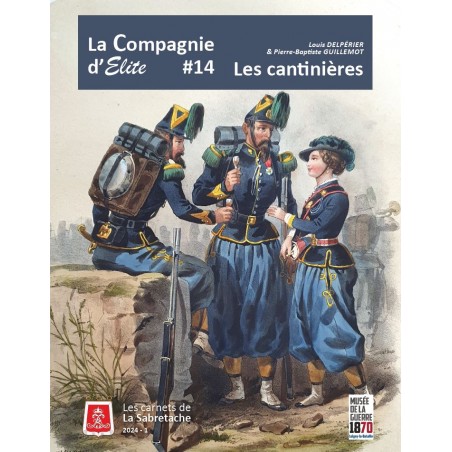
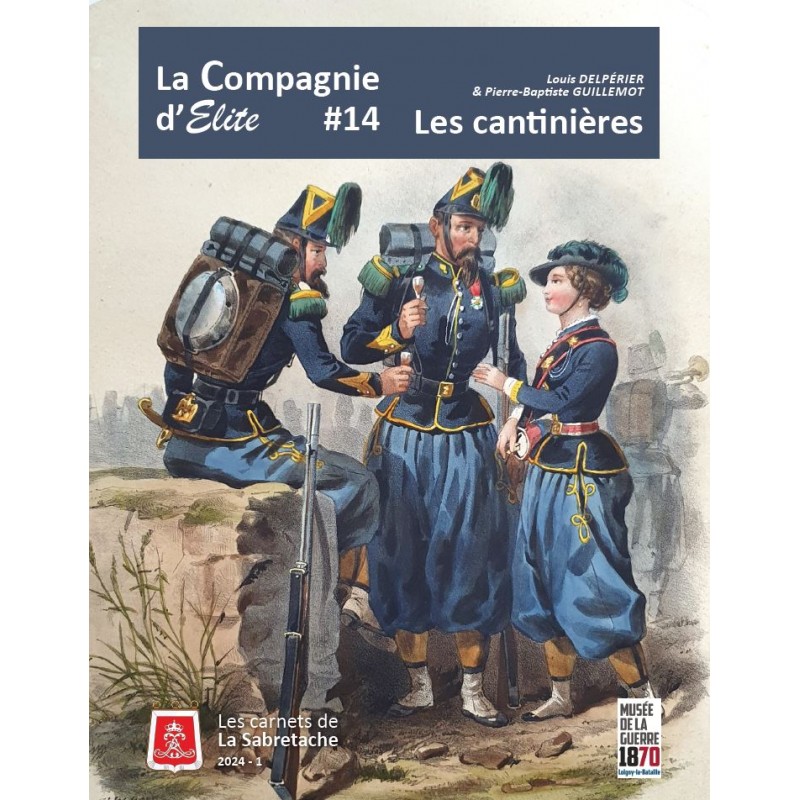
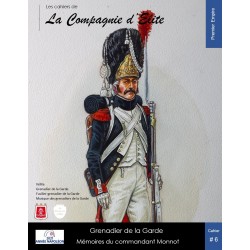
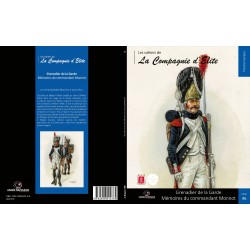
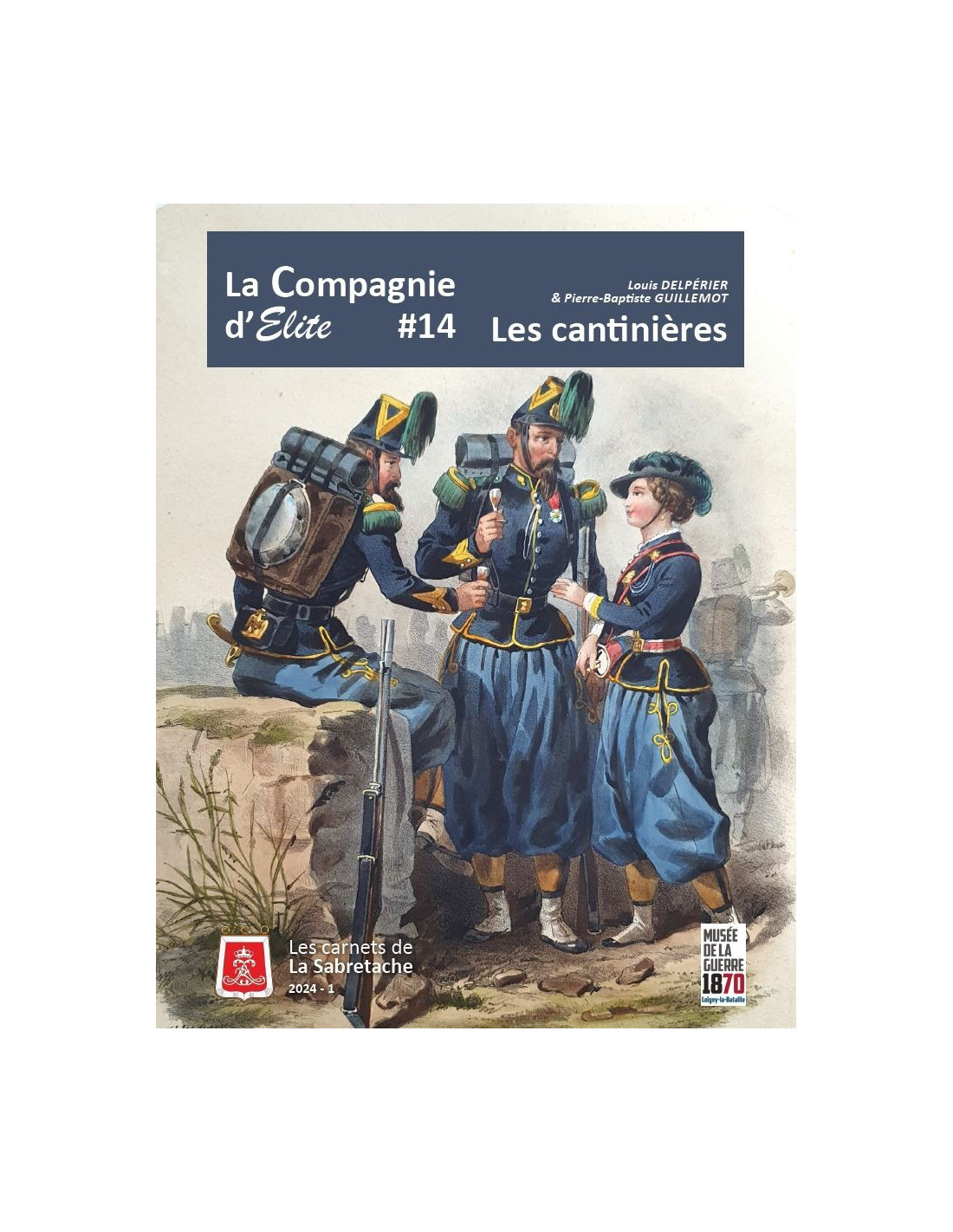
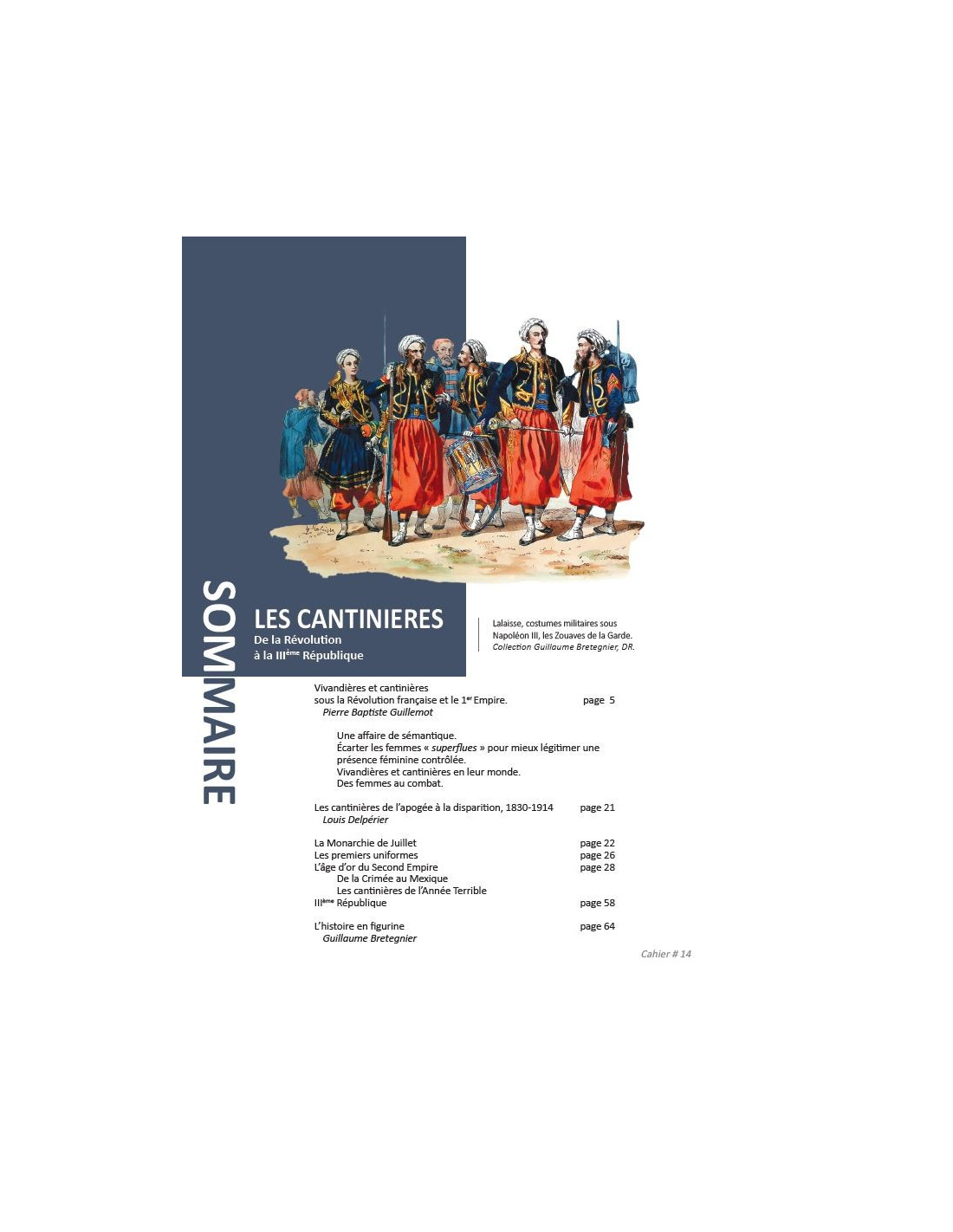
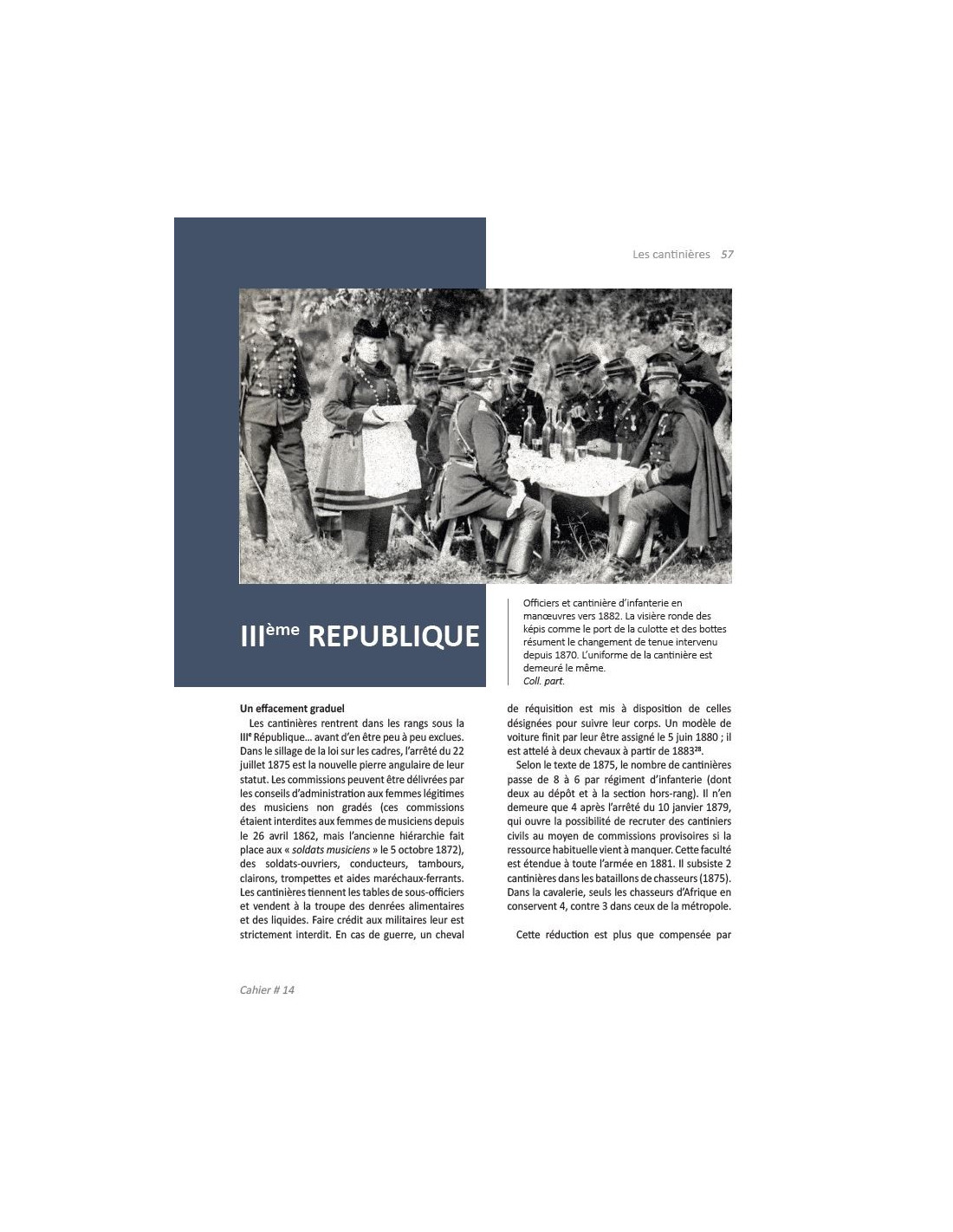
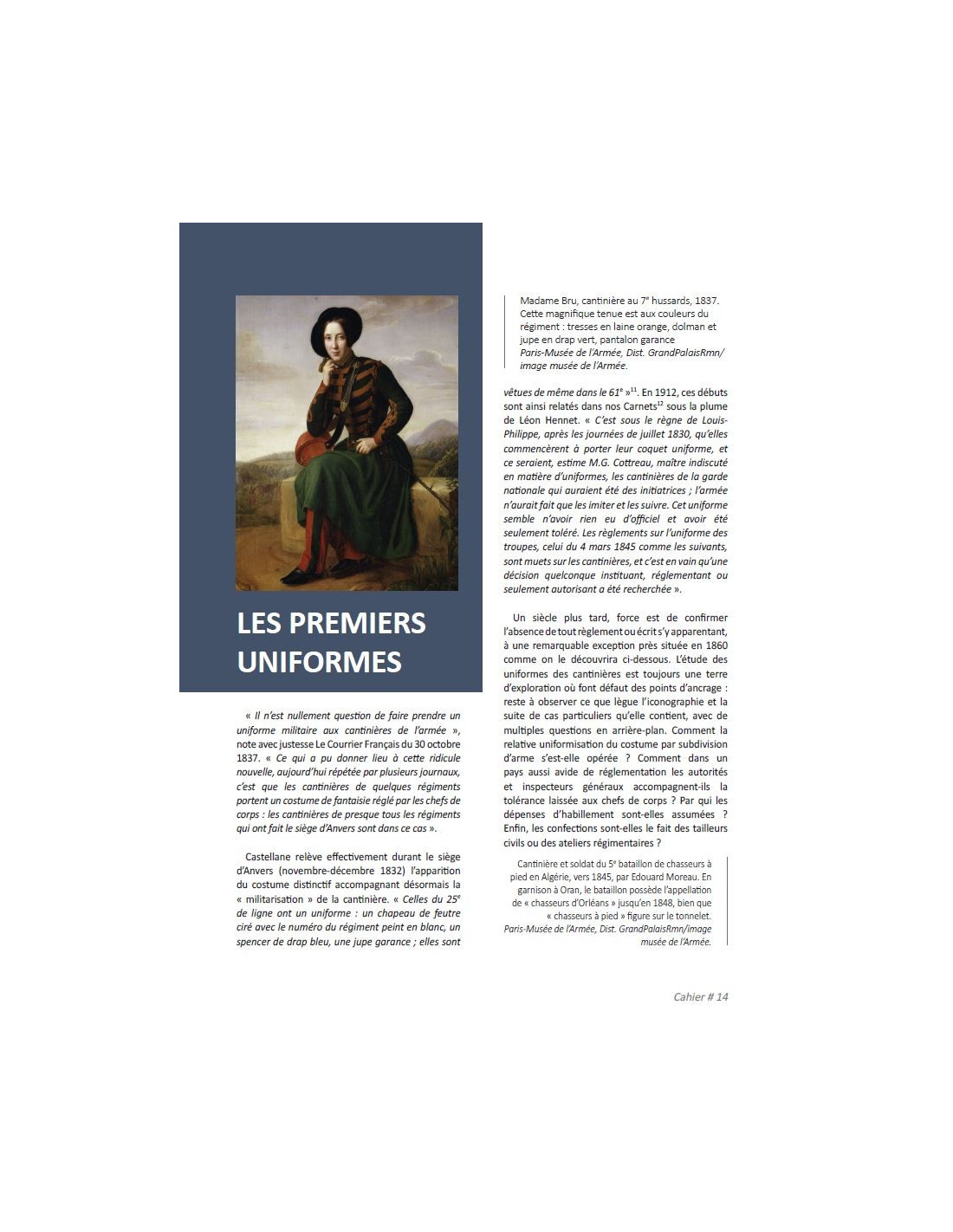
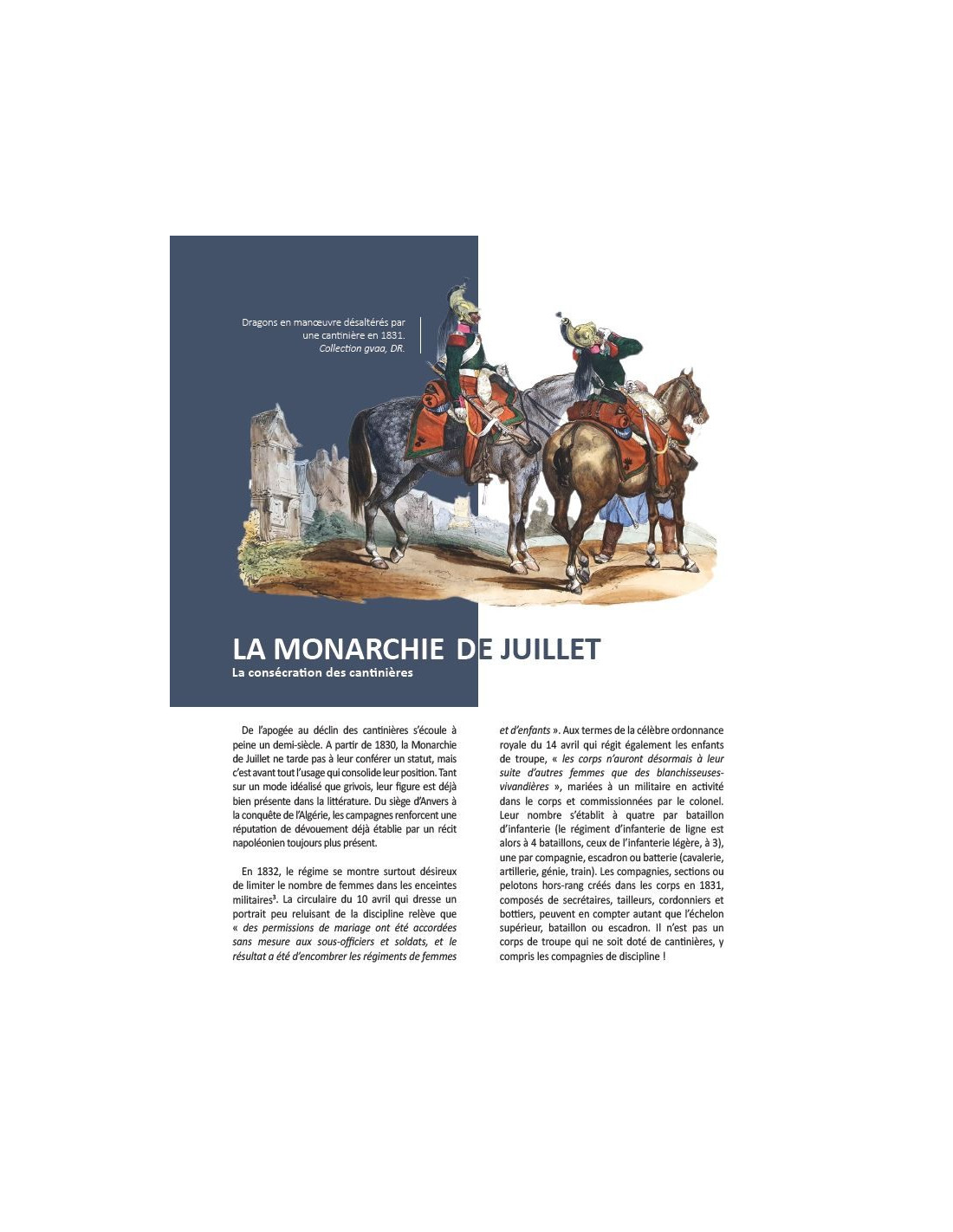
The Cantinières - From the Revolution to the Third Republic
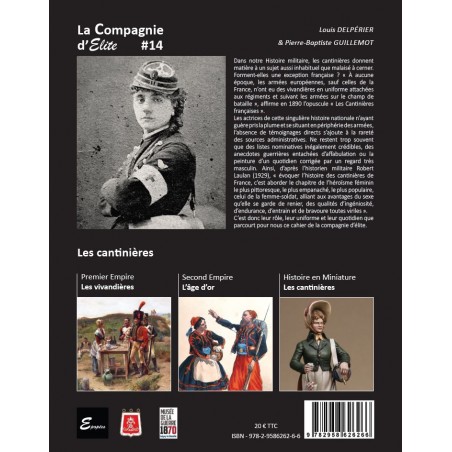
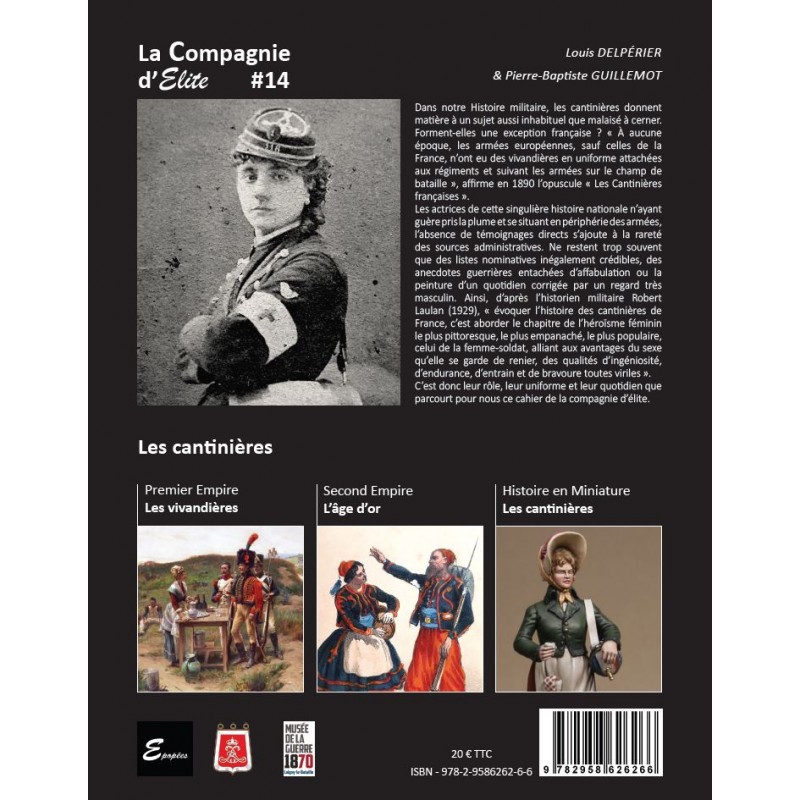
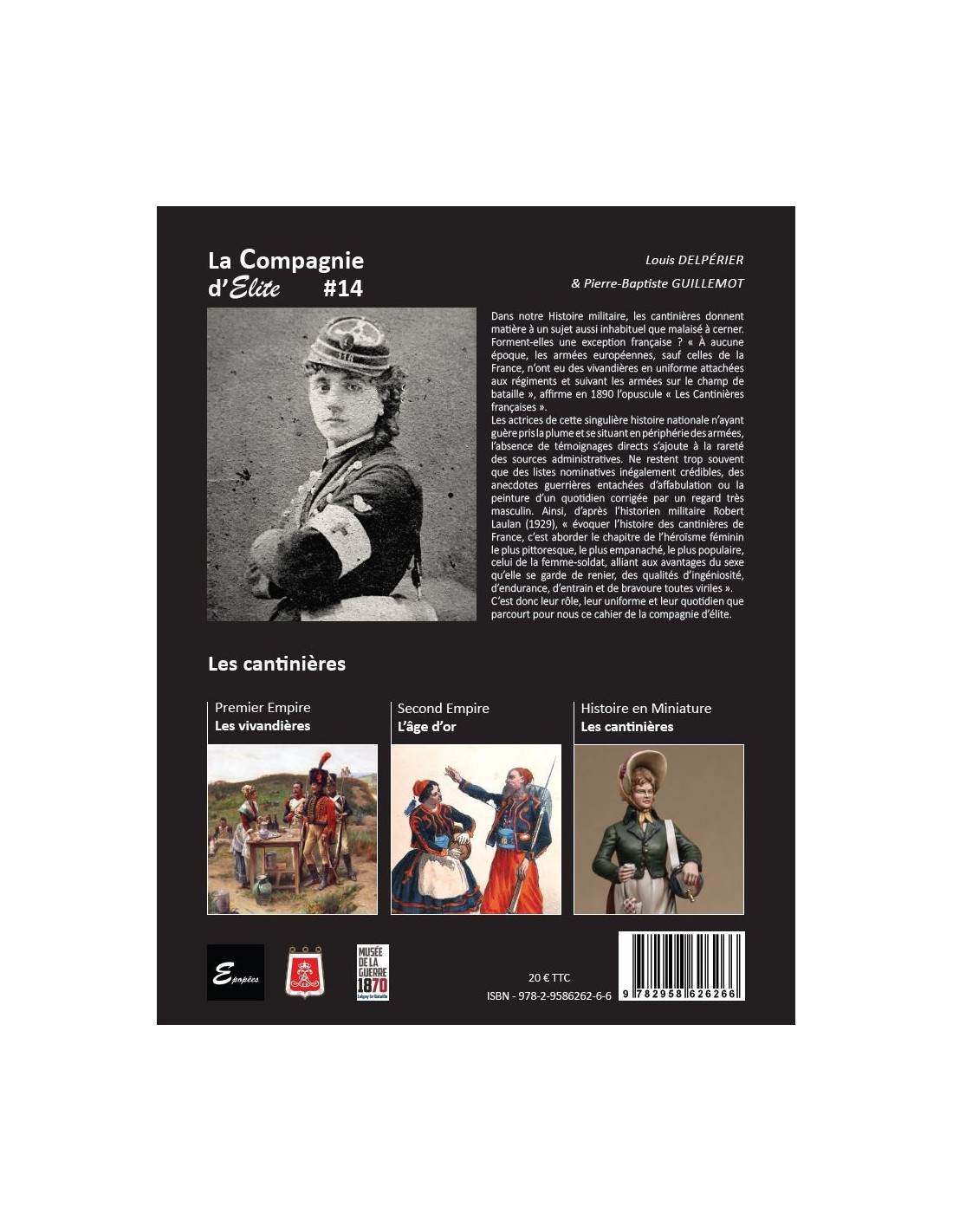
In our military history, the cantinières offer material for a subject as unusual as it is difficult to define. Do they represent a French exception?
"At no period did European armies, save those of France, have vivandières in uniform attached to regiments and following armies onto the field of battle," states the 1890 pamphlet "Les Cantinières françaises."
Since the women at the heart of this singular national history rarely took up the pen and remained on the periphery of the armies, the absence of direct testimonies compounds the scarcity of administrative sources. Too often all that remains are nominal lists of uneven reliability, battlefield anecdotes tainted by embellishment, or depictions of daily life filtered through a decidedly male gaze. Thus, according to military historian Robert Laulan (1929), "to evoke the history of the cantinières of France is to approach the most picturesque, most plumed, most popular chapter of female heroism — that of the woman-soldier, combining the advantages of the sex she takes care never to deny with qualities of ingenuity, endurance, vigour and courage that are entirely virile."
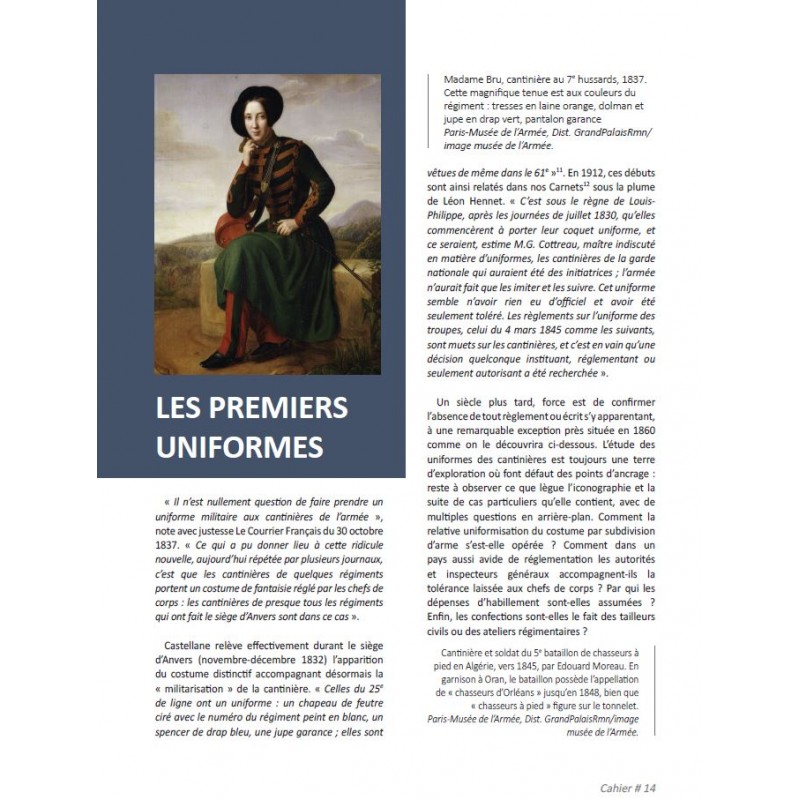
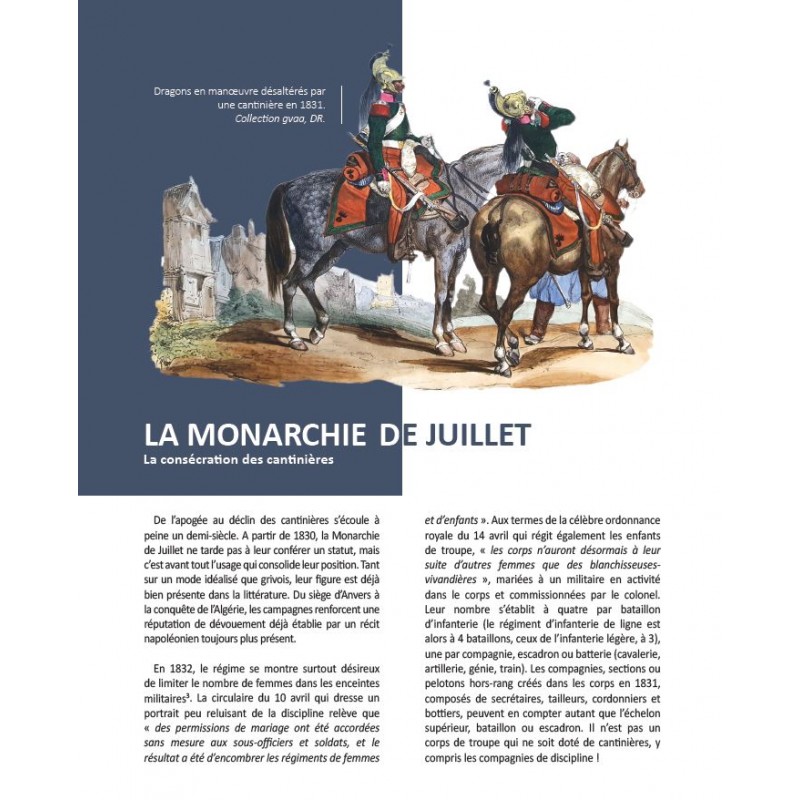
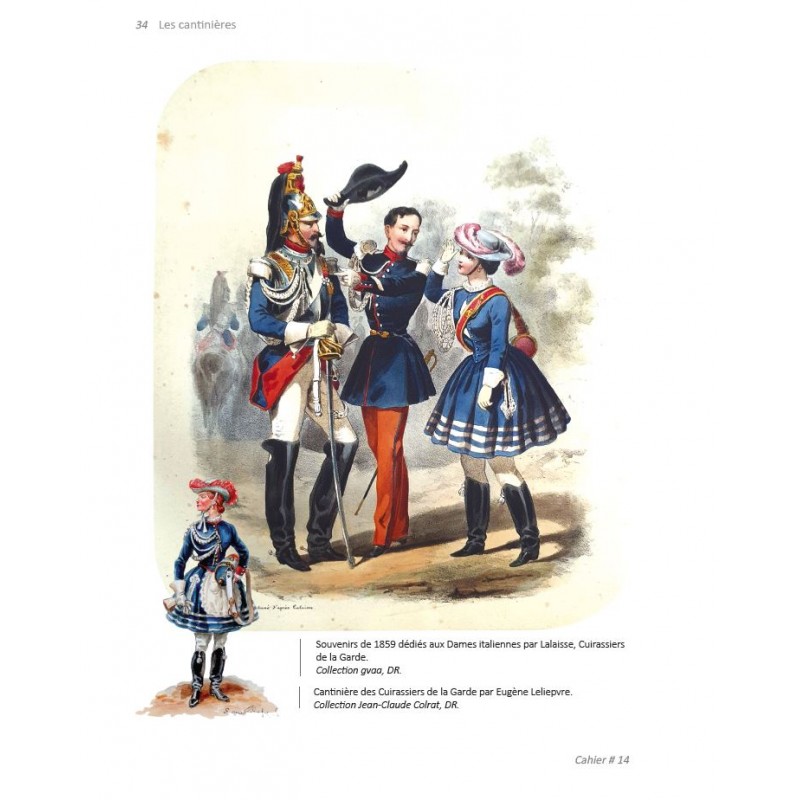
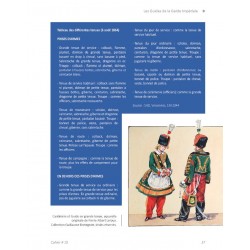
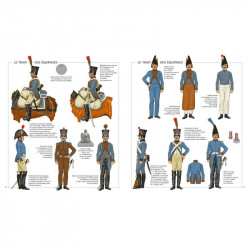
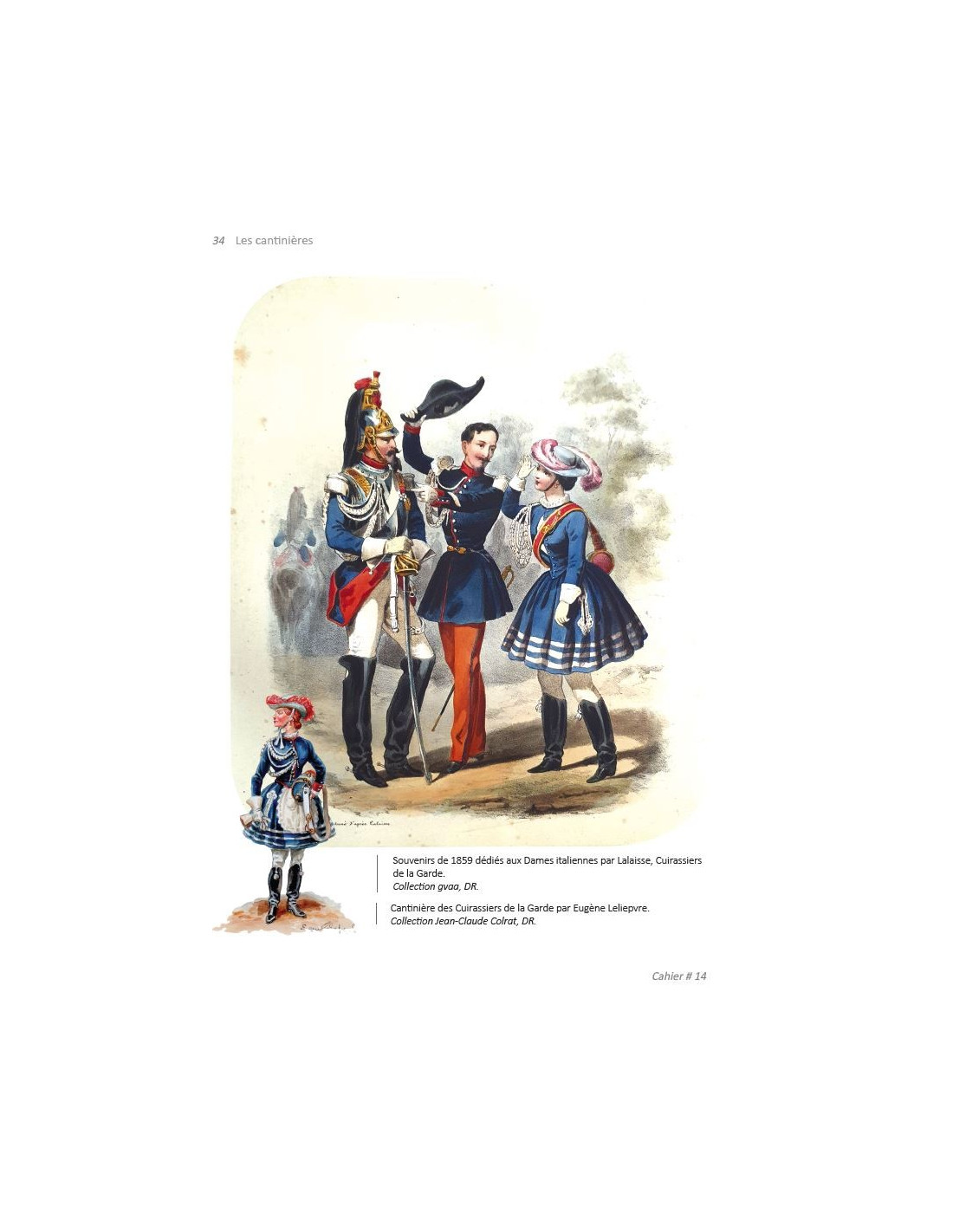
It is therefore their role, their uniform and their daily life that this cahier of the Compagnie d'Elite explores for us.
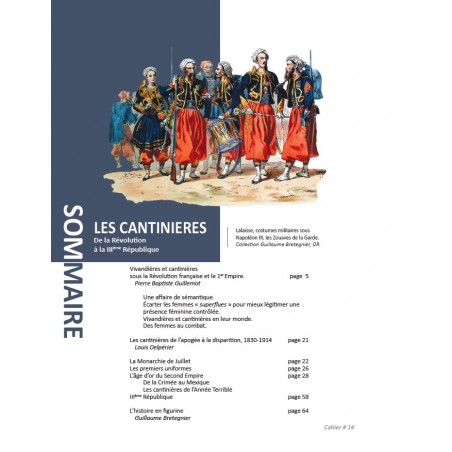
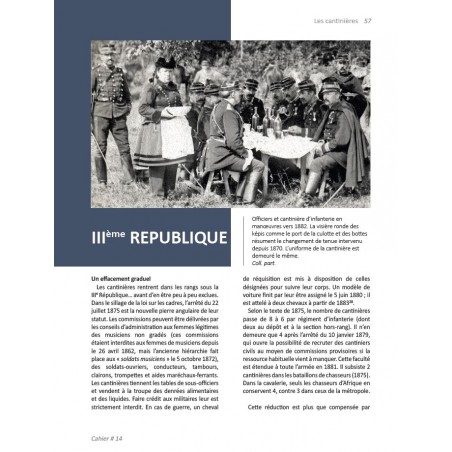
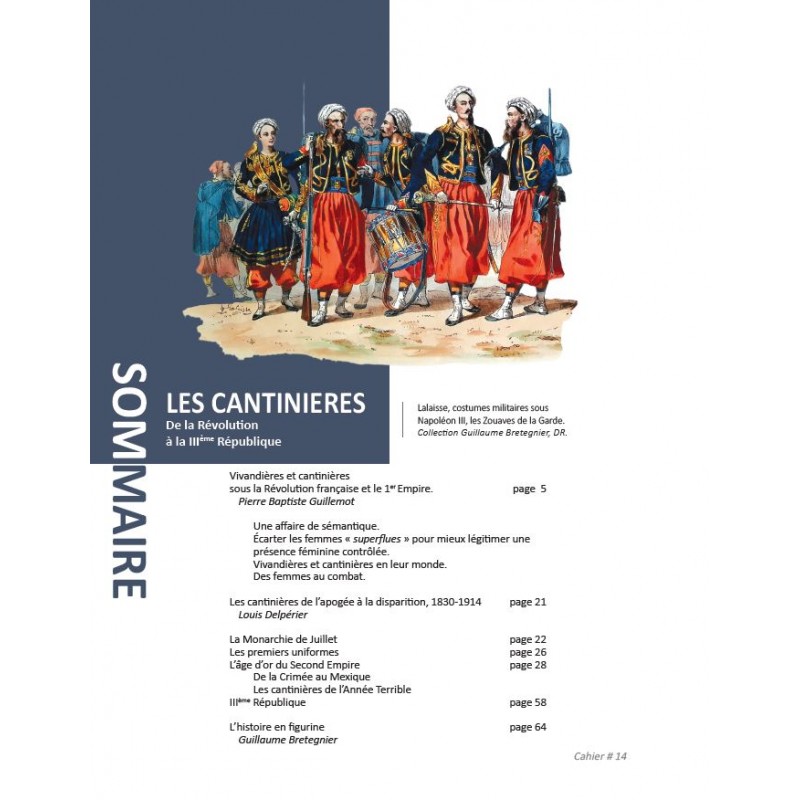
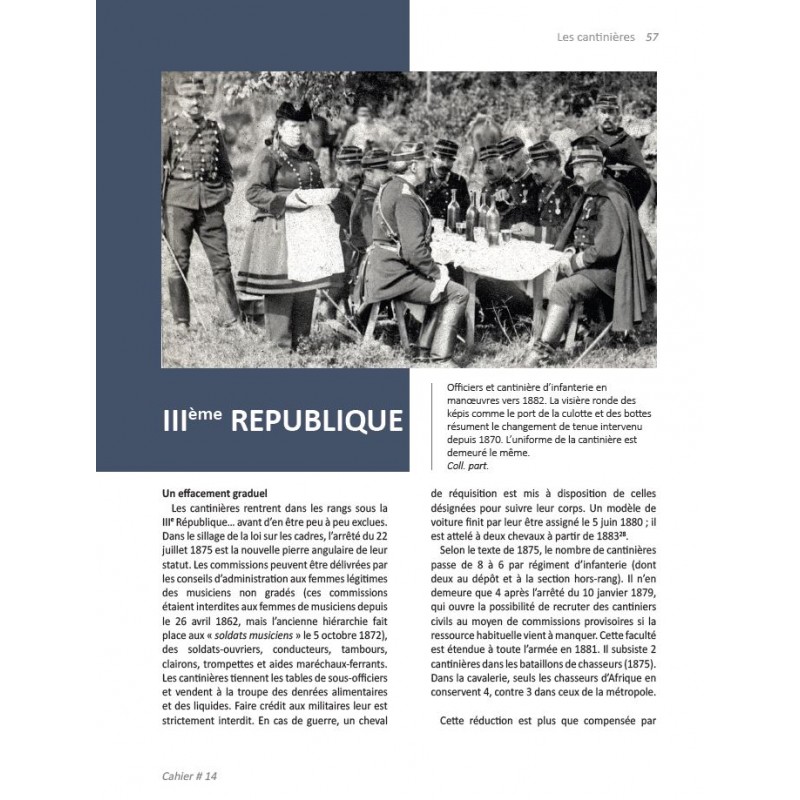
Pierre-Baptiste Guillemot will evoke the vivandières of the Revolution and the First Empire, while Louis Delpérier will trace their journey from the July Monarchy to the Third Republic, with special emphasis on the golden age of the First Empire.
Secure Payment
Delivery
(+33) 01.79.75.05.50
You might also like