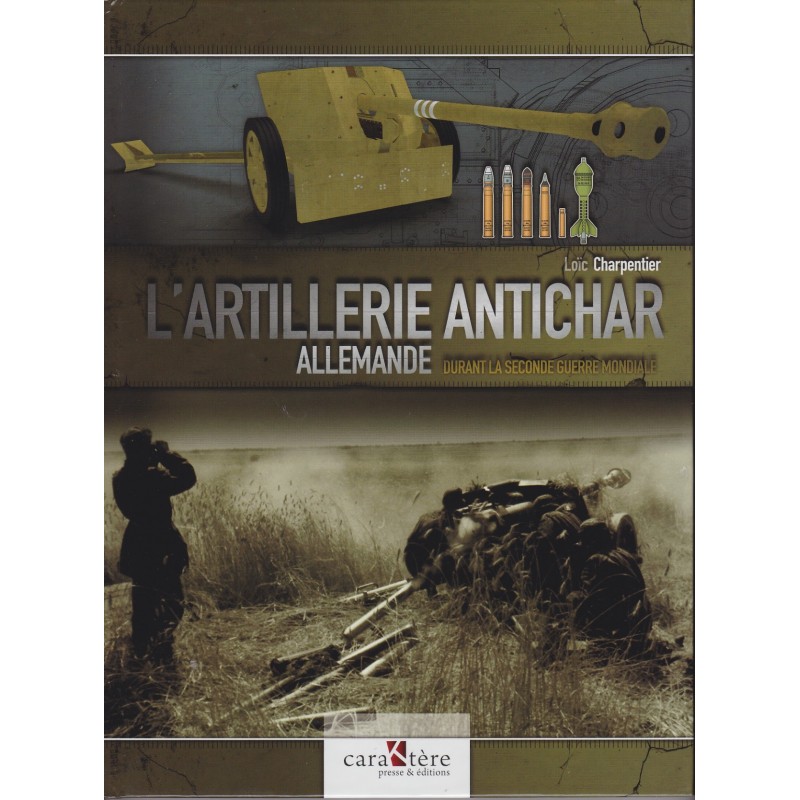
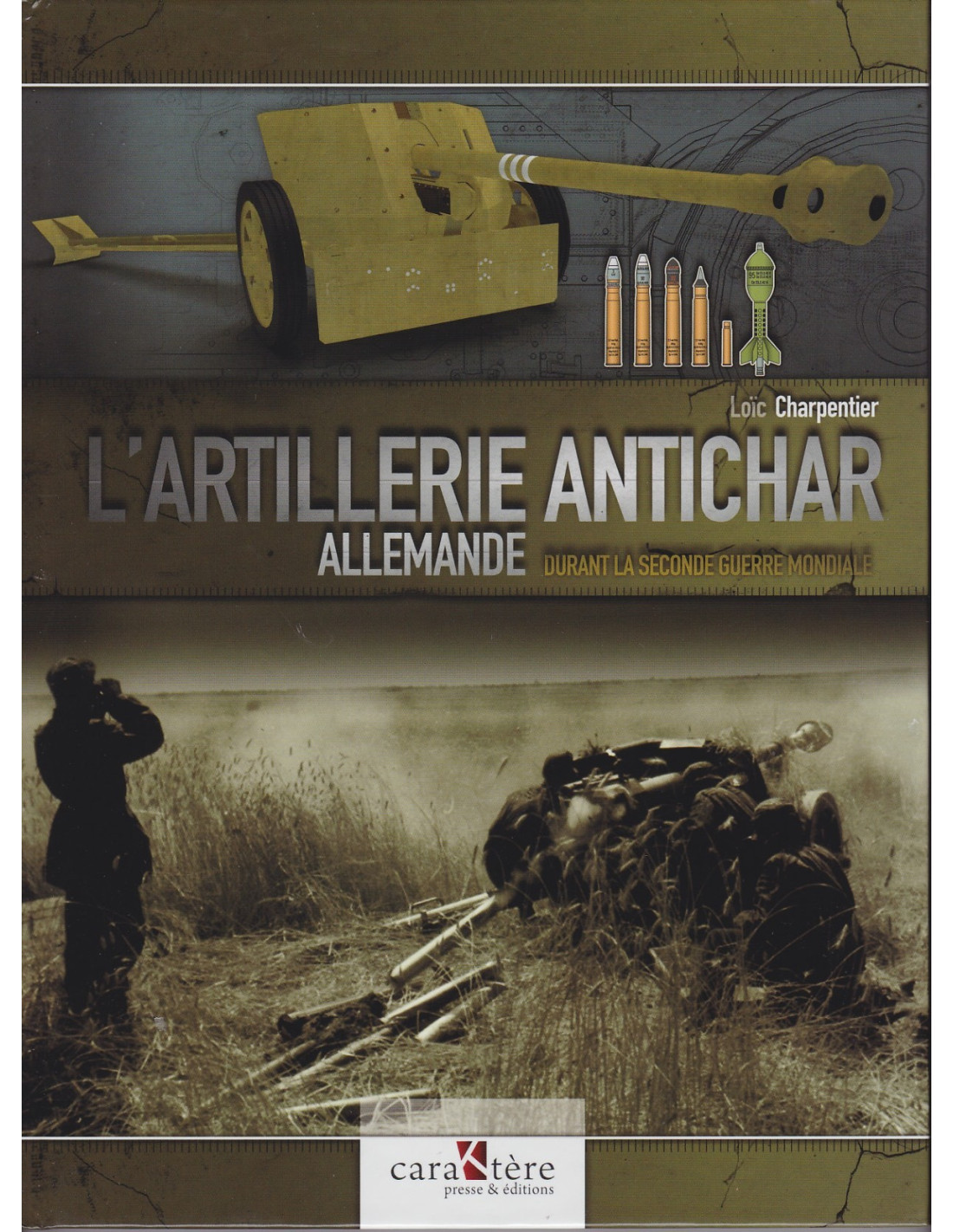
GERMAN ANTI-TANK ARTILLERY DURING THE SECOND WORLD WAR
On 15 September 1916, the first British tanks went into action against the enemy lines; the novelty of the threat compelled the German Army to design, in haste, weapons and ammunition capable of countering them. In the spring of 1918, distribution of the Tank-Gewehr — an anti-tank rifle of 13 mm calibre — began, while on the eve of the Armistice, the first anti-tank guns, the 3.7 cm Tankabwehrkanone, were put into service, though without time to complete the development of the appropriate ammunition.
In the interwar period, the use of armoured forces became established in all general staffs; in parallel, the anti-tank arsenal adapted to improvements made to tanks, which now benefited from, among other advances, better-quality armour — thicker and better-shaped. The anti-tank rifle had by then become merely a supplementary weapon used against lightly armoured vehicles, while the towed gun became widespread; however, its necessary employment in the front line required a weapon that was discreet and easily manoeuvred by its crew.
Secure Payment
Delivery
(+33) 01.79.75.05.50
On 1 September 1939, the 3.7 cm anti-tank gun in service with the Heer weighed less than 450 kg and its projectiles could penetrate 30 mm of armour at 500 metres. In the spring of 1940, this weapon showed its limitations against French Army tanks. From that point, a race began which, each year, saw a new calibre enter service — 5 cm in 1941, 7.5 cm in 1942, 8.8 cm in 1943 — with a constant increase in performance but also an unrelenting rise in weight.
In 1944, the ten tonnes of a projected 12.8 cm piece called into question the very raison d'être of the towed anti-tank gun. Towed pieces imply the existence of a substantial fleet of dedicated vehicles, especially when a specialised corps — that of the Panzerjäger — had been established and was supposed to be fully motorised. Yet even before entering the war, the German Army's vehicle fleet was already highly heterogeneous. Its early successes, both in the West and in the East, provided a welcome and substantial supplement — in the form of captured tractors as well as captured anti-tank pieces — while at the same time further complicating the management of ammunition and spare-parts supply.
- Author 1
- Loïc Charpentier
- Publication date
- March 2022
- Pages
- 160
- Illustrations
- Approx. 300 photos and profiles
- Cover
- Hardcover
- Format
- 21x28.5 cm
- Language
- French
- Publisher
- Editions Caraktère
- EAN
- 9782916403533
You might also like