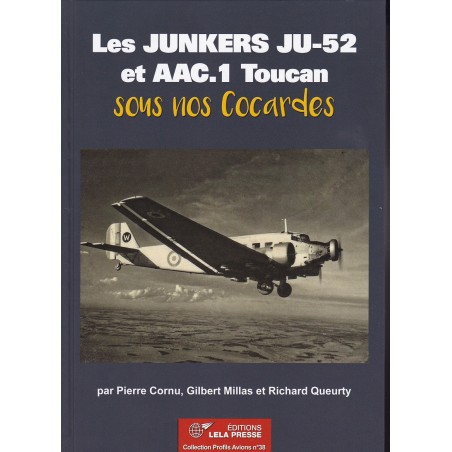
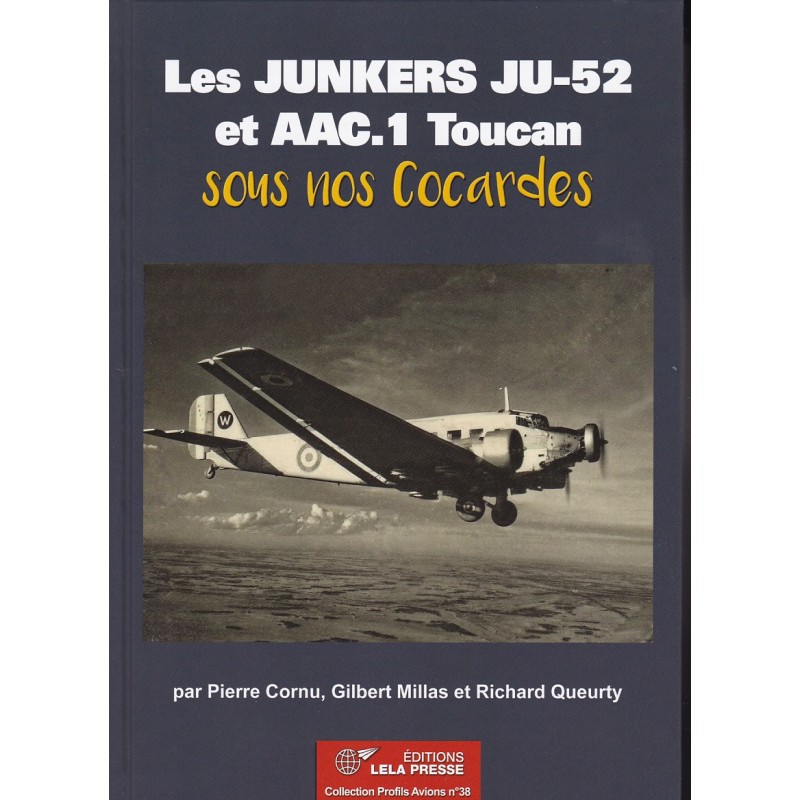
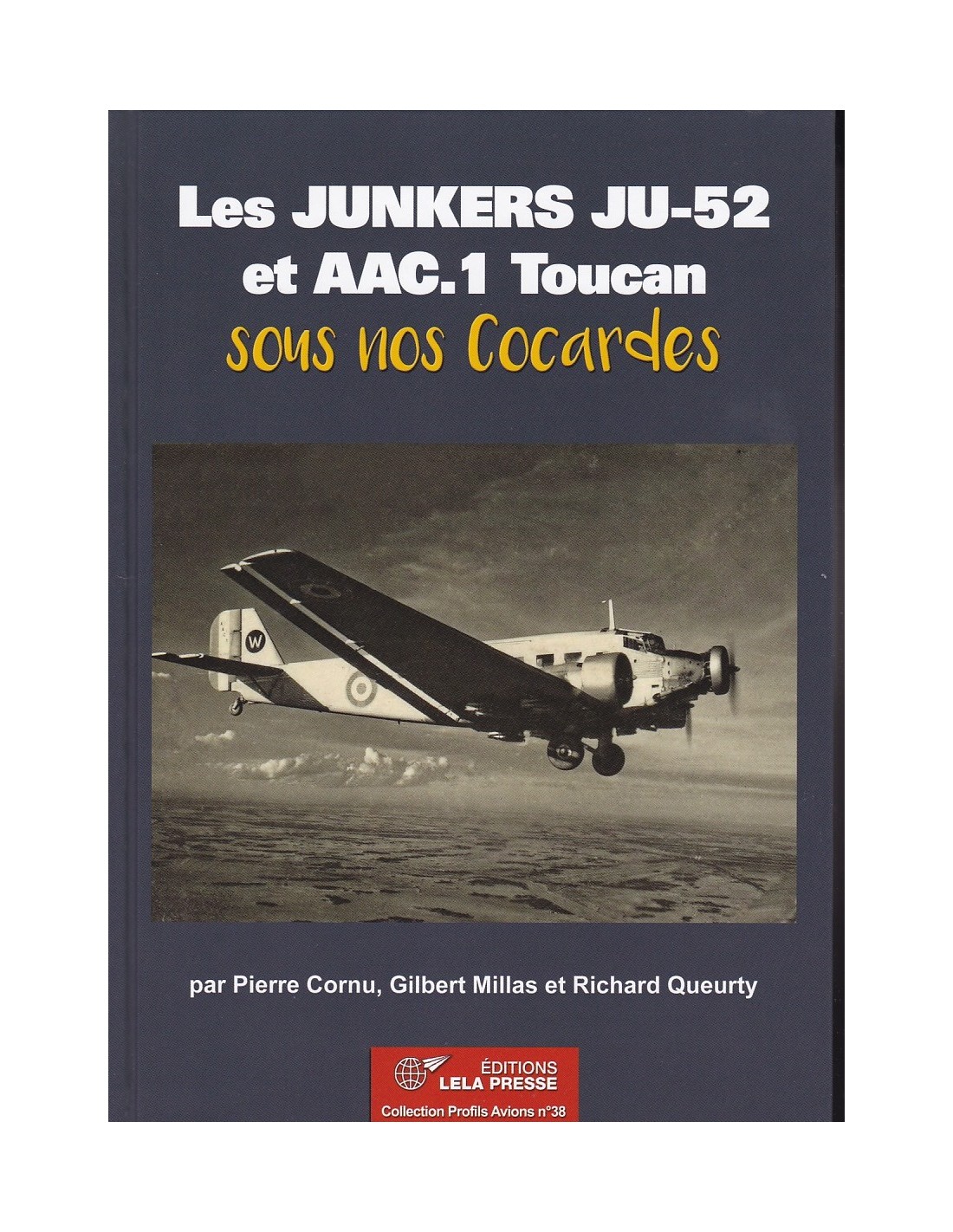
THE JUNKERS JU-52 AND AAC.1 TOUCAN UNDER OUR ROUNDELS
A German engineer, Hugo Junkers was the pioneer of all-metal aircraft construction and, from 1914 onwards, developed several models dedicated to air transport. As the culmination of this line of aircraft, the prototype of the Junkers 52, designed in 1930 at the request of the national carrier Lufthansa, was initially a single-engine aircraft; the Ju 52, in its definitive trimotor version, first flew in 1932, shortly before Hugo Junkers left his factories, which had passed under the control of the National Socialist regime.
Secure Payment
Delivery
(+33) 01.79.75.05.50
Thanks to its reliability and robustness, the Ju-52 achieved enormous success: built primarily in Germany in more than 4,200 examples, but also in Spain in 170 examples under the designation Casa 352, it flew in the colours of several airlines. Unfortunately, it is above all its military use by the Luftwaffe during the Spanish Civil War and then throughout the Second World War that made its distinctive silhouette and corrugated metal skin famous.
In France, under German occupation, the Amiot factories would go on to produce a further 538 aircraft. The Ju-52 is so well designed that in 1944, as the German armies retreated, the decision was taken to continue production under the designation AAC.1: the aim was to rapidly increase the airlift capacity of the armies then in the course of reconstruction. From the production lines of the Ateliers Aéronautiques de Colombes (AAC) came 415 AAC-1s christened "Toucan".
Until the 1960s, alongside the 38 Ju-52s seized from the defeated German armed forces, the Toucans served at every latitude where France was engaged: in Europe, repatriating populations displaced by the war; in Indochina, Madagascar and Africa. The Armée de l'Air was the primary operator, but the Aéronavale was also equipped with them. Air France and no fewer than seventeen French airlines, as well as certain government agencies, shared with the armed forces the experience of "Julie" — the nickname given by crews to the rugged trimotor.
It is the life of each of these aircraft under the roundels of the French Armée de l'Air and the Aéronavale that this work traces, extensively documented with the testimonies of those who flew in crew aboard "Julie" and illustrated by more than 800 photographs and 50 profiles. A reliable and robust aircraft of which nearly 5,400 examples were produced in Europe, the legendary trimotor well deserved to have the pages of its long history in French colours finally brought together in this book that pays it tribute.
- Cover
- Hardcover
- Publisher
- Lela Presse
You might also like