- SUMMER SALE 2026 Massive clearance
-
Bookshop
Publisher
- FORGOTTEN BATTLES HISTORICONE
- CARAKTERE
- EPOPÉES - SABRETACHE
- ETAI
- HEIMDAL
- LAVAUZELLE
- LES BELLES LETTRES
- HISTOIRE & COLLECTIONS
- LELA PRESSE
- L'ESCADRON EDITIONS
- NIMROD
- MARANES EDITIONS
- NUTS & BOLTS
- OREP
- OVERLORD PRESS
- PAQUET
- PIERRE DE TAILLAC
- PERRIN
- PEROTTI - PP CONCEPT
- REGI-ARM MEMORABILIA
- SERVICE HISTORIQUE DE LA DEFENSE (SHD)
- YSEC
Theme- 2ND ARMORED DIVISION
- ARMS & ARTILLERY
- AUTOMOBILIA
- AVIATION
- BATTLES
- BIOGRAPHIES
- DOCTRINES - GEOPOLITICS
- FORTIFICATIONS
- HISTORY
- SCALE MODELS
- NAVY
- MILITARIA
- FASHION, STYLE & CLOTHING
- RECIPES & COOKING
- REGIMENTAL
- RESISTANCE
- SECRET SERVICES & SPECIAL FORCES
- SURVIVAL - SELF DEFENSE - PREPAREDNESS
- UNIFORMS & EQUIPMENT
- CIVILIAN VEHICLES
- MILITARY VEHICLES
- CIVILIAN LIFE
-
Vintage Fashion
Other Brands
-
Second Hand
-
- Plein Air -
BAREBONES - Surplus
-
Gift
Cards - Blog
- Our Website
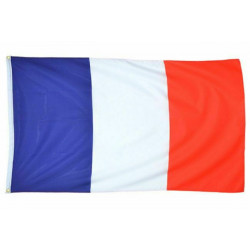
History of the Flag of France and Beyond
The history of a passion as ancient as it is unwavering. For all nations, the flag remains the most important and most powerful emblem in the minds of men, whether military or civilian. Did not Claudel say: " There are only two things to do with a flag: either brandish it at arm's length or press it passionately against one's heart "? Its history is ancient, and its symbolic power transcends every age.
Its evolution is marked by many stages, from what was known as the cape of Saint Martin to our tricolour flag, by way of the standards of the Romans and the Gauls, and through the banners granted at the time of the Crusades to the French — a red cross on a white ground; to the English, a blue cross; to the Flemish, a green cross on a white ground. Flags as such were not yet spoken of, but these " crusaders' banners " were imitated throughout Europe, and every monarch would quickly have his own.
It was ultimately the navy that would provide, by flying it on its warships from 1794, the first version of the tricolour flag that became definitive in 1812. Why is a national emblem ultimately adopted? What do the colours it bears symbolise? How does it build its legitimacy in the eyes of the French? It is to these questions, and many others, that this work — rich in anecdotes and written by a leading specialist in vexillology — provides answers.
Secure Payment
Delivery
(+33) 01.79.75.05.50
You might also like