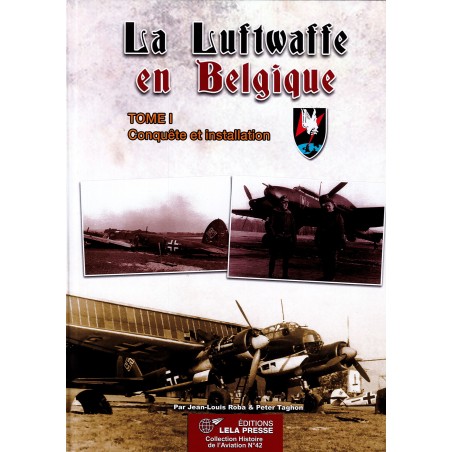
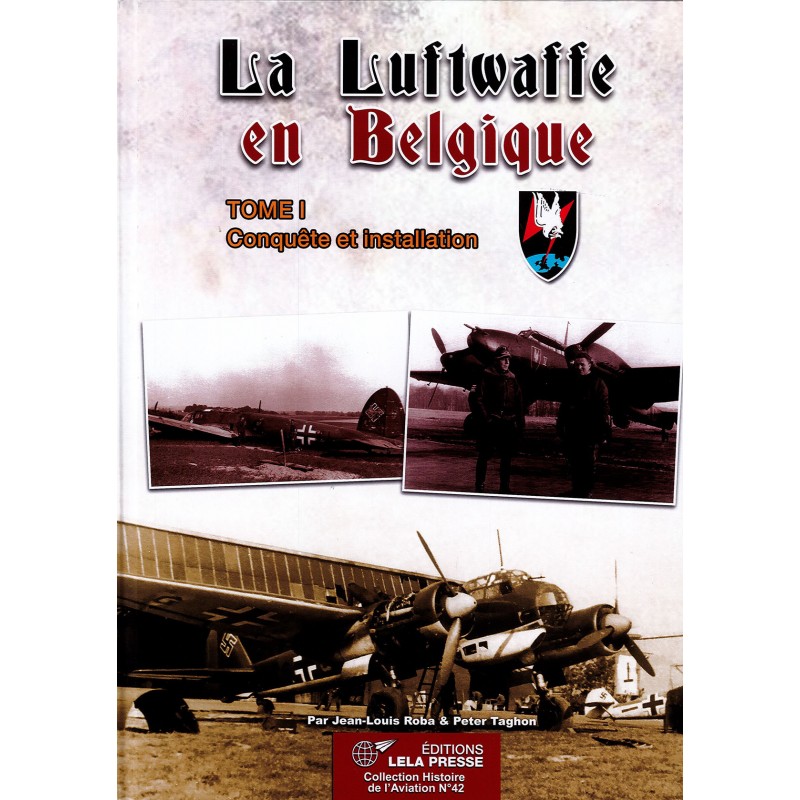
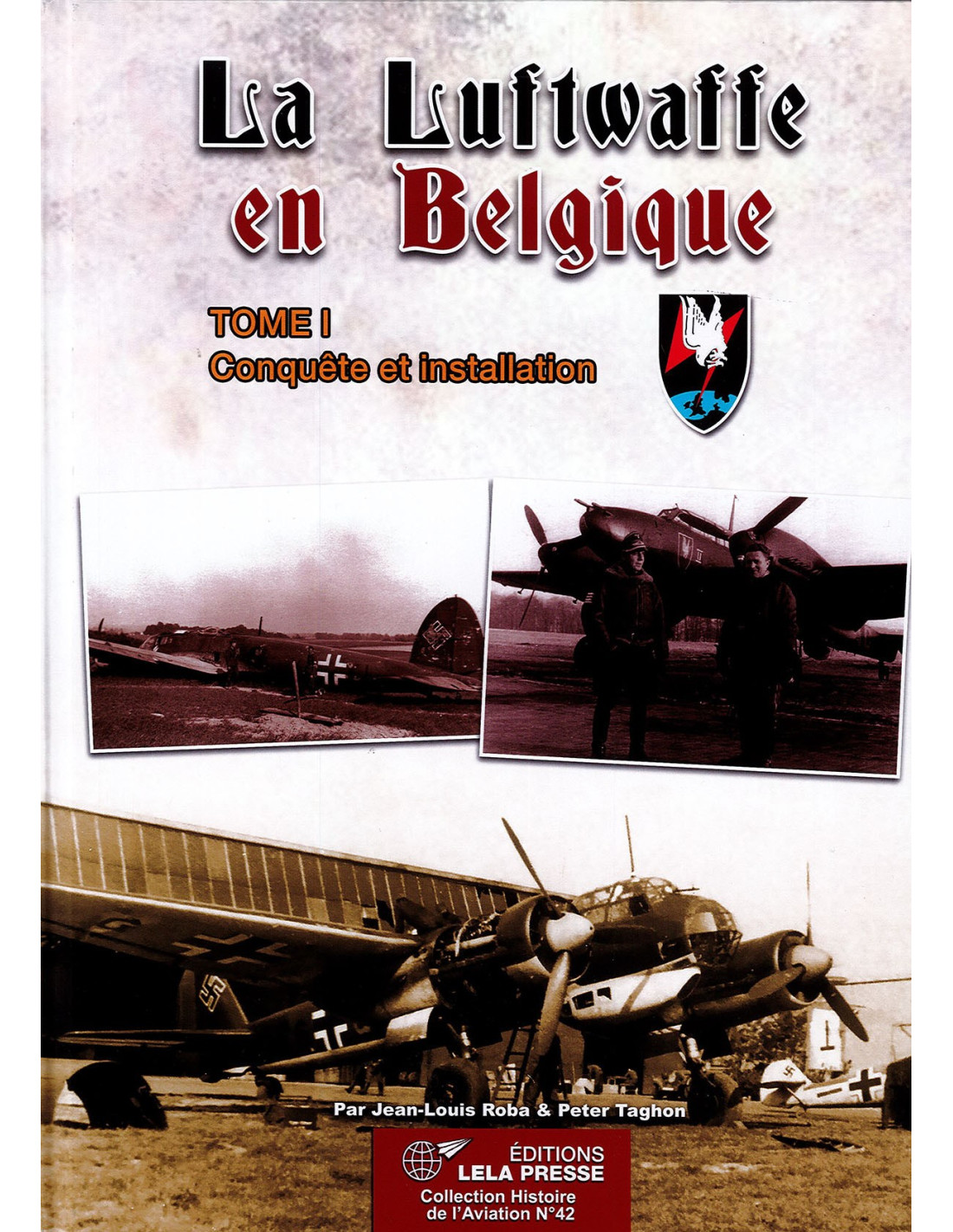
The Luftwaffe in Belgium, Volume 1: Conquest and Establishment
From September 1939 and throughout the "Phoney War," the airspace of neutral Belgium was criss-crossed by the aircraft of the belligerents, who exploited the weakness of the Belgian Aéronautique Militaire. German reconnaissance aircraft were thus able to survey the future invasion routes. On 10 May 1940, the Wehrmacht entered the country and, until the end of that month, fierce fighting raged in Belgian skies, which had become a major strategic prize for the invaders. With the withdrawal of the British Expeditionary Force, aerial engagements grew less frequent (though still active over France), which allowed Luftwaffe units to establish themselves rapidly in the country, restoring airfields and military structures that could serve their purposes.
After the French capitulation at the end of June 1940, Belgium saw little daytime aerial combat, whether during the "Battle of Britain" or the "Non-Stop Offensive" of 1941, being "protected" by the distance separating it from RAF Fighter Command bases. At most, ships and a few ports became targets for British aviation. Belgium was, however (like the Netherlands), on one of the direct routes used by Bomber Command aircraft departing at night to attack the Ruhr factories. Hence the rapid establishment in the country of night fighter units (Nachtjagd) that would make a name for themselves — the famous "Ghosts of Saint-Trond," dreaded by RAF aircrew.
The period 1939–1942 was therefore one of contrasts: bloody fighting during the offensive in the west, followed by relative calm in Belgian skies disturbed only by the growing strength of Bomber Command. The occasional incursions of American "heavies" in 1942 remained "anecdotal," though they were a harbinger of a growing threat.
Secure Payment
Delivery
(+33) 01.79.75.05.50
You might also like