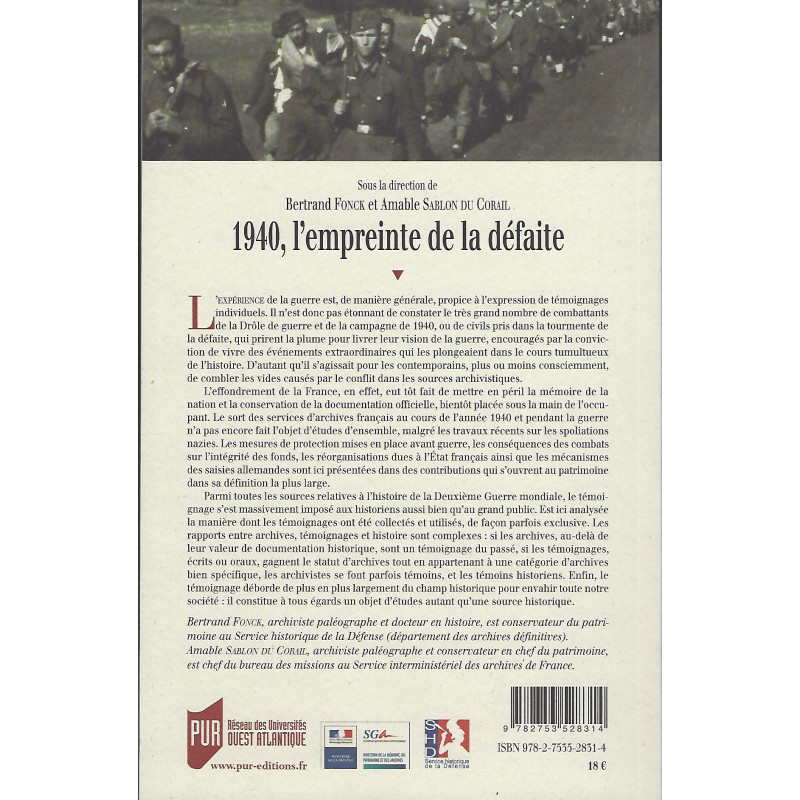
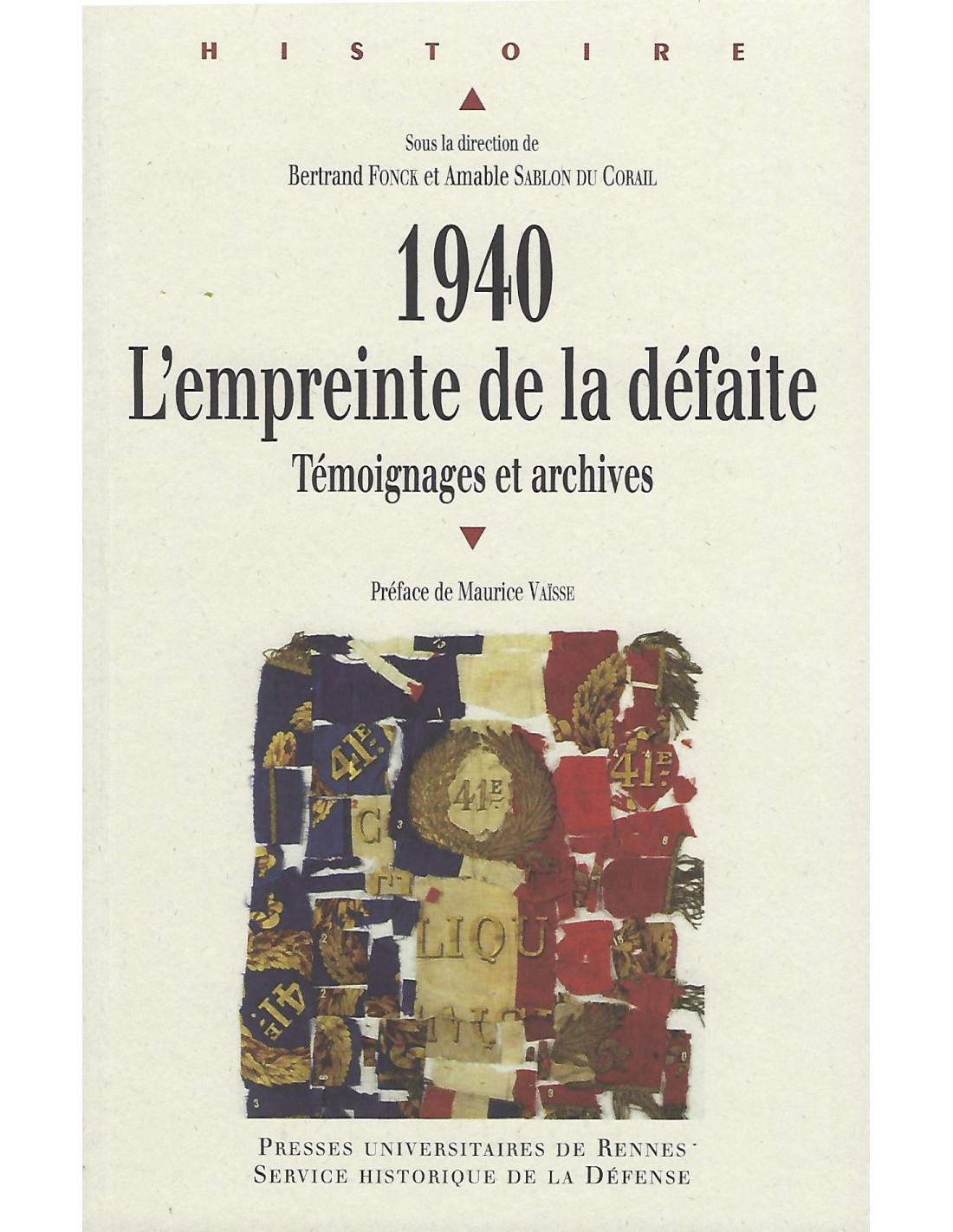
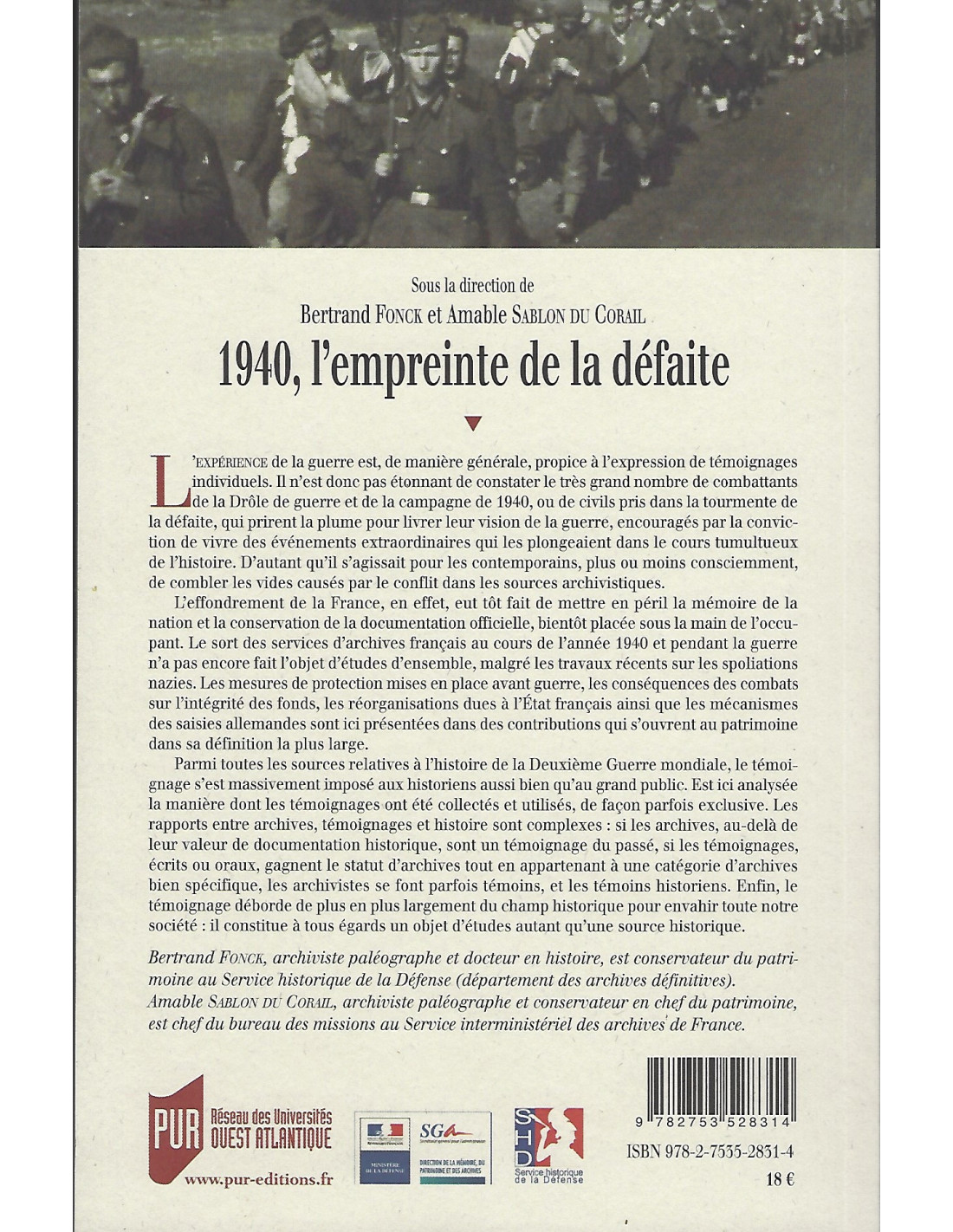
The experience of war is, generally speaking, conducive to individual testimony. It is therefore unsurprising to observe the very large number of combatants of the Phoney War and the 1940 campaign, or of civilians caught up in the turmoil of defeat, who took up their pens to set down their vision of the war, encouraged by the conviction that they were living through extraordinary events that had plunged them into the turbulent course of history.
All the more so since contemporaries were driven, more or less consciously, to fill the gaps caused by the conflict in archival sources. The collapse of France had indeed quickly endangered the nation's memory and the preservation of official documentation, which was soon placed under the hand of the occupier. The fate of French archival services during 1940 and throughout the war has not yet been the subject of comprehensive studies, despite recent work on Nazi spoliation.
The protective measures put in place before the war, the consequences of the fighting on the integrity of holdings, the reorganisations brought about by the French State, and the mechanisms of German seizures are presented here in contributions that extend to heritage in its broadest definition. Among all the sources relating to the history of the Second World War, testimony has imposed itself massively on historians and the general public alike.
Analysed here is the manner in which testimonies have been collected and used, sometimes exclusively. The relationships between archives, testimonies and history are complex: if archives, beyond their value as historical documentation, are themselves a testimony to the past, and if testimonies — written or oral — attain the status of archives while belonging to a very specific archival category, archivists sometimes become witnesses, and witnesses historians.
Finally, testimony increasingly overflows the historical field to permeate our entire society: it constitutes in every respect an object of study as much as a historical source.
The authors:
Bertrand Fonck, archivist-palaeographer and doctor of history, is a heritage curator at the Service historique de la Défense (department of permanent archives). Amable Sablon du Corail, archivist-palaeographer and chief heritage curator, heads the missions bureau at the Service interministériel des archives de France.