- SUMMER SALE 2026 Massive clearance
-
Bookshop
Publisher
- FORGOTTEN BATTLES HISTORICONE
- CARAKTERE
- EPOPÉES - SABRETACHE
- ETAI
- HEIMDAL
- LAVAUZELLE
- LES BELLES LETTRES
- HISTOIRE & COLLECTIONS
- LELA PRESSE
- L'ESCADRON EDITIONS
- NIMROD
- MARANES EDITIONS
- NUTS & BOLTS
- OREP
- OVERLORD PRESS
- PAQUET
- PIERRE DE TAILLAC
- PERRIN
- PEROTTI - PP CONCEPT
- REGI-ARM MEMORABILIA
- SERVICE HISTORIQUE DE LA DEFENSE (SHD)
- YSEC
Theme- 2ND ARMORED DIVISION
- ARMS & ARTILLERY
- AUTOMOBILIA
- AVIATION
- BATTLES
- BIOGRAPHIES
- DOCTRINES - GEOPOLITICS
- FORTIFICATIONS
- HISTORY
- SCALE MODELS
- NAVY
- MILITARIA
- FASHION, STYLE & CLOTHING
- RECIPES & COOKING
- REGIMENTAL
- RESISTANCE
- SECRET SERVICES & SPECIAL FORCES
- SURVIVAL - SELF DEFENSE - PREPAREDNESS
- UNIFORMS & EQUIPMENT
- CIVILIAN VEHICLES
- MILITARY VEHICLES
- CIVILIAN LIFE
-
Vintage Fashion
Other Brands
-
Second Hand
-
- Plein Air -
BAREBONES - Surplus
-
Gift
Cards - Blog
- Our Website
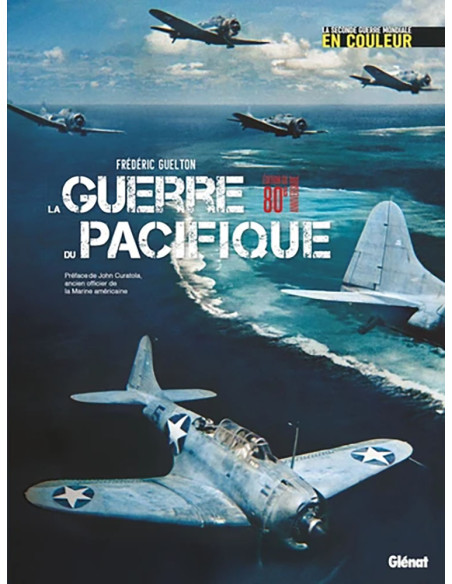
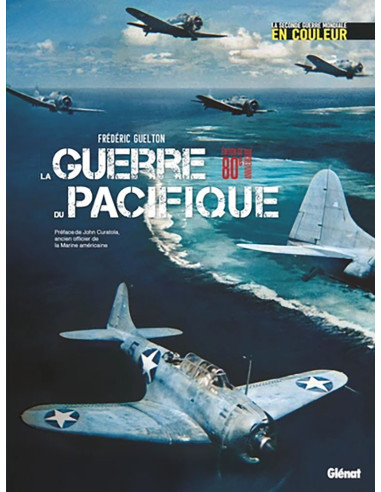
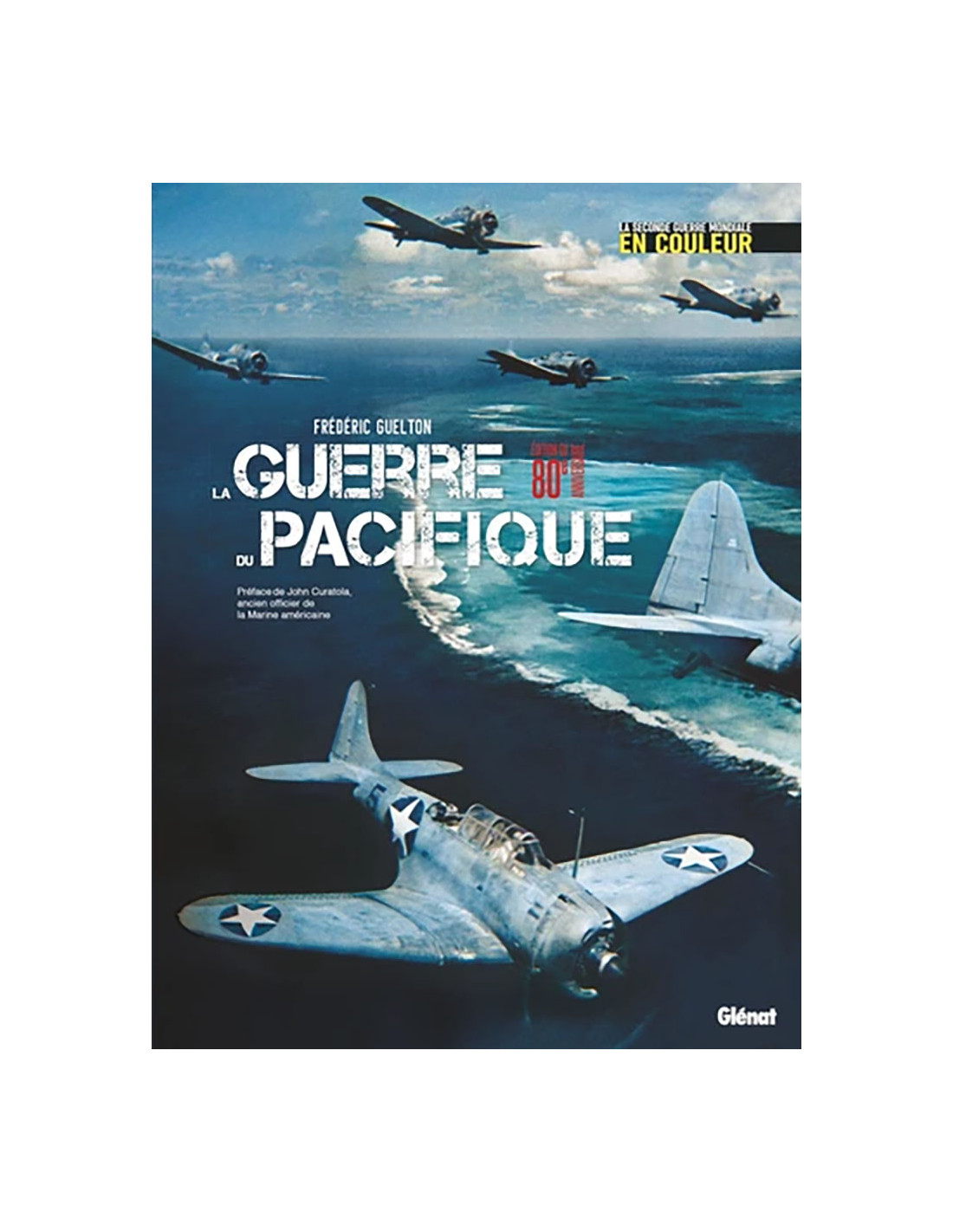
THE WAR IN THE PACIFIC - The Second World War in Colour
From Pearl Harbor to Nagasaki. From December 1941 to August 1945, the Allies — primarily the Americans — and the Japanese clashed in a war whose principal characteristic was that it unfolded across the largest ocean expanse on the planet: the Pacific Ocean. More than 8,000 km separate Tokyo from San Francisco. And while the base at Pearl Harbor, in the Hawaiian Islands, lies only some 4,000 km from the American coast, the great naval and land battles would be fought, like Guadalcanal in the Solomon Islands, a further 6,000 km away.
As for the Japanese, the distances they would have to cover were often nearly equivalent, since more than 5,500 km separate Tokyo from Guadalcanal. But why such a war, and so many battles so far from " home "? Because the Japanese intended to build around themselves a vast empire they called the " Co-Prosperity Sphere ".
A co-prosperity sphere stretching from China on the mainland to the Dutch East Indies towards Australia. To achieve this, any American intervention had to be rendered impossible by destroying its Pacific Fleet. In the event of failure, the worst was to be feared, and the Japanese Imperial General Staff knew it. Yet the attack on Pearl Harbor, an obvious minor tactical success for Japan, was above all... a major strategic defeat. For one simple reason: the American aircraft carriers and the main port facilities remained intact.
From that point until 1945, the balance of power could only shift in favour of the United States, whose economic and industrial might was ten times that of Japan. But achieving this would require 4 years of war, accompanied by a terrifying human and material toll. A toll whose final line was written on 6 and 9 August 1945, when 2 atomic bombs were dropped on the Japanese cities of Hiroshima and Nagasaki, ushering war and humanity into a new era — that of nuclear Apocalypse.
Secure Payment
Delivery
(+33) 01.79.75.05.50
You might also like