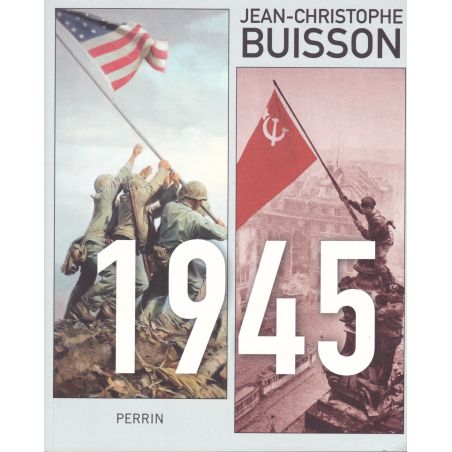
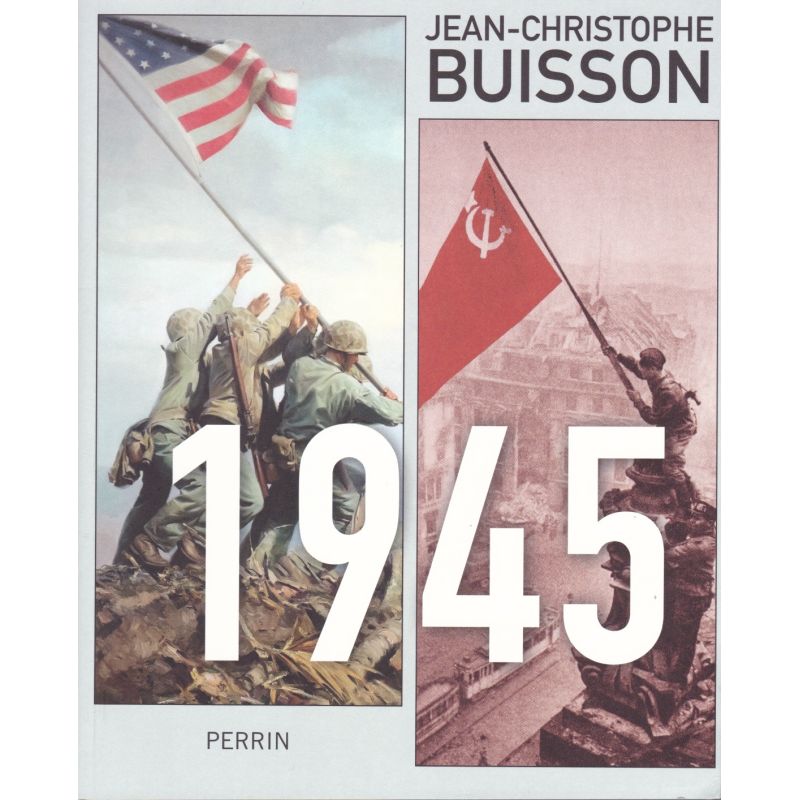
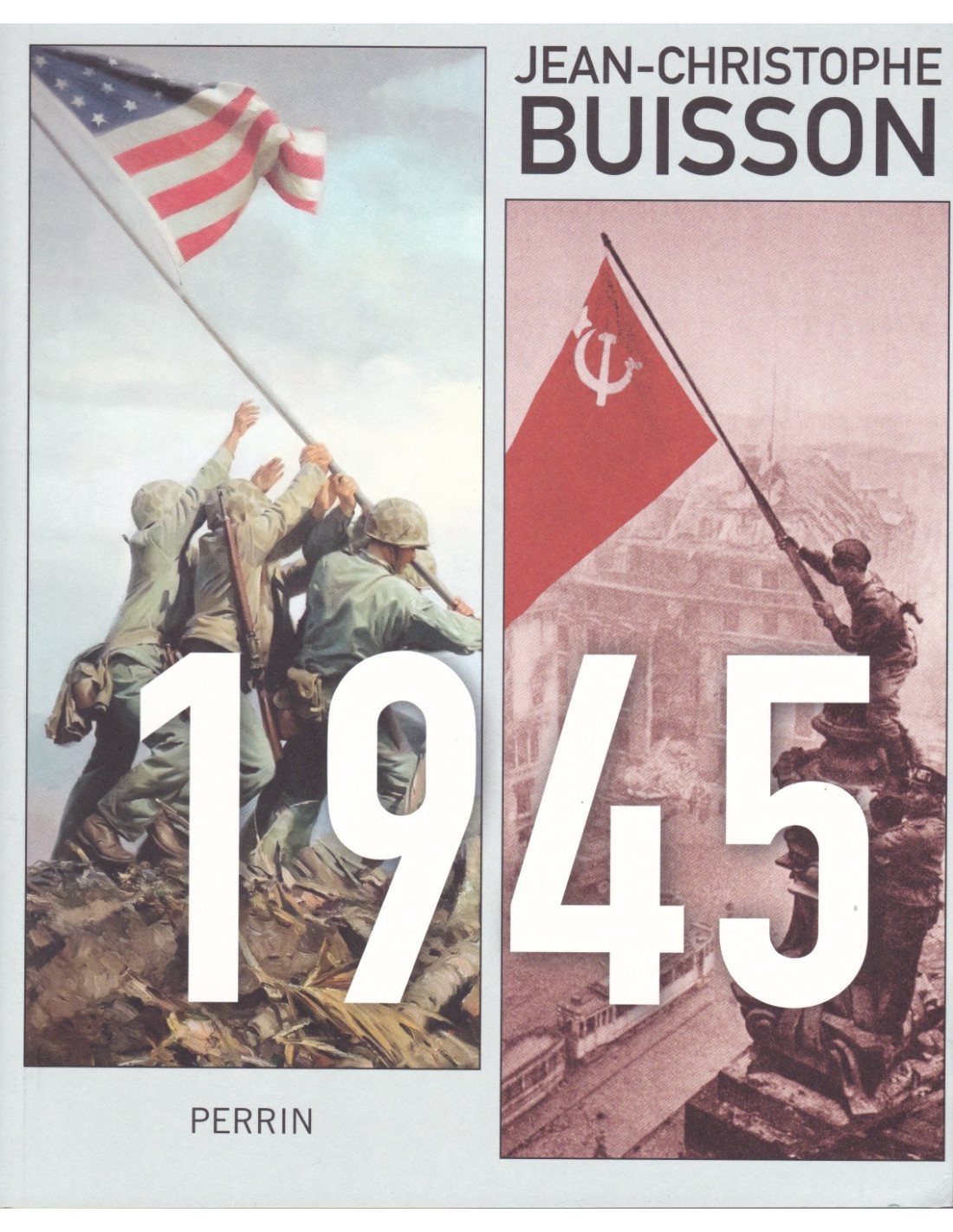
8 May 1945 marked, after weeks of battles on an enormous scale (the Ardennes, northern Italy, East Prussia, Berlin…), the end of the Second World War. In Europe. For four more months, the Asian continent would remain the theatre of a conflict of terrifying proportions, one that would only end with the use of an apocalyptic weapon: the atomic bomb. An event which, by the dread it inspired, echoed the discovery, at the start of that year, of the Nazi death camps where six million Jews had perished. Holocaust and apocalypse — suddenly revealing mankind's capacity for self-destruction. But as the Americans were devastating Hiroshima and Nagasaki, a large part of the world had already embarked on a vast project of economic, political and moral reconstruction.
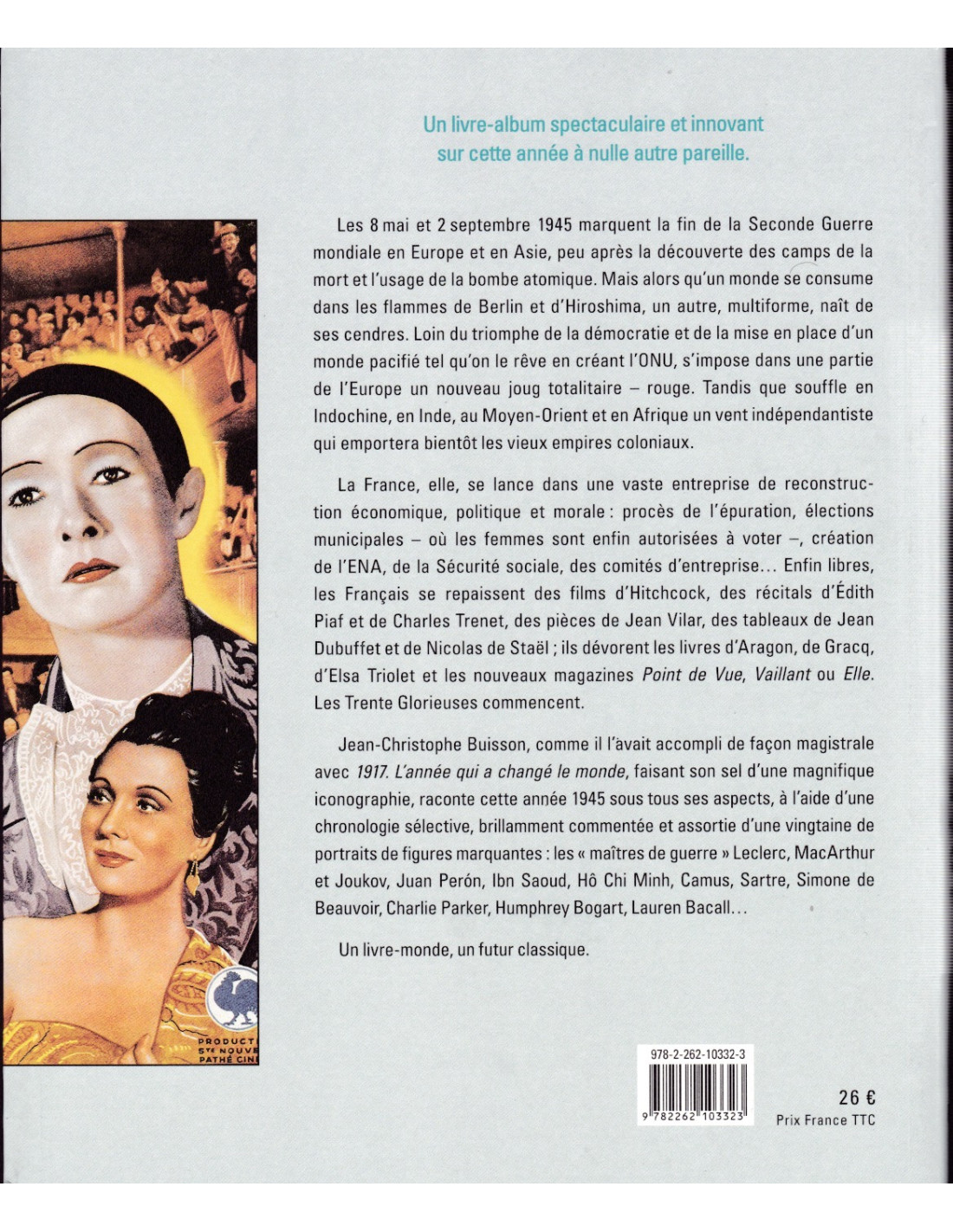
To speak only of France, then led by General de Gaulle, the first trials of the purge (Brasillach, Pétain…) had taken place; municipal elections had been held, with women voting for the first time; crowds rushed to cinemas to applaud films by Hitchcock or John Huston and Les Enfants du Paradis, recitals by Édith Piaf and Charles Trenet, or plays by Jean Vilar with Gérard Philipe; audiences marvelled at the canvases of emerging artists Jean Dubuffet, Georges Mathieu and Nicolas de Staël; readers devoured works by Aragon, Gracq, Cendrars, Ponge, Elsa Triolet and Simone de Beauvoir, as well as the new weekly magazines Point de vue, Vaillant (the future Pif Gadget) and Elle, etc. Before year's end, the ENA, the Commissariat général au Plan, the Commissariat à l'énergie atomique, the CNPF, the CFA franc, works councils, the INED and the journal Les Temps modernes would all come into being — where Jean-Paul Sartre would expound existentialist thought under the sardonic gaze of the Marxists who monopolised the world of intellectual thought and the arts.
In this respect, 1945 is a truly pivotal year: one world consumed in flames, another rising from the ashes. But it wears many faces, and the end of the brown and black regimes of terror does not signal the triumph of democracy nor the establishment of a pacified world, as dreamed of at Yalta or San Francisco with the announced creation of the UN. Thus the liberation of part of Europe was accompanied by the imposition, for half a century, of a new totalitarian yoke — red. From Budapest to Sofia, via Belgrade, Warsaw, Bucharest and Prague, power structures were sovietised gradually and inexorably, while in Indochina, India, the Middle East and North Africa, winds of independence blew that would soon sweep away the European colonial empires. A year of upheaval and transformation in equal measure, 1945 is recounted here in all its dimensions — political, military, social, cultural, geopolitical — through a selective, detailed and annotated chronology. It is, finally, richly illustrated and enhanced by some twenty portraits of prominent figures, each focused on their role during this landmark year: Generals Leclerc, MacArthur and Zhukov, Juan Perón, Ibn Saud, Zhukov, Hồ Chí Minh, Camus, Sartre, Charlie Parker, Humphrey Bogart and Lauren Bacall…