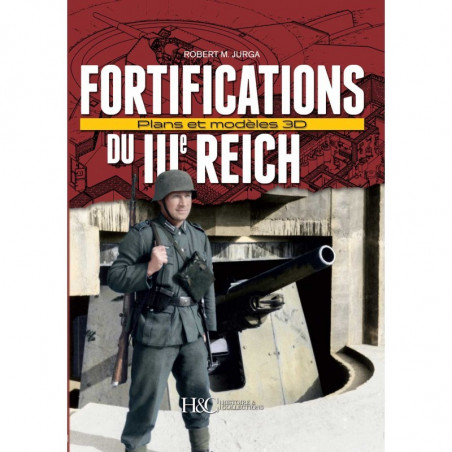
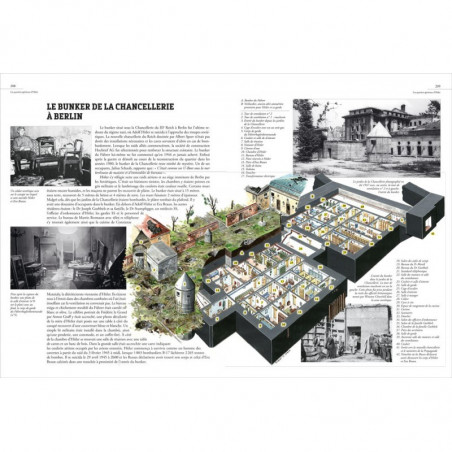
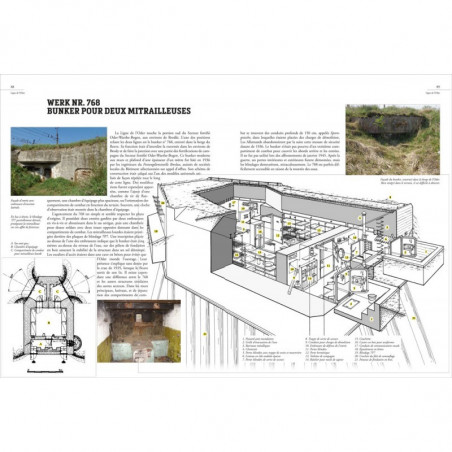
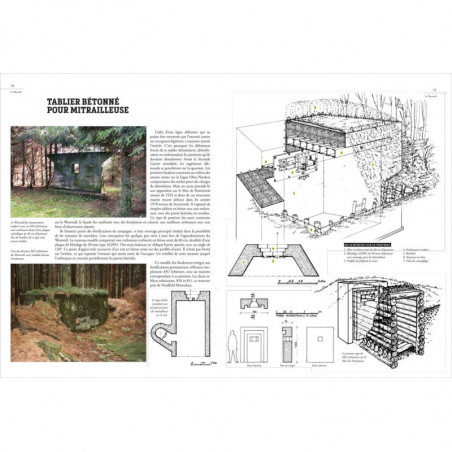
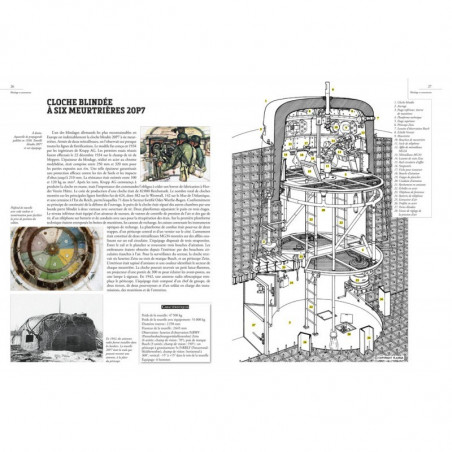
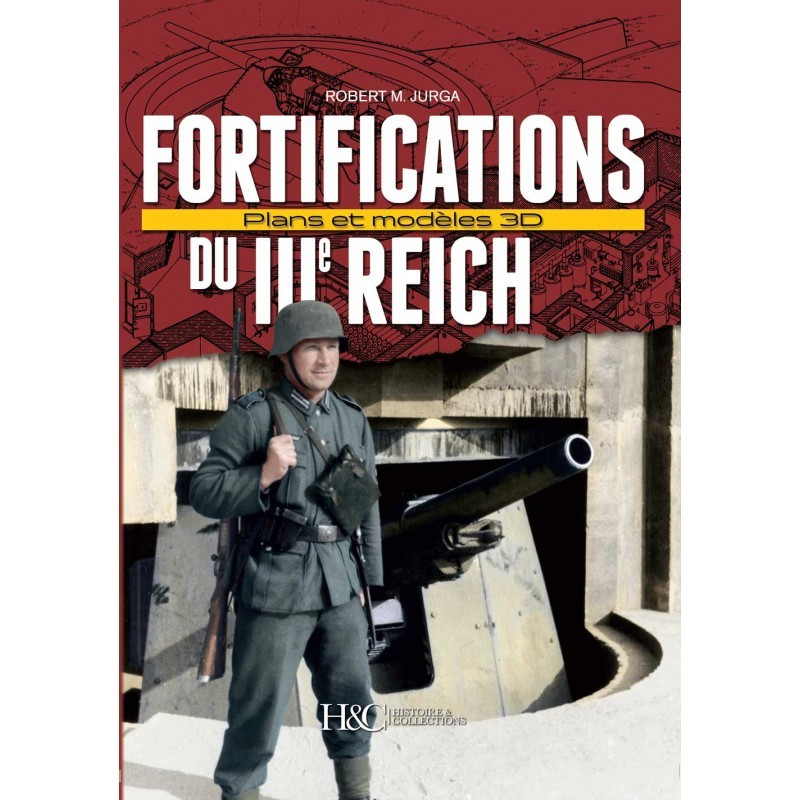
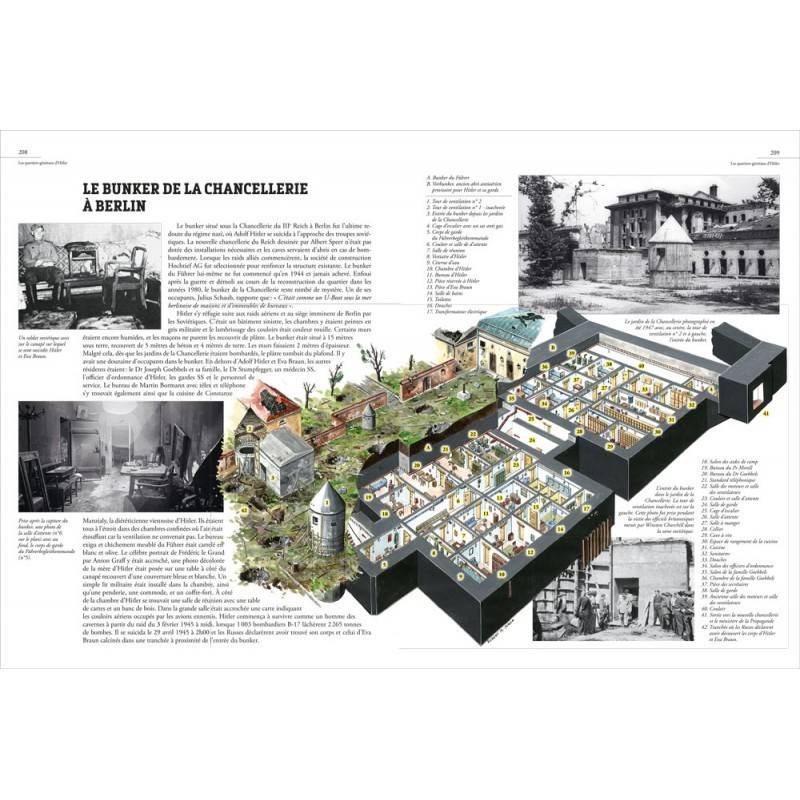
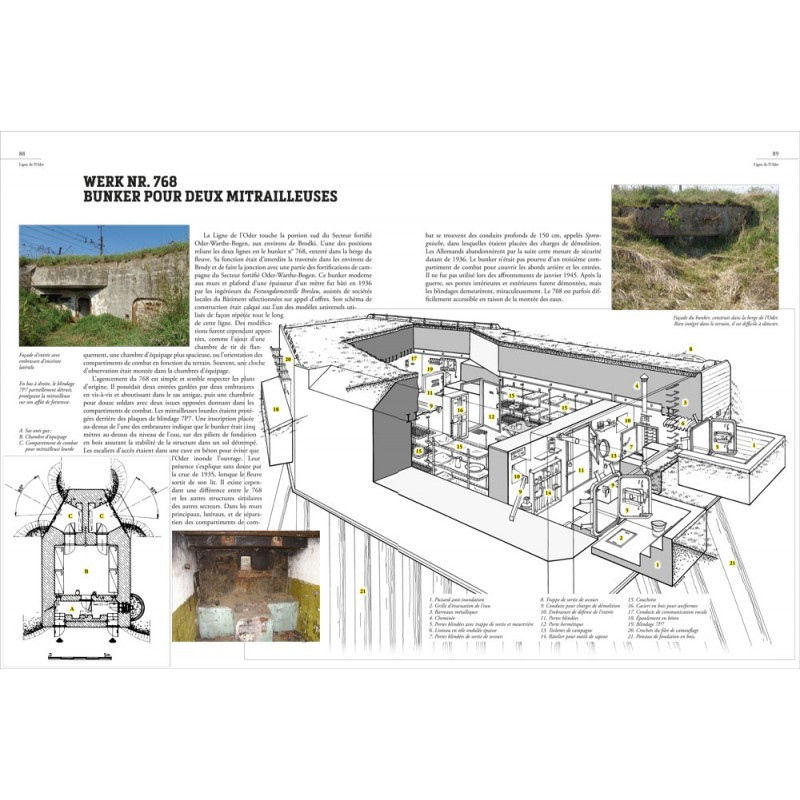
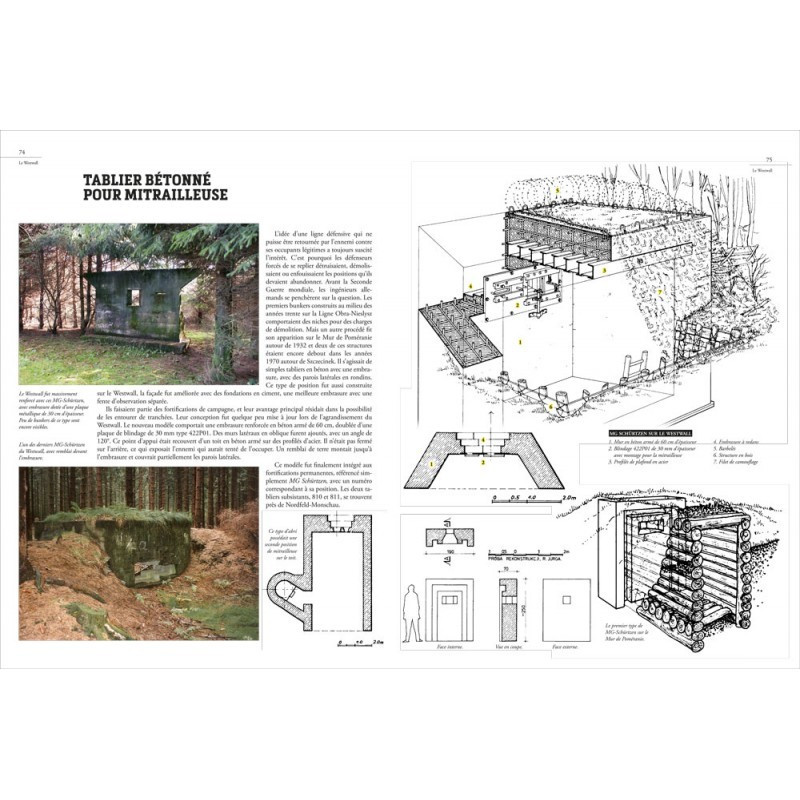
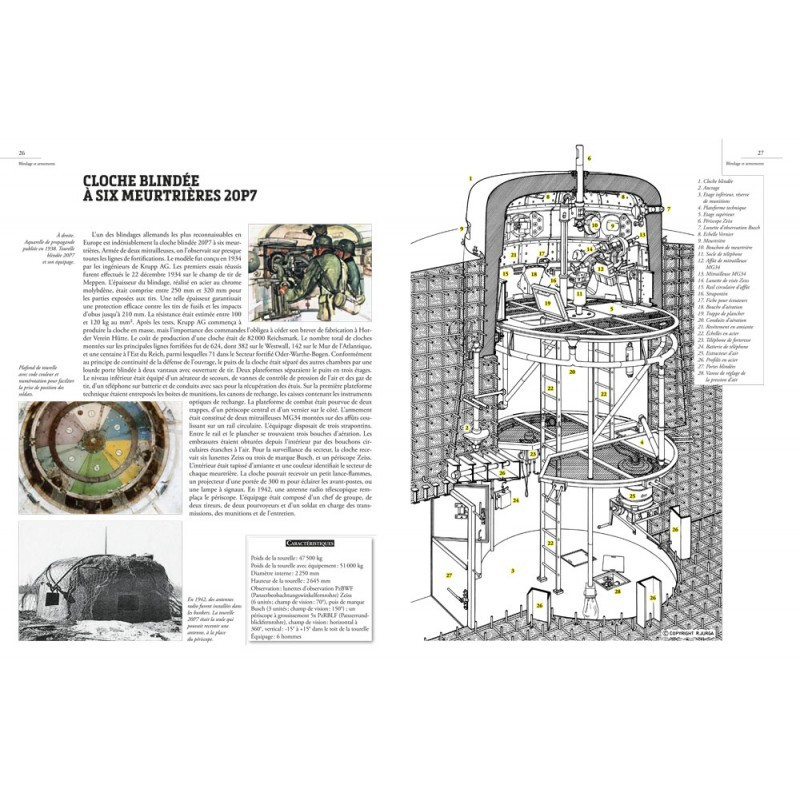
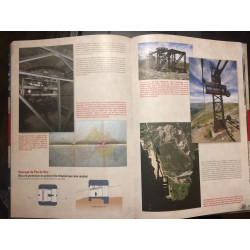
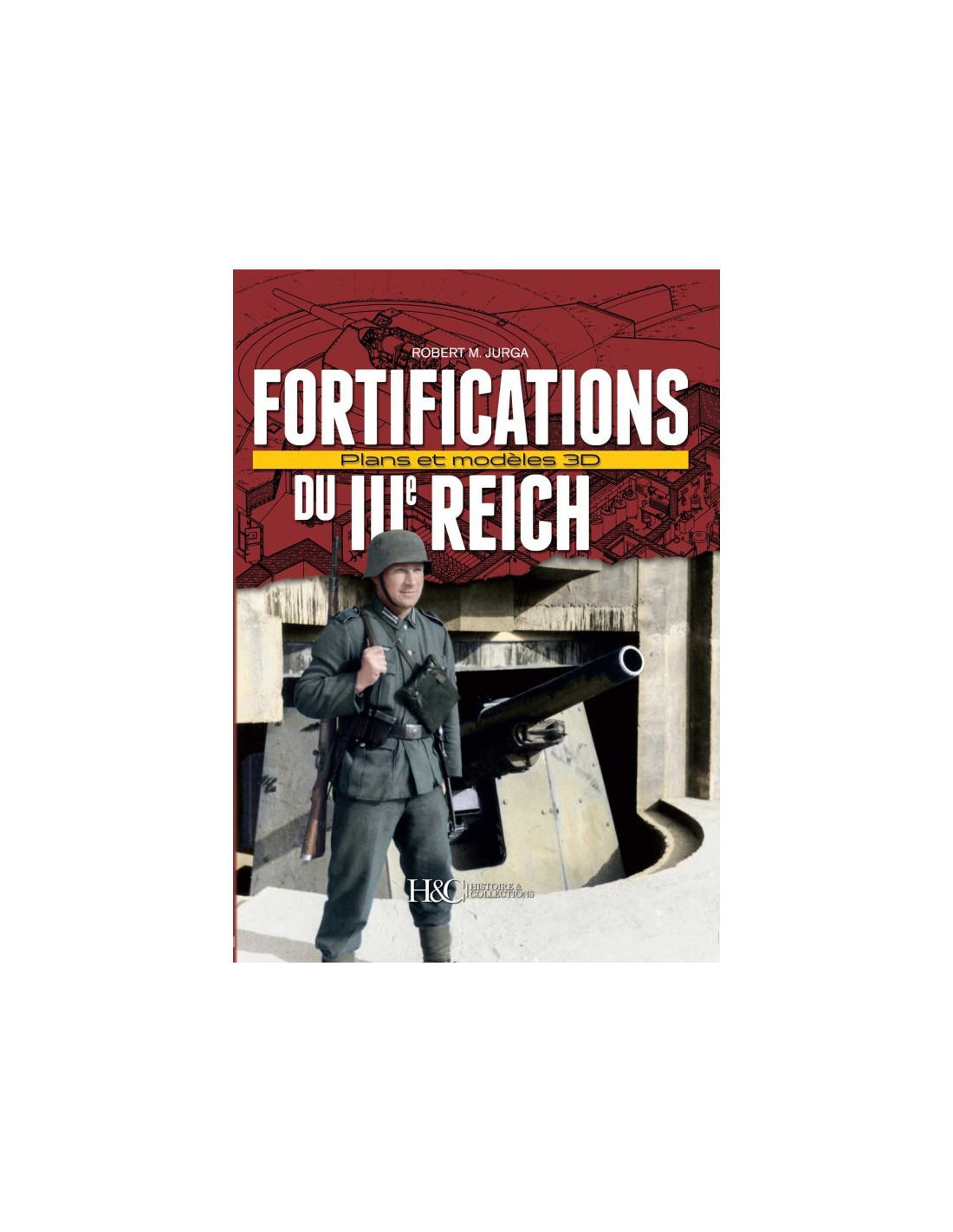
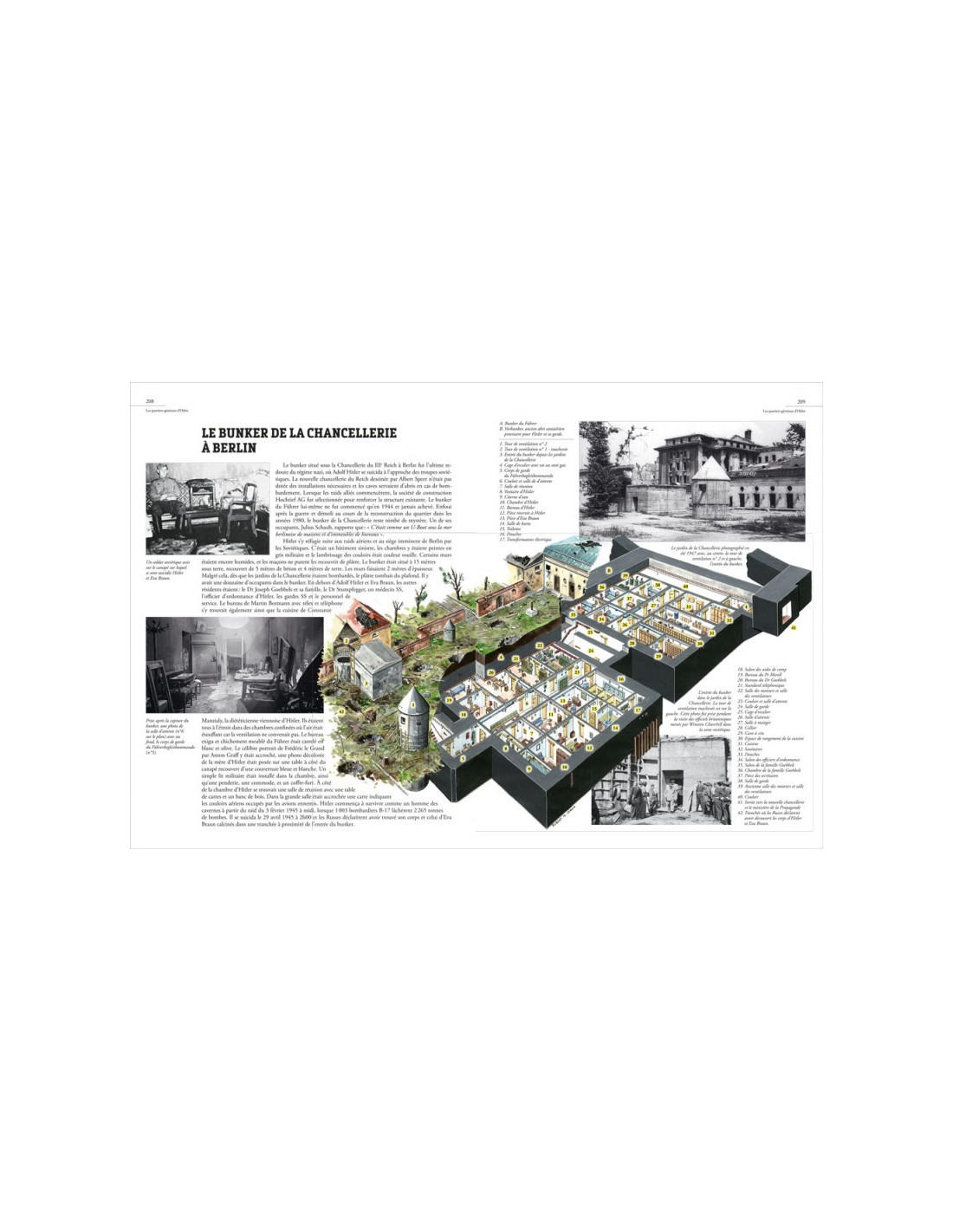
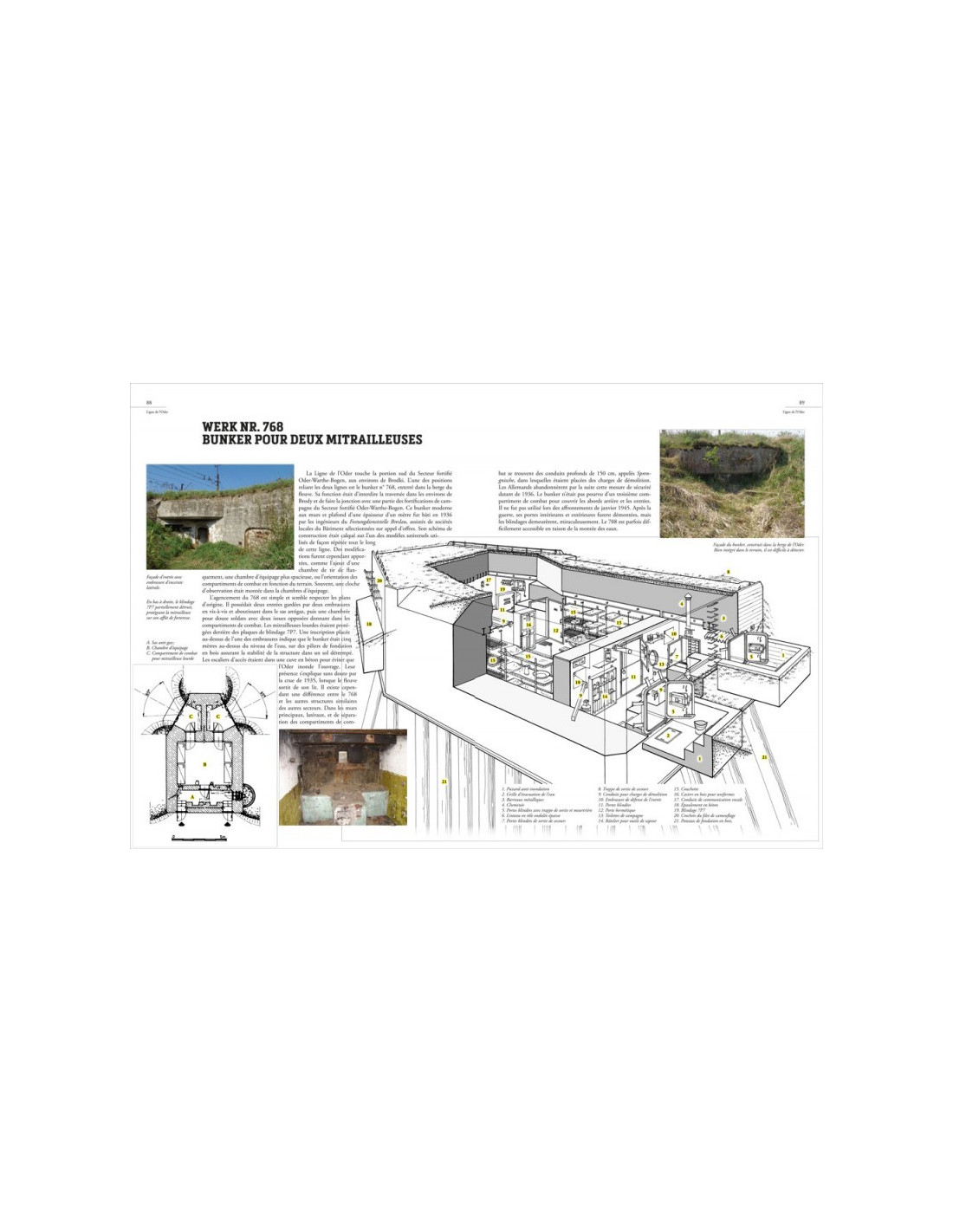
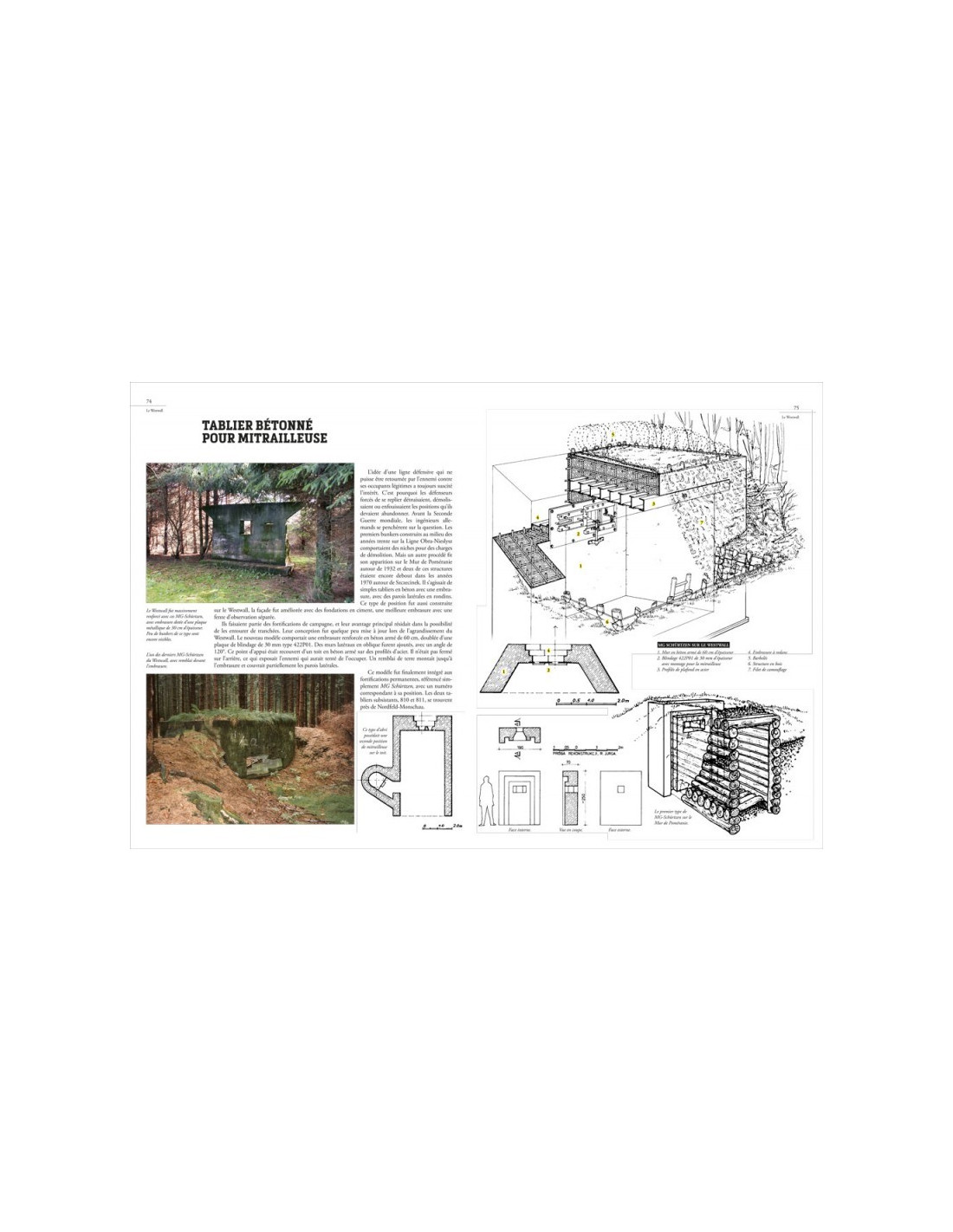
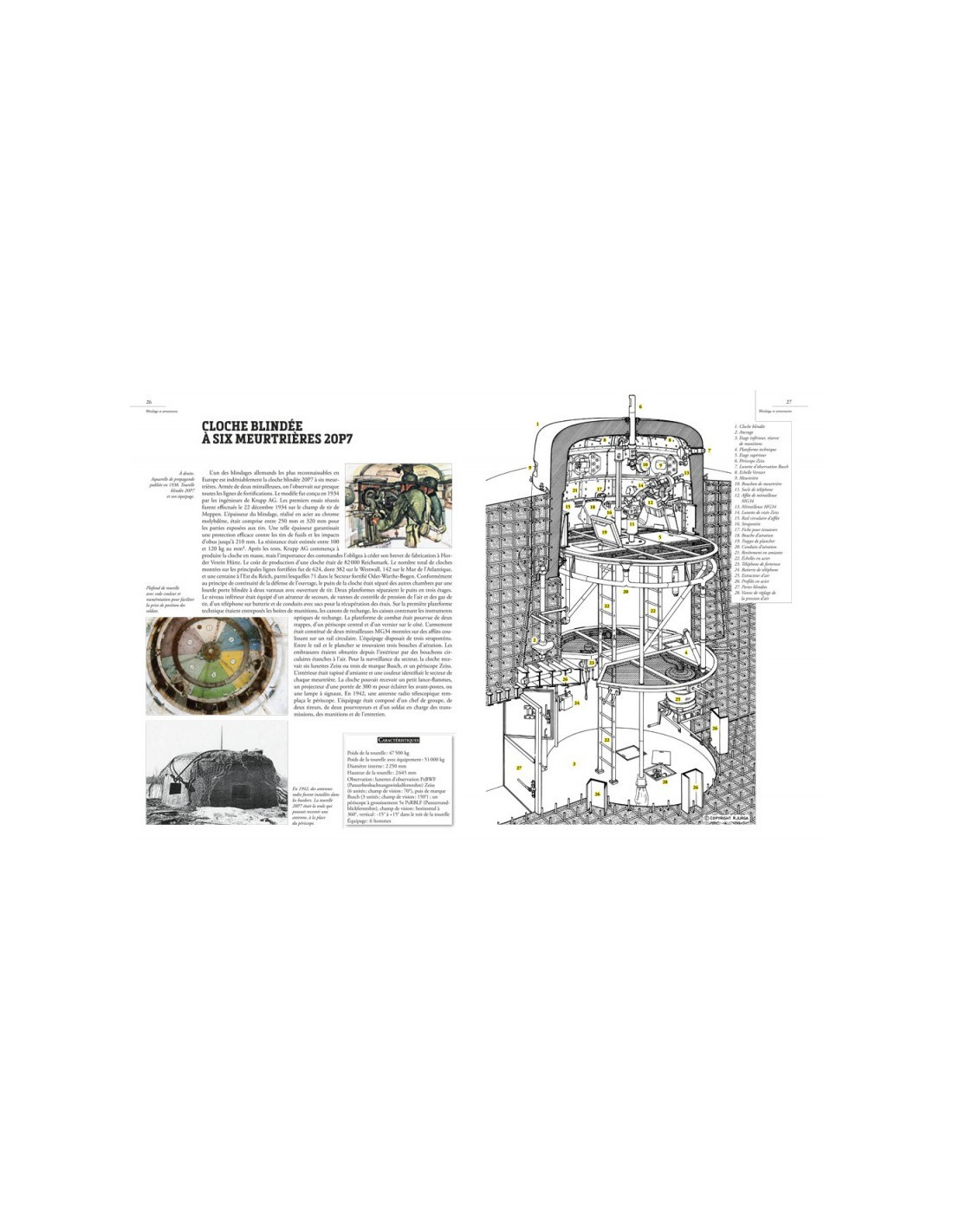
The reader will discover in detail more than 100 models of fortifications in this work. Each is presented with a detailed, annotated 3D plan along with numerous diagrams and photographs. Few Germans knew what the fortresses looked like, but the German high command was aware that without securing the state's borders through these fortifications, the very existence of the state could be seriously compromised.
From 1933, Germany's modest defence expenditure permitted the construction of bunkers whose design was already outdated, predating the war of 1914–18. It was not until 1935 that the idea of national fortifications based on relatively modern technology emerged. Such fortifications began to be built to reinforce Germany's eastern and southern borders. Until 1937, twenty-six fortified lines were erected along the French, Czech and Polish borders, stretching over 3,500 km.
In the second half of the 1930s, the Germans decided to build their own Maginot Line. In parallel, other defensive lines were under construction along the borders of the Reich. The Pomeranian Wall and the Siegfried Line were extended, as were the Oder Line and LVZ-West. The air defence zones of the Siegfried Line and East Prussia were reinforced and coastal strongpoints erected, in the hope of stopping neighbouring enemies.
The diversity of the thousands of bunkers constructed was such that, without an updated index, it was extremely difficult to determine the function and purpose of each one. It is very difficult to appreciate the diversity of German fortifications.