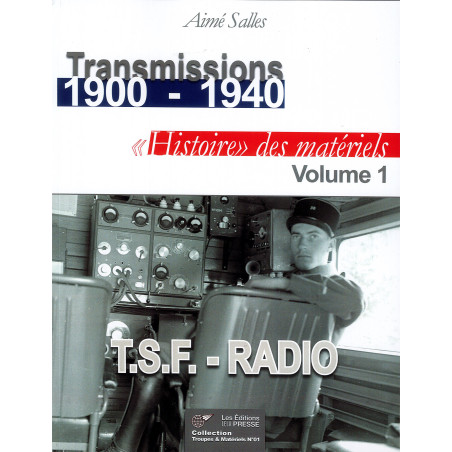
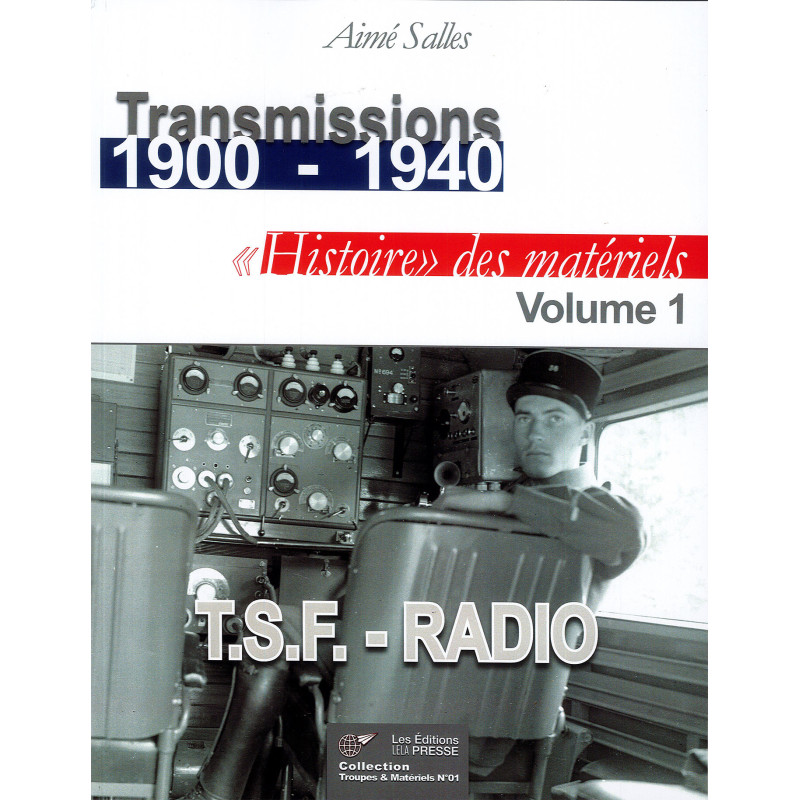
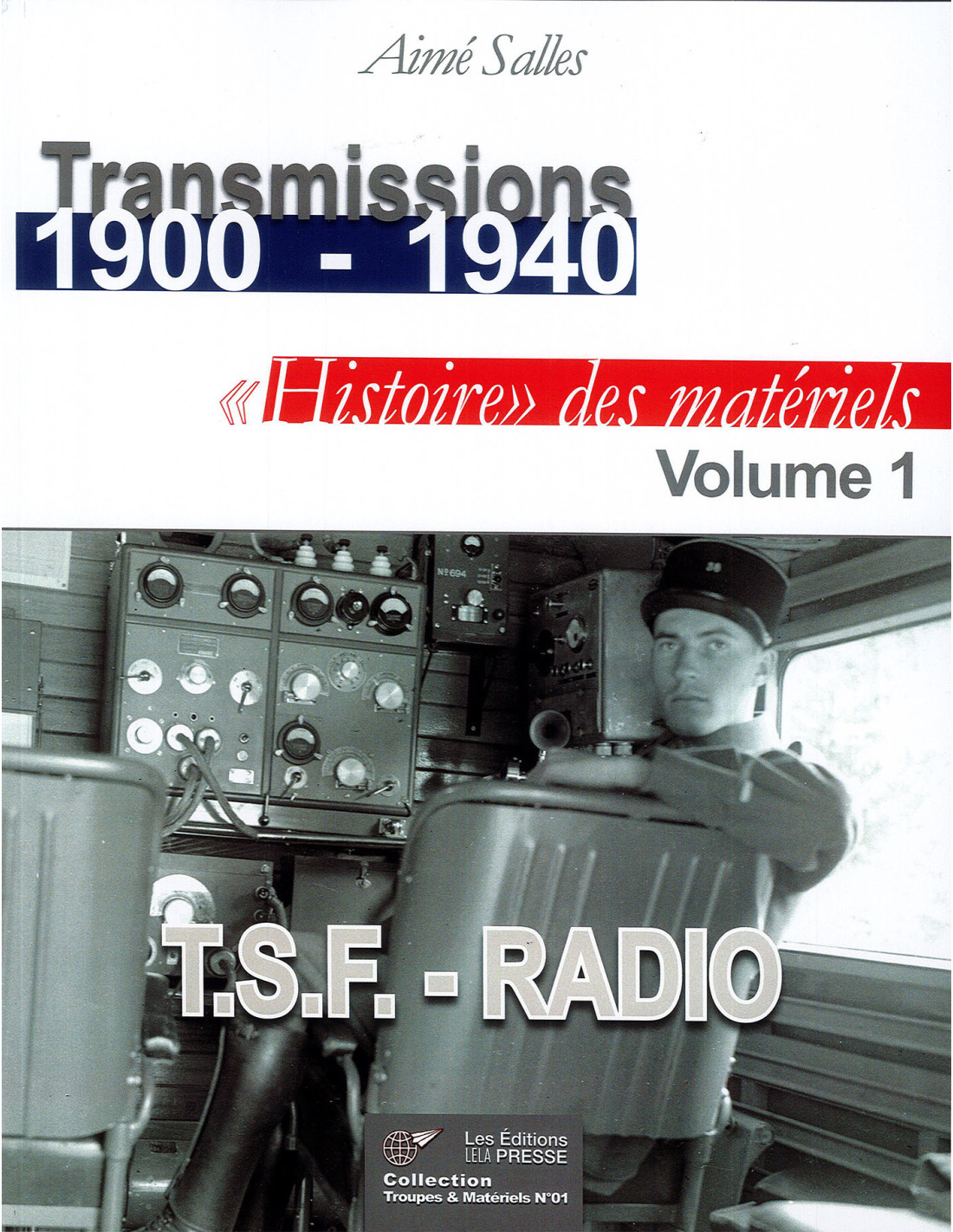
TRANSMISSIONS 1900–1940. History of Equipment, vol. 01
This book grew out of a technical inventory compiled by the author, covering French military radio equipment from its origins to 1940. It focuses on the most representative sets, complementing their descriptions with a wealth of period photographs — often previously unpublished — or photographs of surviving examples that are the pride of collectors and museums. Each set is placed within its "technological" era, highlighting advances and their consequences as well as outstanding technical problems of the time.
This cold, technical analysis serves as a springboard for an approach that seeks to place this equipment in context and, through it, to reach the men — designers and operators alike — who worked with it. The testimonies they left behind, unfortunately very rare, allow us to cover part of the ground; "listening" to the equipment helps reconstruct part of the missing puzzle. For instance, looking at the installation diagram of the ER 52 in the tank reveals the ordeal endured by the radio operator, squeezed between the driver and the ammunition bay, with the tank commander looming overhead. It is hot, visibility is almost nil, the noise is infernal, the air reeks of hot oil — copying a Morse signal under such conditions is a feat in itself, transcribing it on paper is a second. Likewise, if the sapper had enjoyed the pre-war exercises with an ER 12, because everything worked as the manual said it should, he is far less appreciative, in those days of May 1940, of having to wrestle with the "tics" and "tocs". And so one sets aside the "button boxes" and steps into a story whose essential landmarks we thought we had lost.
Immersed in that era, we will better understand: why a deserter was able, in 1914, to give French wireless telegraphy a comfortable head start over that of the adversary; why the "pacification of Morocco" campaign saved the Eiffel Tower from demolition; or — a long-contested question — whether French radio equipment, unanimously judged the "best in the world" at the close of the Great War, was or was not responsible for the débâcle of 1940.
Secure Payment
Delivery
(+33) 01.79.75.05.50
You might also like