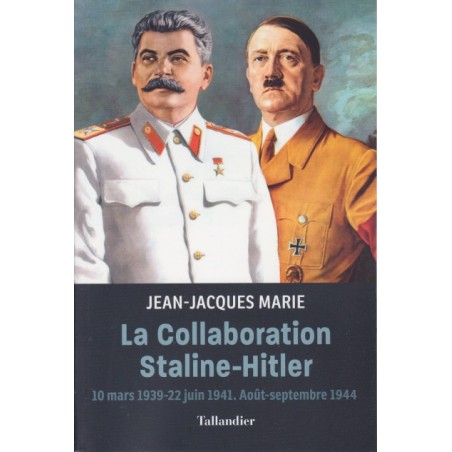
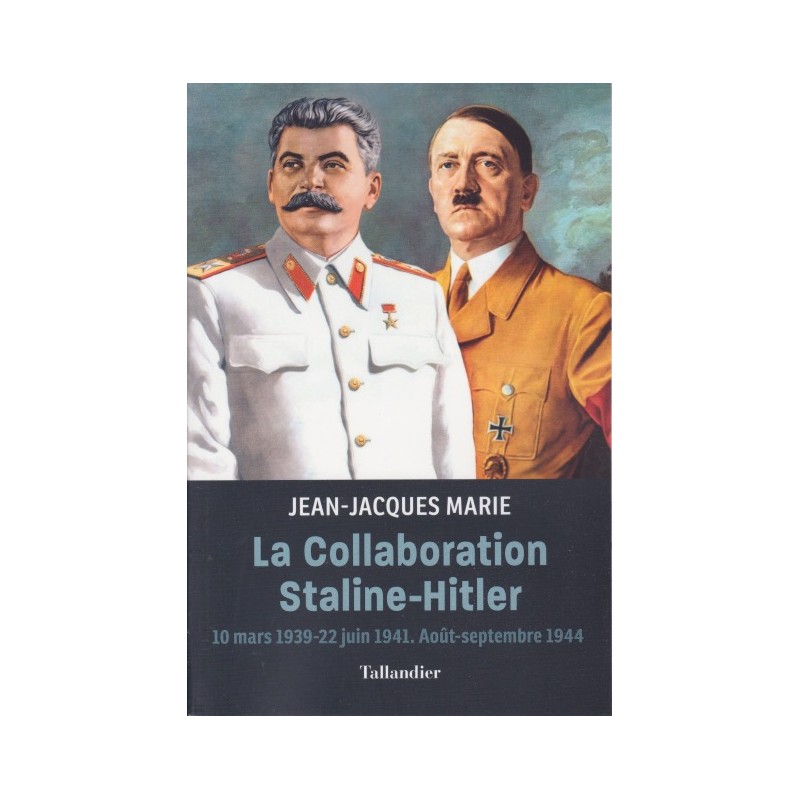
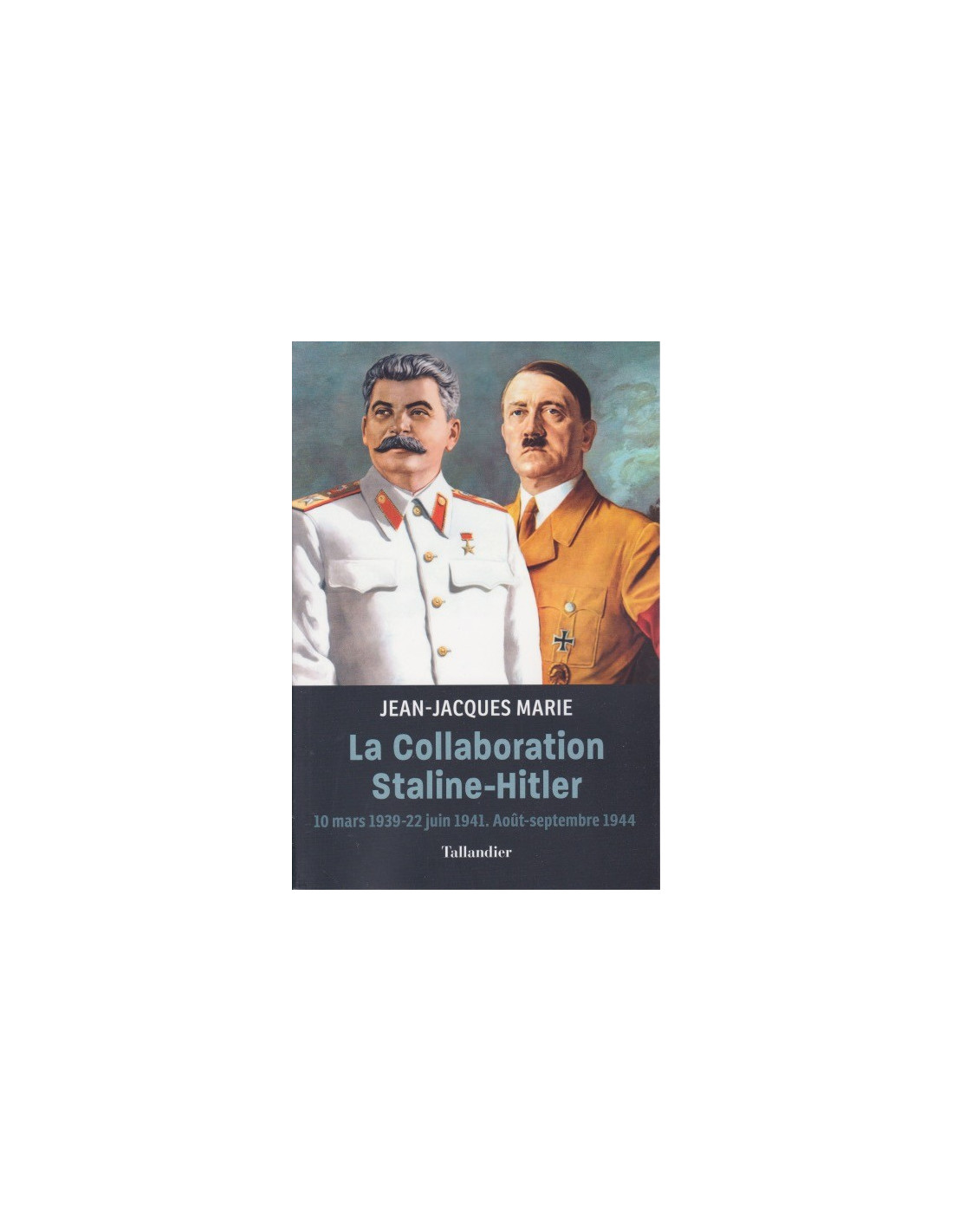
The Stalin-Hitler Collaboration, 10 March 1939–22 June 1941. August–September 1944
Since the German invasion of the USSR, Soviet propaganda — and in its wake Soviet historiography — has presented the Molotov-Ribbentrop Pact as the fruit of Stalin's supreme cunning: faced with France's and Britain's refusal to come to an understanding with the Soviet Union against the Nazi peril, Stalin supposedly chose to buy time in order to better prepare his country for the inevitable war between fascism and progressivism, and it was thanks to this reprieve that he ultimately won the war.
The trouble is that all the documentation — the opening of numerous archives previously kept secret, Comintern documents, the memoirs of multiple Soviet protagonists — that came to light from 1989–1990 onwards proves that Stalin played a double game from 1933 to 1939. He simultaneously explored the possibility of an alliance with the Western democracies and with Nazi Germany, which he regularly sounded out.
His proposal for collaboration immediately seduced Hitler, who accepted it in August 1939. This allowed him to annex half of Poland and the Baltic states without firing a shot, to attack Finland, to recover Bessarabia, and even to envisage the USSR joining the tripartite pact of fascist countries and the dissolution of the Comintern, which Hitler had never ceased to denounce.
Until the eve of the launch of Barbarossa on 22 June 1941, Germany was tirelessly supplied with Soviet raw materials. Stalin's absolute trust in Hitler's word and the disorganisation of the army are sufficient to explain the stupefaction and impotence that seized Stalin and the Soviet Union.
The fruit of lengthy research across multilingual documentation, this work delivers a decisive revision of the greatest historical lie of the twentieth century.
Secure Payment
Delivery
(+33) 01.79.75.05.50
You might also like