Your cart
There are no more items in your cart


When Hitler's Filmmaker Captivated France, Leni Riefenstahl
L20220041
Delivery in 8–10 days
€27.49
Publication
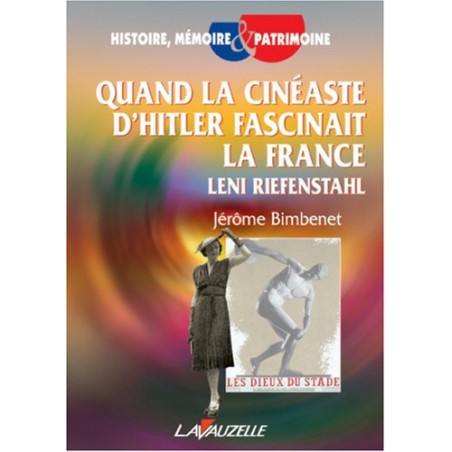
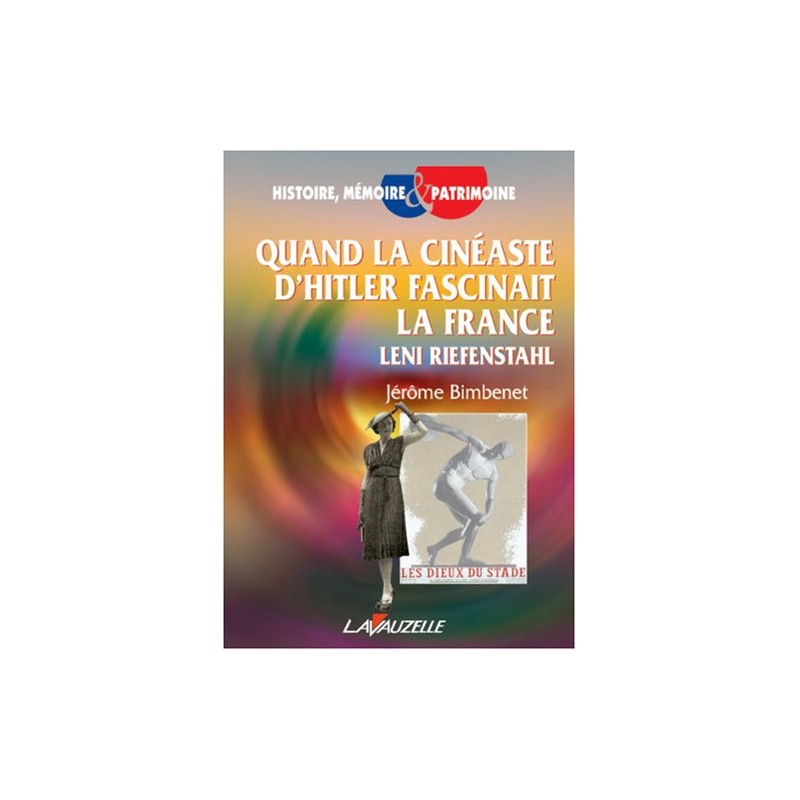
When Hitler's Filmmaker Captivated France — LENI RIEFENSTAHL. Why was Popular Front France able to hold up Nazi propaganda films such as Triumph of the Will or Olympia as models of thought or conduct? This book is not a biography of Leni Riefenstahl but a study of the reception of her films in France and of their possible influences on French society in the 1930s and the post-war period. Drawn from a doctoral thesis defended at Paris-7 in December 2002, this work draws primarily on the Parisian and provincial press, consulted in a near-exhaustive manner for the pre-war period and very substantially for the post-war period. In order to make more perceptible the evolution of the reception of the films and the personality of their director, and to better trace the evolution of mentalities, we have chosen to retain numerous article excerpts. The reader will thus be able to immerse themselves in the historical and sociological context of each of the periods examined. Understanding the mindset of an era is no easy matter, and it is inadvisable to approach it through the gaze, assumptions and judgements of a twenty-first-century observer. I was able to benefit from the partial opening of the Henri Langlois archives and to publish here for the first time excerpts from the correspondence between the founder of the Cinémathèque française and Leni Riefenstahl, which allows for a better understanding of the Tiefland affair. Thanks to the Archives of Colmar, I am able to reveal what the interrogations and captivity of Leni Riefenstahl were like in the zones occupied by the French between 1945 and 1948. Key primary sources are thus brought to light and contribute to a better assessment of the accusations of complicity in crimes against humanity to which Leni Riefenstahl was subject. Finally, as a complement to the already published versions of the correspondence between Cocteau and Riefenstahl, excerpts from Cocteau's letters to Robert Favre le Bret concerning the screening or otherwise of Tiefland at the Cannes Film Festival are published here for the first time, shedding a little more light on the particular relationship between the two artists. The titles of Leni Riefenstahl's films are given in German at their first citation, then in English. The Olympic film is entitled Olympia in German. It comprises two parts, entitled in English The Gods of the Stadium and Olympic Youth. When referring to the film as a whole, we will use the German title Olympia. The English title The Gods of the Stadium will be used when it seems more pertinent, particularly after the war, when this title gradually comes to cover both parts. Very particular thanks go to Marie-Claire Hoock-Demarle, my thesis supervisor, who followed the progress of this work over seven years and whose patience was often sorely tested. Special thanks are finally due to Robert Belot, thanks to whom this work sees the light of day and whose unwavering support has been invaluable to me in embarking on this new stage of my research.

Secure Payment

Delivery
 Call Us
(+33) 01.79.75.05.50