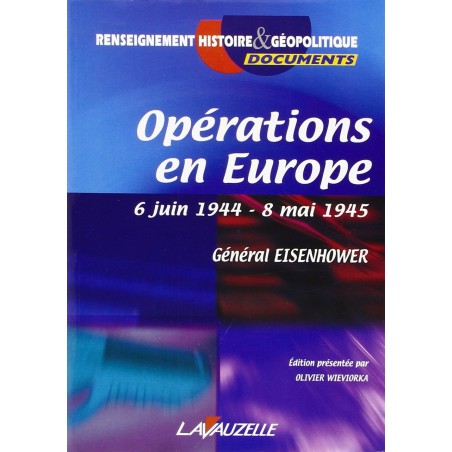
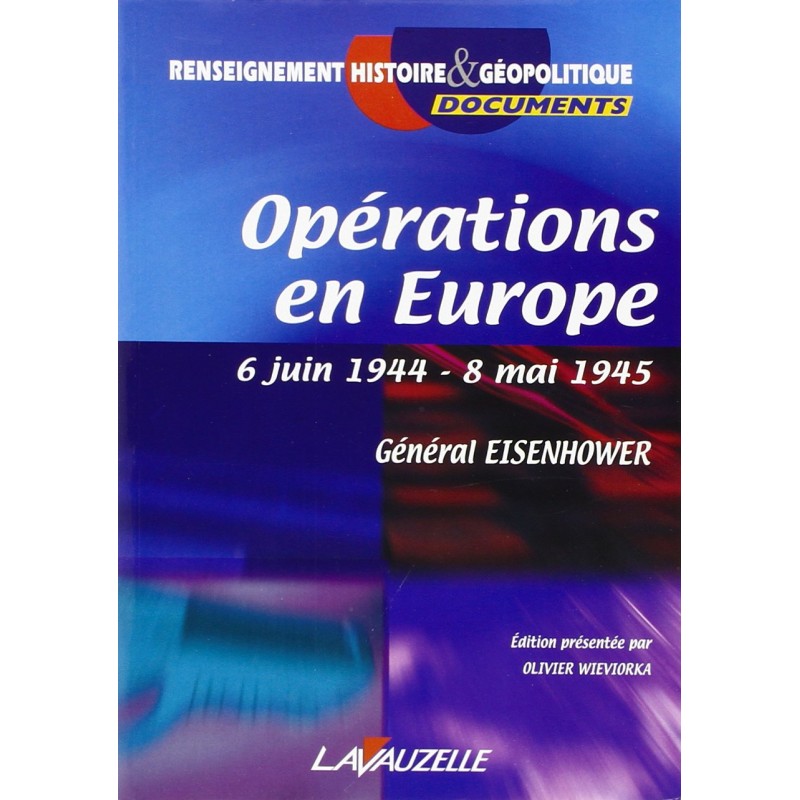
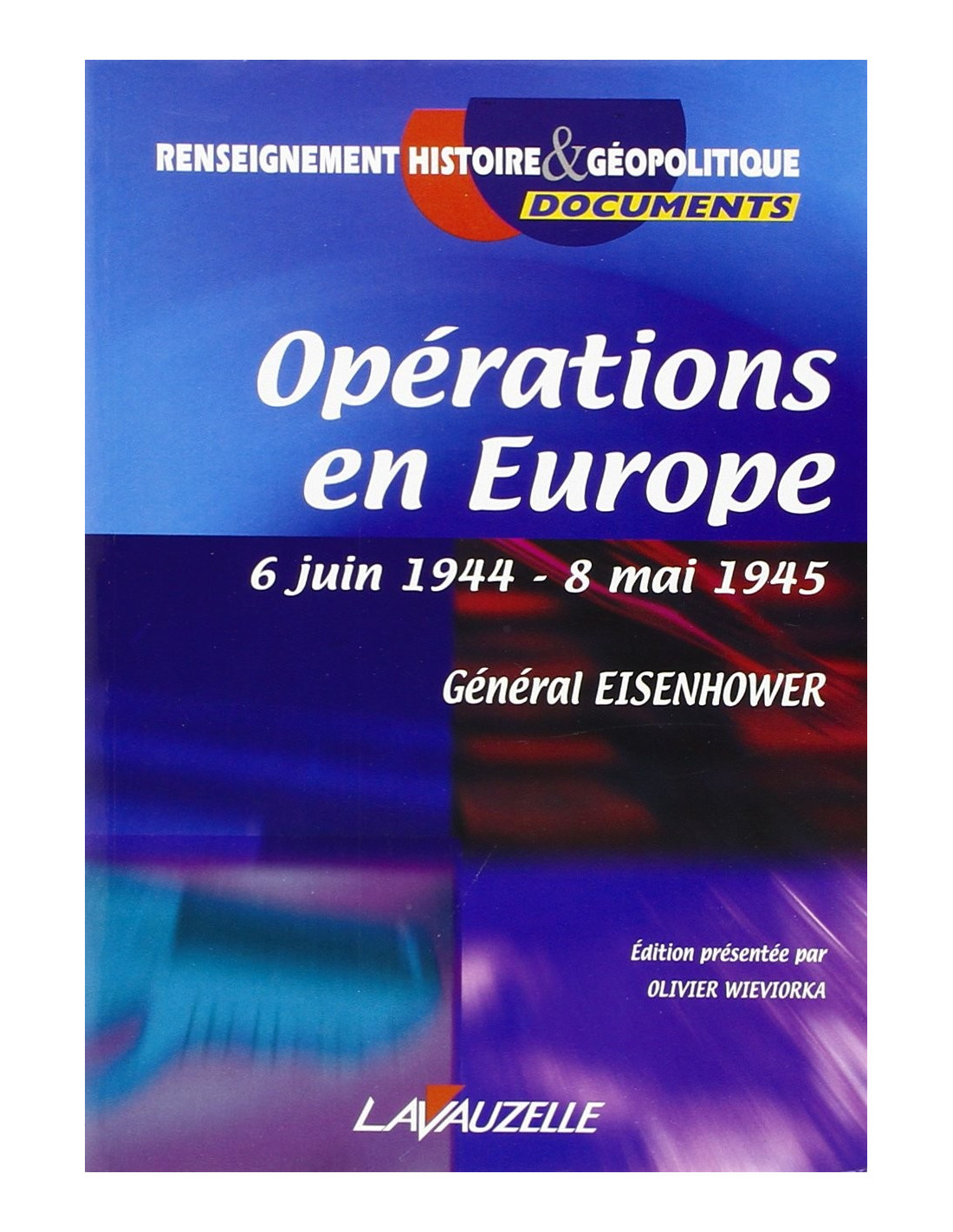
Once operations had ended, it was customary for general officers to render an account of their actions. It was thus that General Dwight Eisenhower (1890–1969) wrote in 1945 a lengthy report to the Combined Chiefs of Staff on the operations in Europe of the Allied Expeditionary Forces, from 6 June 1944 to 8 May 1945, of which he was the Supreme Commander.
At the heart of the commemorative wave of the sixtieth anniversary of the Liberation, it seemed necessary to reissue this historic document emanating from the highest military authority of that struggle which was to lead to the surrender of the German forces after the Battle of Normandy.
The outcome of this titanic endeavour was by no means guaranteed, despite the efforts deployed by soldiers and generals alike, and the primary merit of this lengthy report is undoubtedly to recall the difficulties the Allies had to contend with.
The other interest of this document lies in the exhaustive account of the operations conducted in north-west Europe between 6 June 1944 and 8 May 1945. A certain Gallocentrism inclines the French to consider that the war ended with the recapture of Strasbourg (23 November 1944), or even earlier, with the liberation of Paris (25 August 1944). A somewhat hasty conclusion. The war would last almost another year and would be, far from it, a military walkover, owing to German resistance. The year 1944 is far from marking the end of the ordeal for all the peoples of Europe: much effort remained to be made in Belgium, the Netherlands, and finally in Germany.
Beyond the contribution offered to our knowledge, Eisenhower helps to revive a luminous and terrible page of European history.