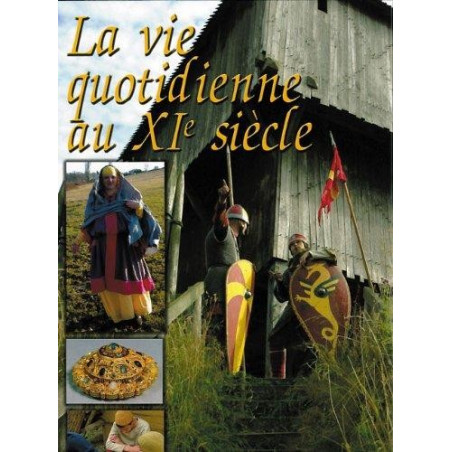
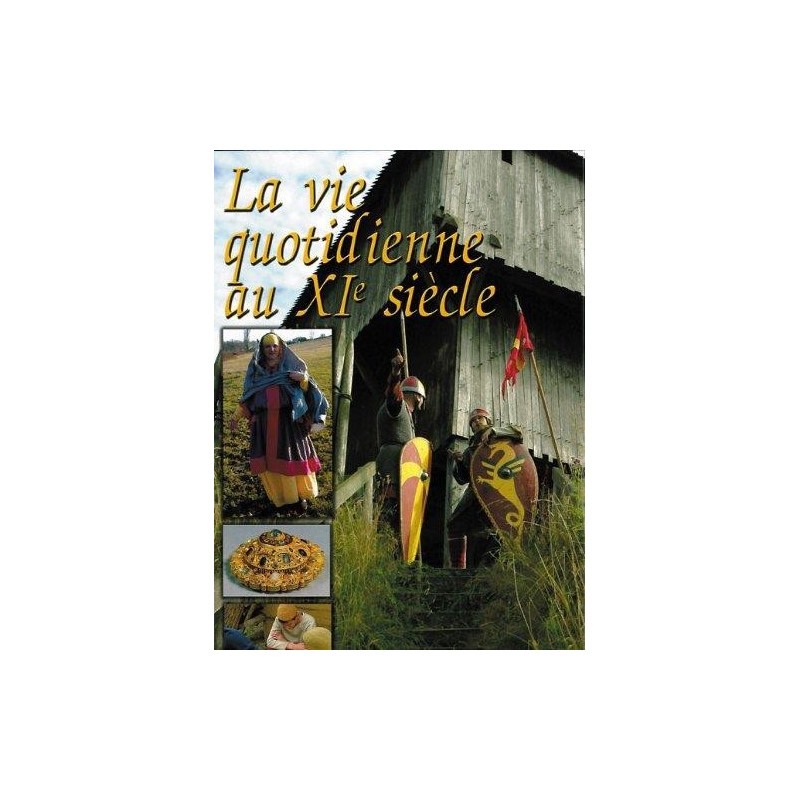
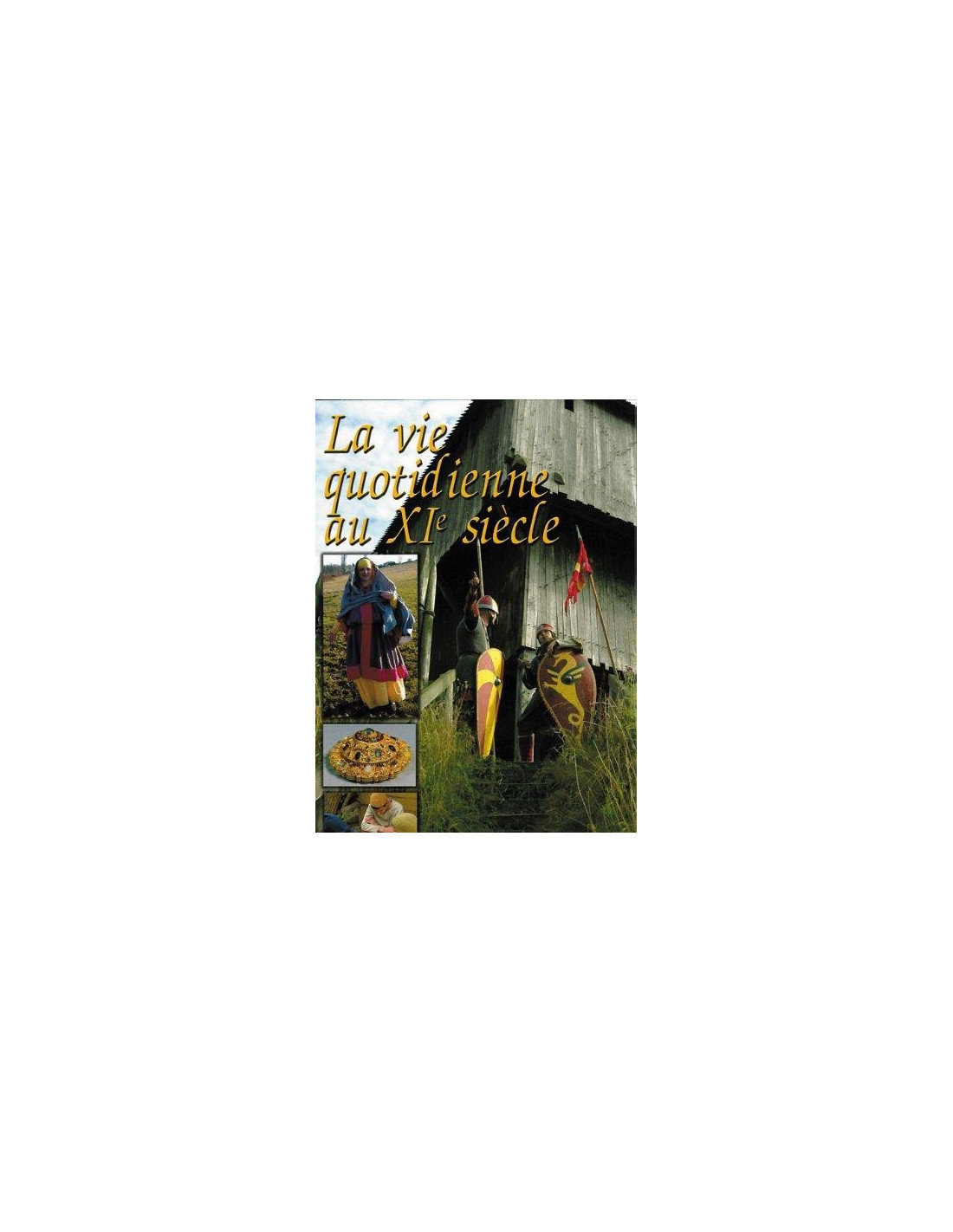
Until now, no synthetic study of costume and daily life in the 11th century had been undertaken. Yet this period is of the highest interest for the history and civilization of the Middle Ages. Unlike the 15th century, which is thoroughly documented thanks to the wealth of surviving records and artefacts — dwellings, furniture, costume, and weaponry — the 11th century still presents us with many conjectures regarding the details of everyday life, making the recovery of this past all the more worthwhile. It marks a pivotal turning point after the Year 1000, witnessing the birth of feudalism and the emergence of the village organized around the parish. It also sees the rise of a more ordered society in which the Church imposes its authority but also the Truce of God, curbing private warfare, fostering the chivalric ideal, the protection of widows and orphans, and aid to the most destitute. This turning point laid the foundations of our present society. It was equally a momentous juncture at which the development of the horse collar and the spread of mills would make it possible to feed a rapidly expanding population, all the way to the " beautiful 13th century ". The rural world took shape around its castles and churches. Towns and trades experienced a new surge — this was to become an urban and mercantile civilization. Following the Carolingian era, which partly revived the art of Antiquity, Romanesque art emerged from these foundations in the 11th century and would flourish until the sublime ambitions of Gothic architecture in the course of the following century. The 11th century is an age of every hope in a young world in full transformation. It is above all illustrated by the Telle du Conquest, also known as the Bayeux Tapestry — a remarkable iconographic document and the cornerstone of our exploration of the 11th century. It depicts an epic in which anything was still possible: a minor Norman or French knight could cross the Channel and obtain a fief in a kingdom he was only then discovering. The Telle du Conquest offers us a considerable wealth of information but, schematic as it is, leaves us facing an even greater mass of conjecture. Other sources must therefore be examined. These include archaeological sources — York in England, and Blois and above all Charavines or Andone in France — as well as the few surviving monuments from the period. Artefacts preserved from what was once the Empire further complement this picture of the past: often sumptuous objects, but archaeology too. From England to Lake Zurich, we invite you on a journey through a Middle Ages brimming with the energy that would go on to build our world. With more than 470 illustrations, this unique work presents a comprehensive panorama of daily life in the 11th century, from the architecture and food of the period to costume, tools, weaponry, and more.