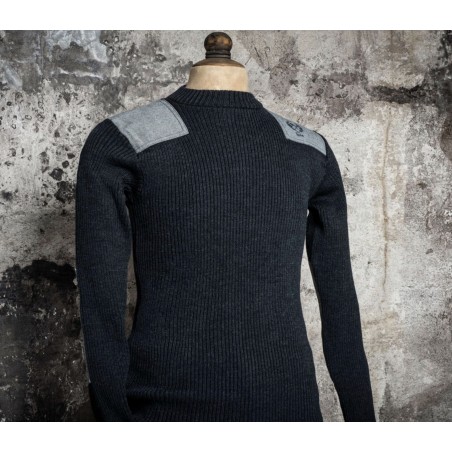
Washing instructions:
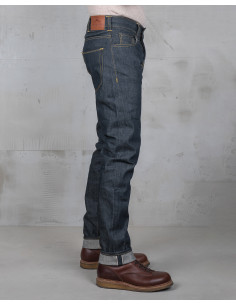
Hand wash only
Tumble drying PROHIBITED
On the Land of the "ENFANTS DU MALHEUR" of the French Army.
The Bataillons d'Afrique, the famous "Bat d'AF", were established by ordinance in June 1832 and stationed in Algeria.
The Bataillons d'Afrique were regularly constituted corps to which all men who, at the time of their conscription, had served a criminal sentence of more than 6 months were assigned.
Servicemen who committed an offence during their service in any regiment, after having served their sentence, completed their time in the Bat d'AF.
All the Military Penitentiaries located in North Africa were designated collectively by the name BIRIBI.
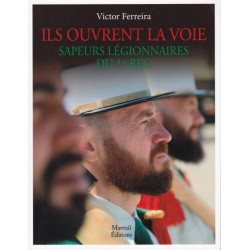
"the Bat d'AF were "Corps d'Épreuves" — disciplinary holding units — which received soldiers released from BIRIBI upon leaving the disciplinary sections or Military Penitentiaries. They served as a kind of airlock, under stricter discipline, in which these men had to prove they now deserved to rejoin a regular unit." Excerpt from BIRIBI by Dominique KALIFA (recommended reading).
The "specificity" of its recruitment, which brought together a good number of rogues, made the Bataillons d'Afrique a privileged breeding ground for forging the networks of the Parisian underworld during the interwar years.
All the great crime bosses of the era cut their teeth in these famous Bat d'AF.
Pierre LOUTREL known as "Pierrot le FOU" and Jo ATTIA known as "Jo le Boxeur" struck up a friendship in the Bat d'AF at Tataouine before forming, a few years later, the Gang des Tractions Avant with several other underworld figures of the time:
Emile Buisson known as "Mimile", Abel DANOS known as "le Mammouth", René GIRIER known as "René la CANNE", Henri FEUFEU known as "Riton le Tatoué", Georges Boucheseiche, Raymond Naudy known as "le Toulousain", François MARCANTONI and Louis Querard known as "P'tit Louis le Nantais".
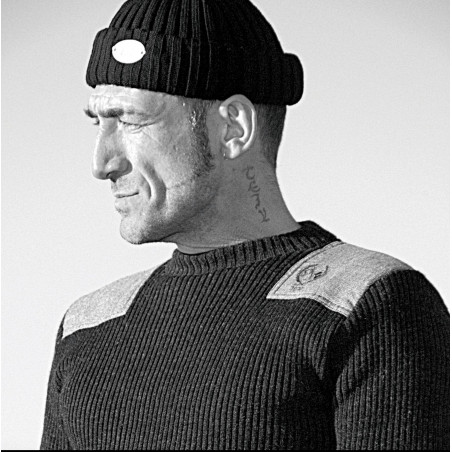
Most if not all of them passed through the Bat d'AF and display on their skin a fine collection of Fleurs de Bagne "made in Tataouine".
MARTYR MILITAIRE
The AERNOULT-ROUSSET Affair:
On 2 July 1909, at the camp of Djenan-el-Dar (Algeria), disciplinary soldier Albert Aernoult was beaten to death by three non-commissioned officers: Lieutenant Sabattier, and Sergeants Casanova and Beigner. Witness to the scene, Émile Rousset, himself a disciplinary soldier, decided to denounce the crime to superior authorities — too many crimes of this kind going unpunished in his view — but the military hierarchy did everything in its power to prevent him. Despite threats, torture, and solitary confinement, Rousset did not yield. He was threatened with a court martial if he persisted, and that is exactly what happened to him. On 19 July 1910, he appeared before the court martial at Oran, where attempts were again made to silence him; he was sentenced to five years in prison and incarcerated at the Douéra penitentiary.
But Rousset had managed to alert the metropolitan press through a letter denouncing the crime of the three servicemen. A support committee was formed in France and the Rousset affair gained momentum. Thanks to this mobilisation, Rousset was released before completing his sentence.
The Outcasts of the Bat d'AF
During the hour of the siesta, in the half-light of the barracks, painfully, disciplinary soldiers and battalion men transferred onto their skin the expression and signs of their experience.
Tattooing was indeed the great obsession of Biribi, where virtually every man was "bleus" — tattooed. Some arrived at the battalion already tattooed (a quarter, according to Lacassagne's counts, nearly half according to those of Dr Combe) — souvenirs of prison or reform school — but for most it was in the African penal camps that they surrendered their bodies to the tattooist's needle, despite the official prohibition.
Alexandre LACASSAGNE, who served in Algeria from 1878 to 1880 as a military physician attached to the 2nd Bataillon d'infanterie légère d'Afrique, then stationed at Médéa near Algiers, undertook a systematic survey of the battalion men's tattoos and published in 1881 the first work on the subject: Les Tatouages. Etude anthropologique et médico-légale.
By applying a transparent cloth to the tattooed bodies of 360 battalion men and 18 inmates of the Algiers military penitentiary, he meticulously traced 1,333 tattoos, which he then mounted on cardboard of identical dimensions, thus obtaining a "mathematical" reproduction of each design. He complemented this survey with a battery of twenty precise questions covering the tattooed individual, the tattooist, the methods employed, the body's reactions, the tattoos themselves, and so on.
Lacassagne's study was followed by numerous others, often published in the journal he founded, the Archives d'anthropologie criminelle, which was filled with studies on tattooing. Excerpt from BIRIBI by DK.