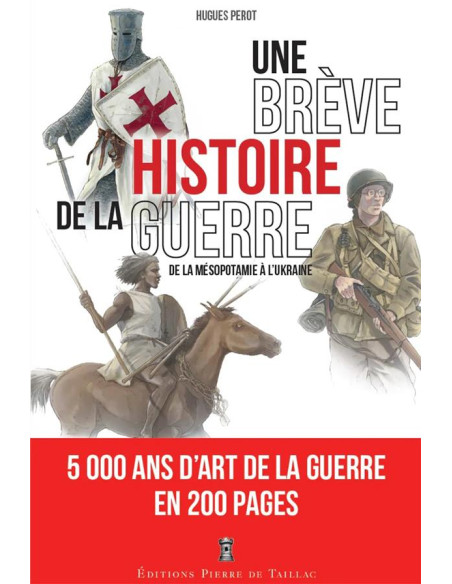
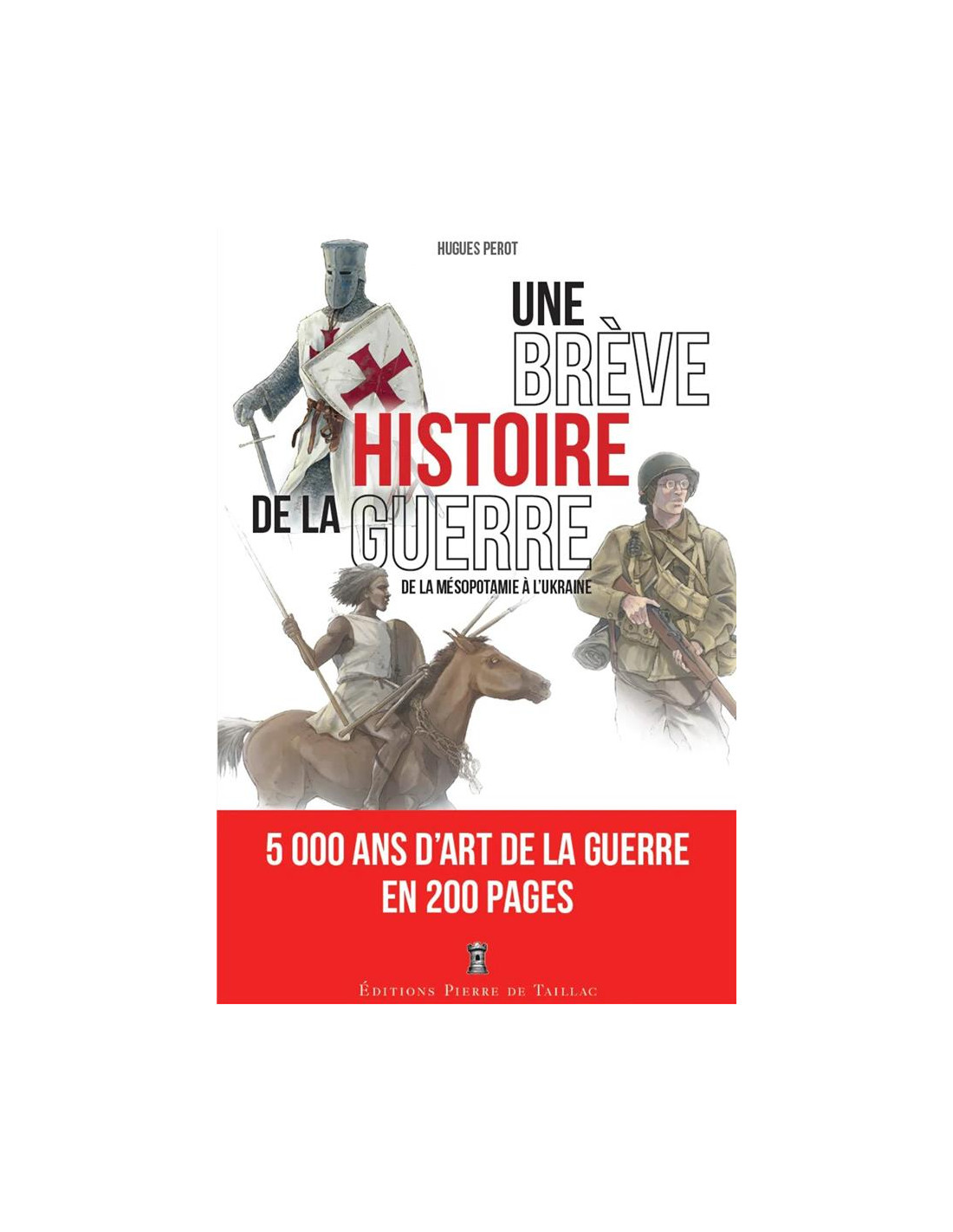
A BRIEF HISTORY OF WAR. From Mesopotamia to Ukraine
5,000 years of the art of war in 200 pages
Since the dawn of humanity, war has determined the life and death of individuals and peoples. From the 3rd millennium BC, with the refinement of weapons and tactics, the phenomenon of warfare gathered momentum across the steppes of Central Asia, in Mesopotamia and in ancient China. Subsequently, ancient Greece, Rome and all the great civilisations imposed and maintained themselves by force of arms.
For a long time, the art of war amounted to a brutal clash between two masses of men, in which only weaponry and training made the difference. The development of cavalry progressively brought a further dimension to combat — that of movement — allowing the strategist's talent to express itself through manoeuvre. Finally, the advent of gunpowder in the West at the end of the 14th century profoundly revolutionised tactics and then strategy, inaugurating an era of great technical innovation.
But more than the remarkable advances in the science of warfare achieved over 5,000 years, it is the singular genius of exceptional commanders — capable of rising above the contingencies of combat to combine in action the effects of fighters and weapons — that makes war a true art form in its own right.
Here is a brief history.
A graduate of Saint-Cyr, Colonel Hugues Perot holds a diploma from the École de Guerre. An infantry officer, he commanded the 126th Infantry Regiment of Brive-la-Gaillarde, and served in Kosovo, Côte d'Ivoire and Afghanistan. A passionate student of military history, he is notably the co-author (with General Gilles Haberey) of several reference works on tactics: L'Art de conduire une bataille, Les 7 péchés capitaux du chef militaire and Qui ose vaincra.
Secure Payment
Delivery
(+33) 01.79.75.05.50
You might also like