Your cart
There are no more items in your cart


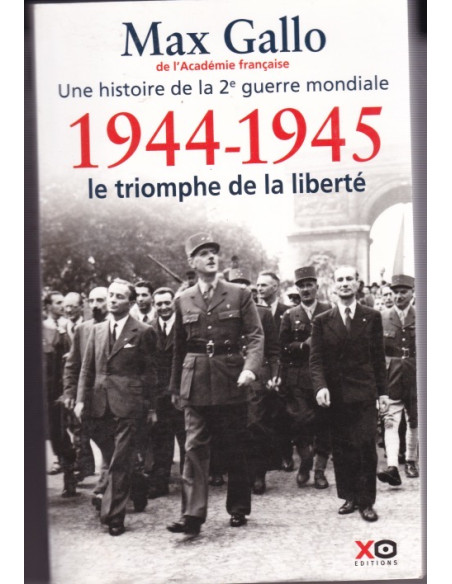
1944–1945: The Triumph of Liberty
Colliv311
In stock
€4.74
Publication
1944: Roosevelt and Churchill put in place the landing of Anglo-American troops on the Normandy coast, planned for 6 June 1944. De Gaulle, kept on the sidelines, dreams of setting foot on French soil liberated by his people and of restoring France's sovereignty. Caught in a vice by the Allied forces, the Axis powers capitulate one after another. In France, violence mounts — barbaric, bloody. The Resistance unites and organises itself; the maquisards of the Glières and the Vercors sacrifice themselves, while militiamen, collaborators, and German soldiers massacre innocents in reprisal. Hitler, who survives an assassination attempt plotted by his own camp in July 1944, still believes in victory despite the rout of his troops; but, faced with the Russians' entry into Berlin, he shoots himself in the head, leaving his generals, a week later, to sign Germany's unconditional surrender on 8 May 1945. In the Pacific, the fighting is fierce. To force the Japanese to yield, the American high command uses the atomic weapon: on Hiroshima on 6 August 1945, and on Nagasaki on 9 August. On 2 September, Japan has capitulated and the armistice is signed. 1945: at the cost of tens of millions of lives, peace has returned and liberty has triumphed. A new world remains to be built.

Secure Payment

Delivery
 Call Us
(+33) 01.79.75.05.50